Two weeks is where Bali stops being a rush. Ten days works, and our ten day itinerary covers it, but it involves a brisk circuit with a fair amount of driving. Fourteen days lets you use three or four bases, spend several nights at each, and reach the parts of the island that shorter trips always cut. Here is a route built around the one constraint that governs everything here.
The constraint: distance means nothing
This is the single fact that should shape your planning. Bali is a small island and the roads are narrow, largely single carriageway, and heavily congested through the populated south.
Fifty kilometres can take two to three hours. A map that suggests two places are close together tells you almost nothing about how long it takes to travel between them, and the southern belt around the airport is consistently the slowest part.
Two rules follow. Plan by hours, not kilometres. And avoid moving between bases in the late afternoon, which is when the roads are worst.
The practical version is to treat a change of base as a morning job. Leaving around eight gets the drive done before the worst of it and leaves the afternoon intact, whereas a two o’clock departure regularly turns a two-hour transfer into three and a half. Mapping apps underestimate these journeys, because they cannot see the ceremony closing a village road, so add half an hour to whatever the app says.
The route
Nights 1 to 4, the south coast. Land and stay near the west coast beaches, whether that is the surf and cafe scene of Canggu, the more polished Seminyak, or the clifftops of Uluwatu. Recover from the flight, get a scooter, and spend the first days close to base rather than driving.
Nights 5 to 8, Ubud. Inland and up, into the rice terraces and the jungle valleys. This is the cultural centre of the island and the base for the waterfalls, the temples and the walks. It is also cooler than the coast, which matters more than people expect.
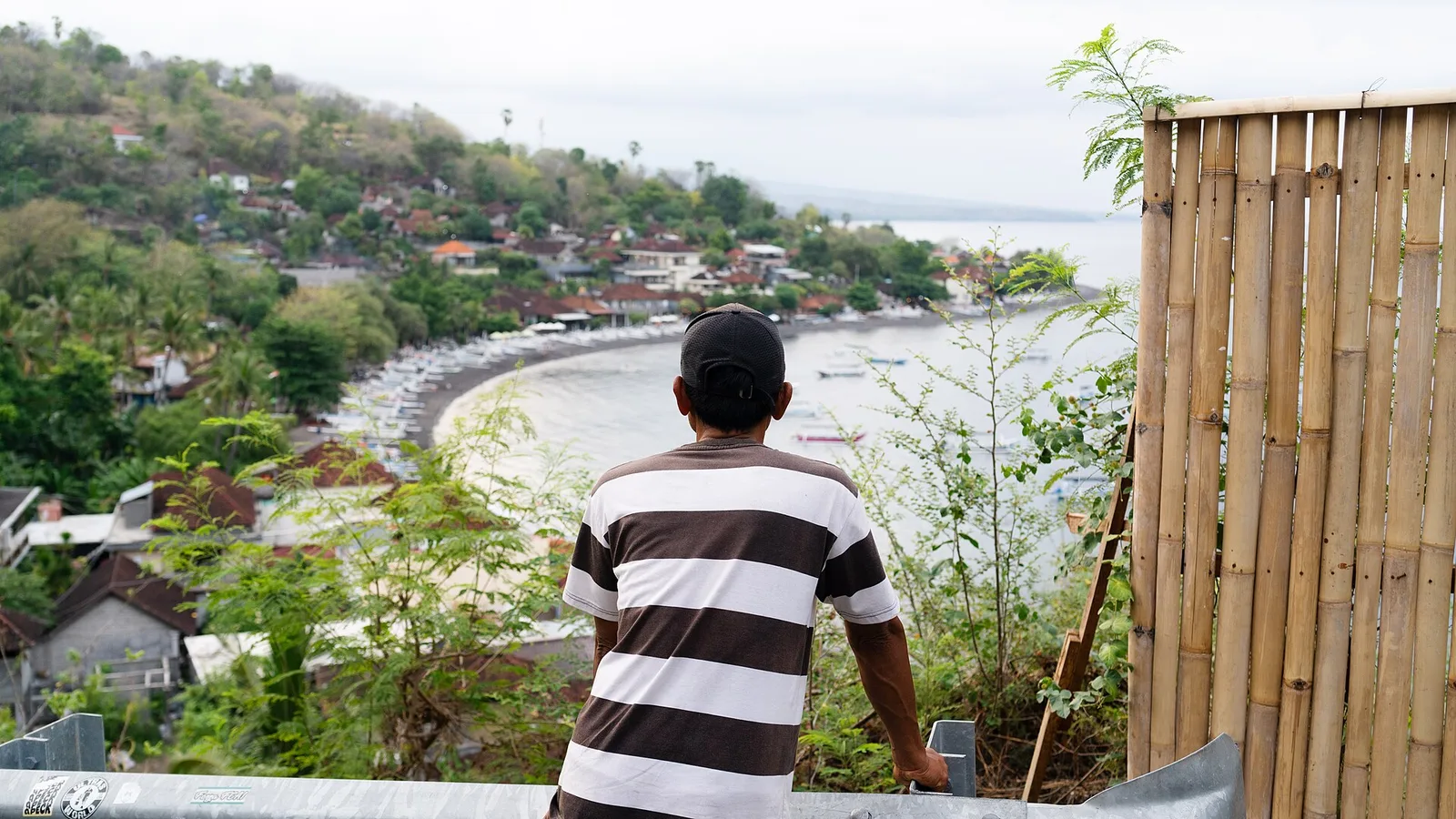
Nights 9 to 11, the quiet side. East or north: the Sidemen valley, the diving villages around Amed, or the lakes and waterfalls of the north. This is the Bali that existed before the south filled up, and it is where two weeks earns its keep over ten days.
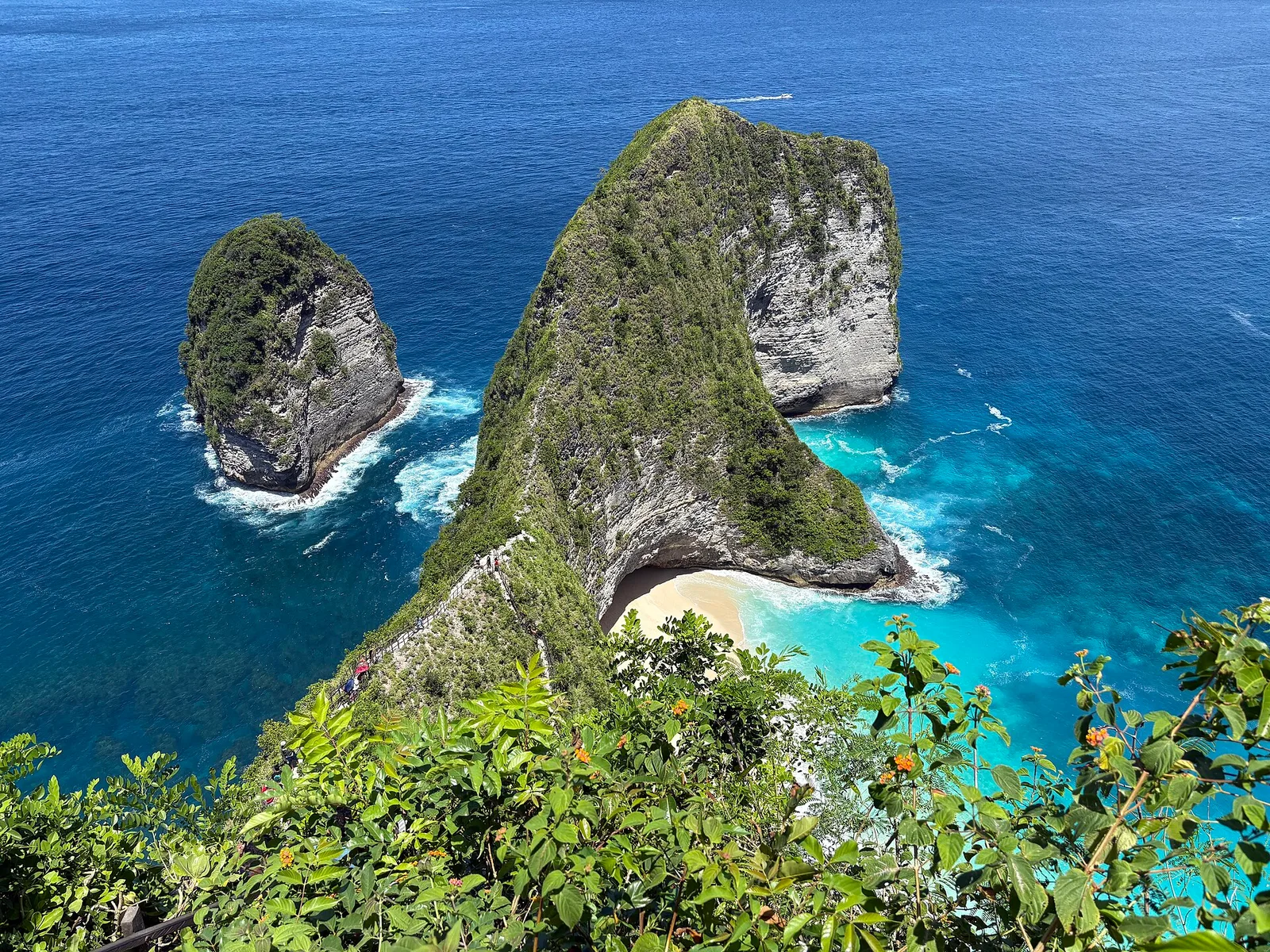
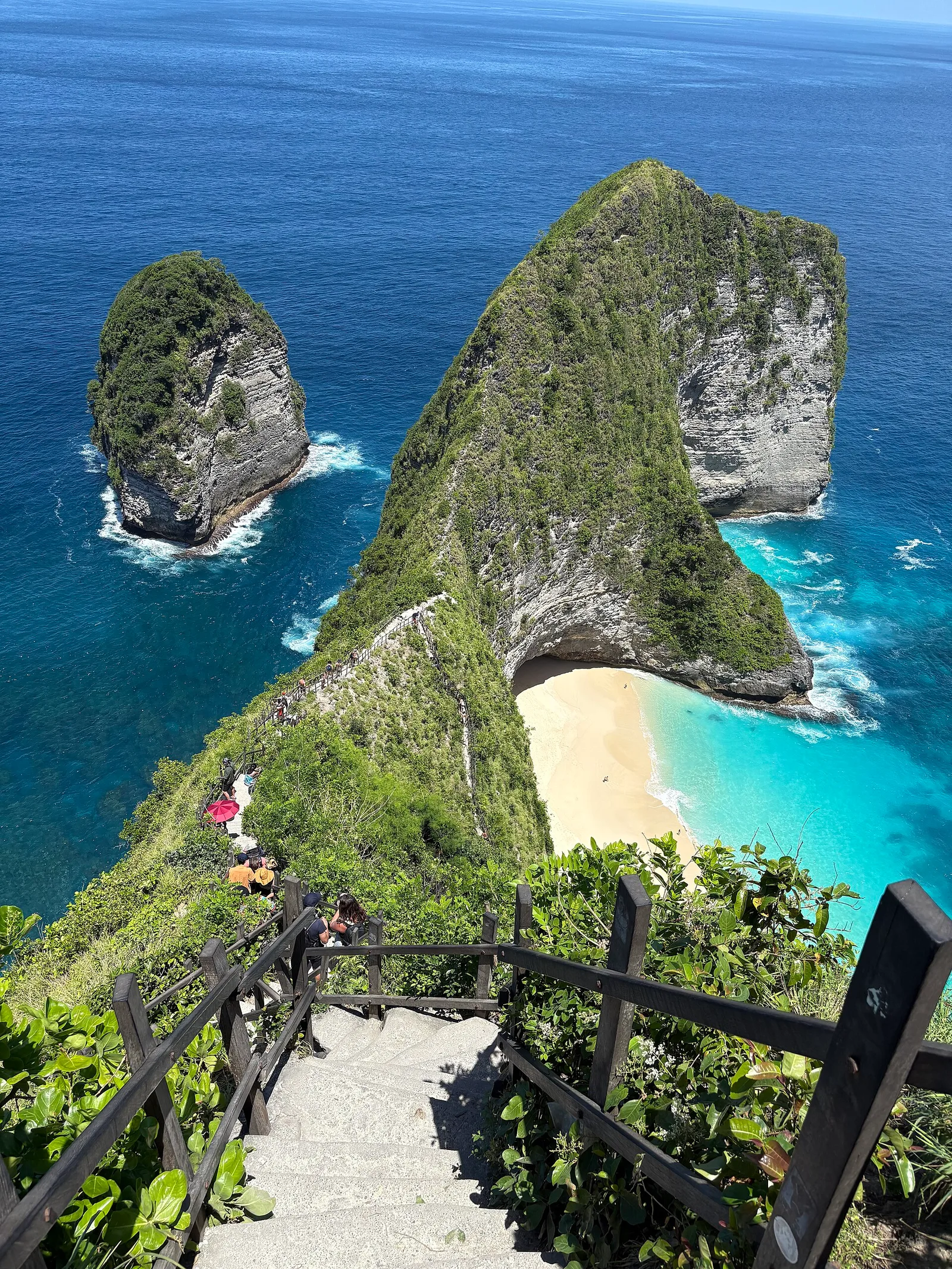
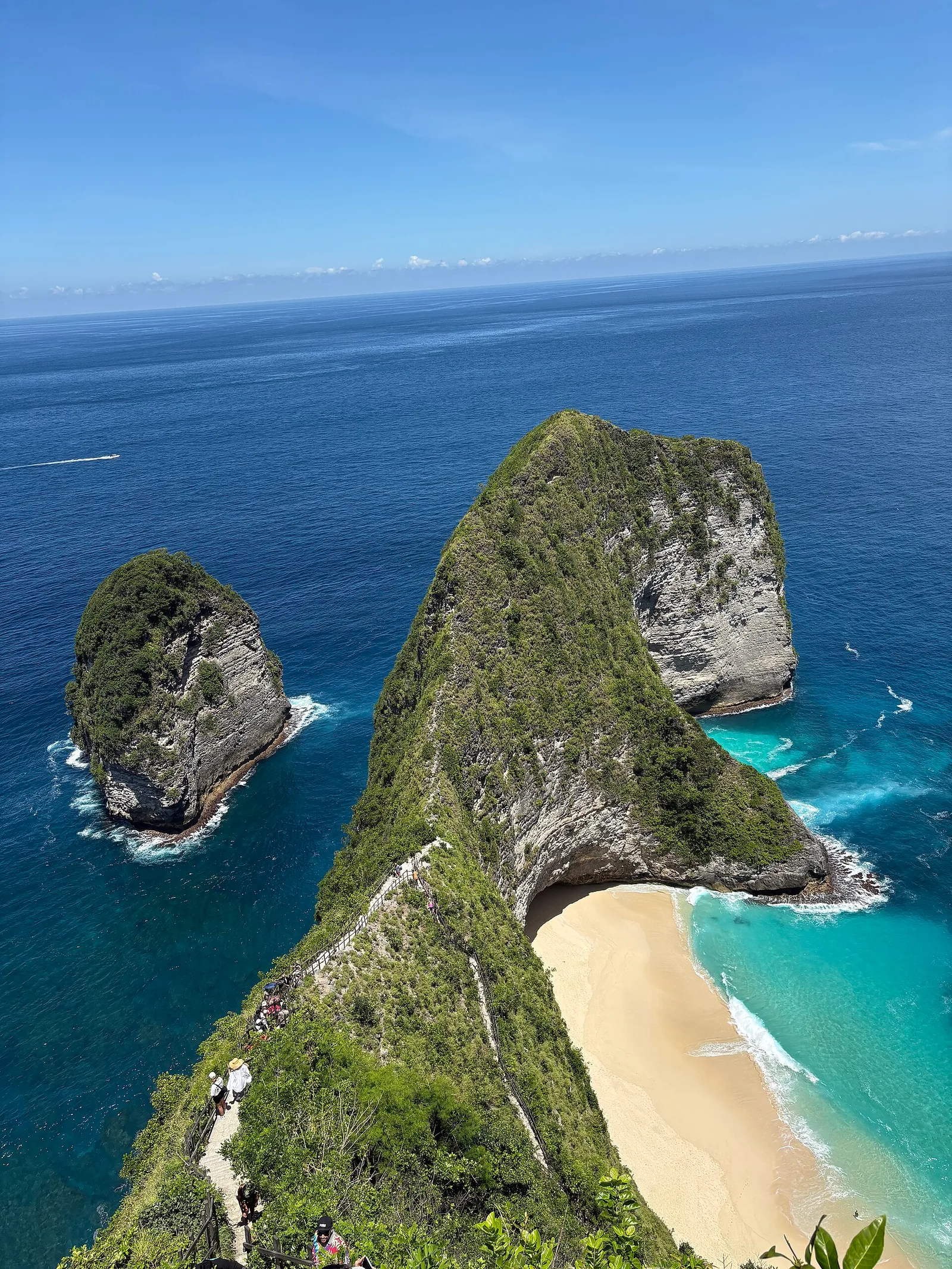
Nights 12 to 14, an island. The Nusa islands sit off the southeast coast, well under an hour by fast boat, with cliffs, snorkelling and a slower pace. Our Nusa Penida guide covers the biggest of them.
Put the island at the end rather than in the middle, for a practical reason: the fast boats run on a fixed timetable and can be cancelled outright in rough seas, so a crossing with nothing scheduled behind it costs you nothing if it slips by a few hours. The same crossing wedged between two bookings takes the rest of the itinerary down with it. If you fly home from Bali, come back to the mainland the day before the flight rather than the morning of it.
Why three or four bases, not six
Every move costs more than it looks. Packing, checking out, the drive, checking in, and finding your feet in a new place together consume the best part of a day, and on Bali’s roads that is often literal.
Three or four bases with three to four nights each gives you actual days in each place. Six bases gives you six travel days out of fourteen, which is how people come home from Bali saying they spent the holiday in a car.
If you want to cut something, cut the number of places rather than the nights in them. Our five day itinerary shows what the compressed version looks like, and the difference is instructive.
Book the moves, not just the bedsThree or four bases over two weeks means three or four bookings, and the good villas in Ubud and the east go earlyGetting between them
Most visitors use two modes and should.
A hired driver for the day costs little by international standards and is the right way to handle the long journeys between bases, particularly with luggage, and to do a full day of scattered sights. This is not an extravagance here, it is the normal way things are done.
A scooter is how you move around once you are settled somewhere, and it is genuinely the best way to experience the island. What causes most visitor accidents is the combination people should avoid: long distances, heavy traffic, luggage and unfamiliar roads all at once. Our guide to scooter and car rental covers the licensing and insurance side, which matters more than people assume.
The one date to check
Nyepi, the Balinese day of silence, shuts the entire island for twenty four hours. No travel, no lights after dark, no going outside, and the airport closes completely. Hotels keep their guests but you stay on the property and keep quiet.
It moves each year with the Balinese calendar. Check it against your dates before booking flights, because an overlap removes a full day and can strand an arrival or departure entirely. The days either side, with the parades of enormous demon effigies, are among the most extraordinary things to witness on the island, so an overlap is not purely a loss.
What this leaves out
Deliberately: Lombok and the Gili Islands, which sit further out across a longer and rougher crossing and deserve several nights of their own rather than a quick visit; and the far west of the island, which is quiet, undeveloped and a long drive from anywhere else. Both are better as a separate trip or an extension than as an insert into a two-week loop.