Bali has no metro, no useful bus network, and distances that are longer than they look on a map. How you get around shapes your whole trip: pick right and the island opens up, pick wrong and you spend your holiday stuck in traffic or nursing a scraped knee. Here are your real options, honestly compared.
Why the map lies
Start here, because everything else follows from it. Outside a single toll road in the far south, Bali runs on two-lane roads shared by everybody: scooters, trucks, dogs, tour buses and temple processions, through villages that never really end. There is no bypass and no fast alternative.
The result is that a journey which looks like forty minutes routinely takes ninety, and the late afternoon is the worst of it, which is exactly when everyone is heading back from a day out. Two consequences for planning: build far more time into every transfer than the map suggests, and treat “just popping over to” anywhere as a half-day commitment rather than an errand.
The scooter: how Bali actually moves
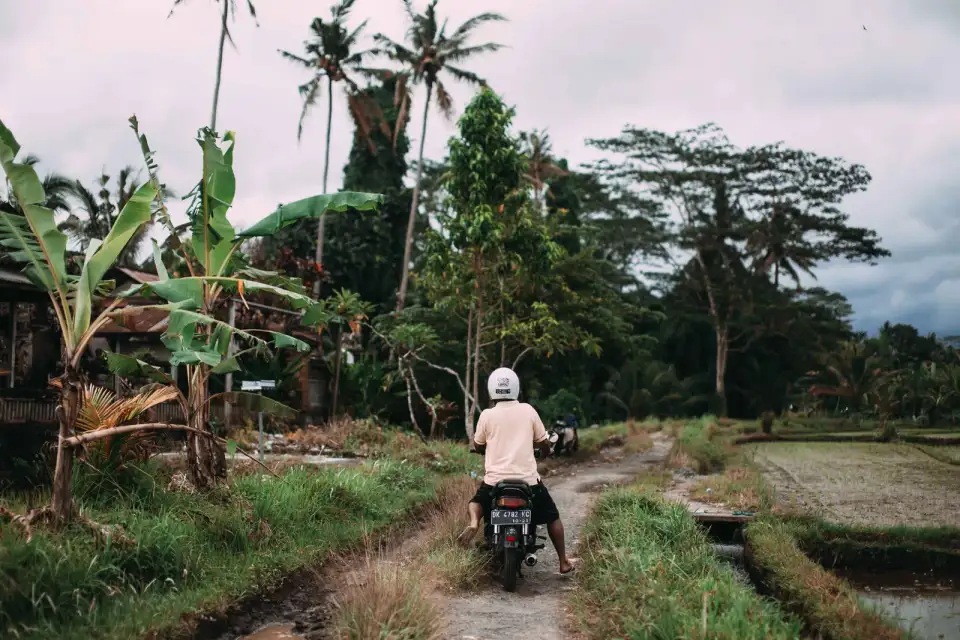
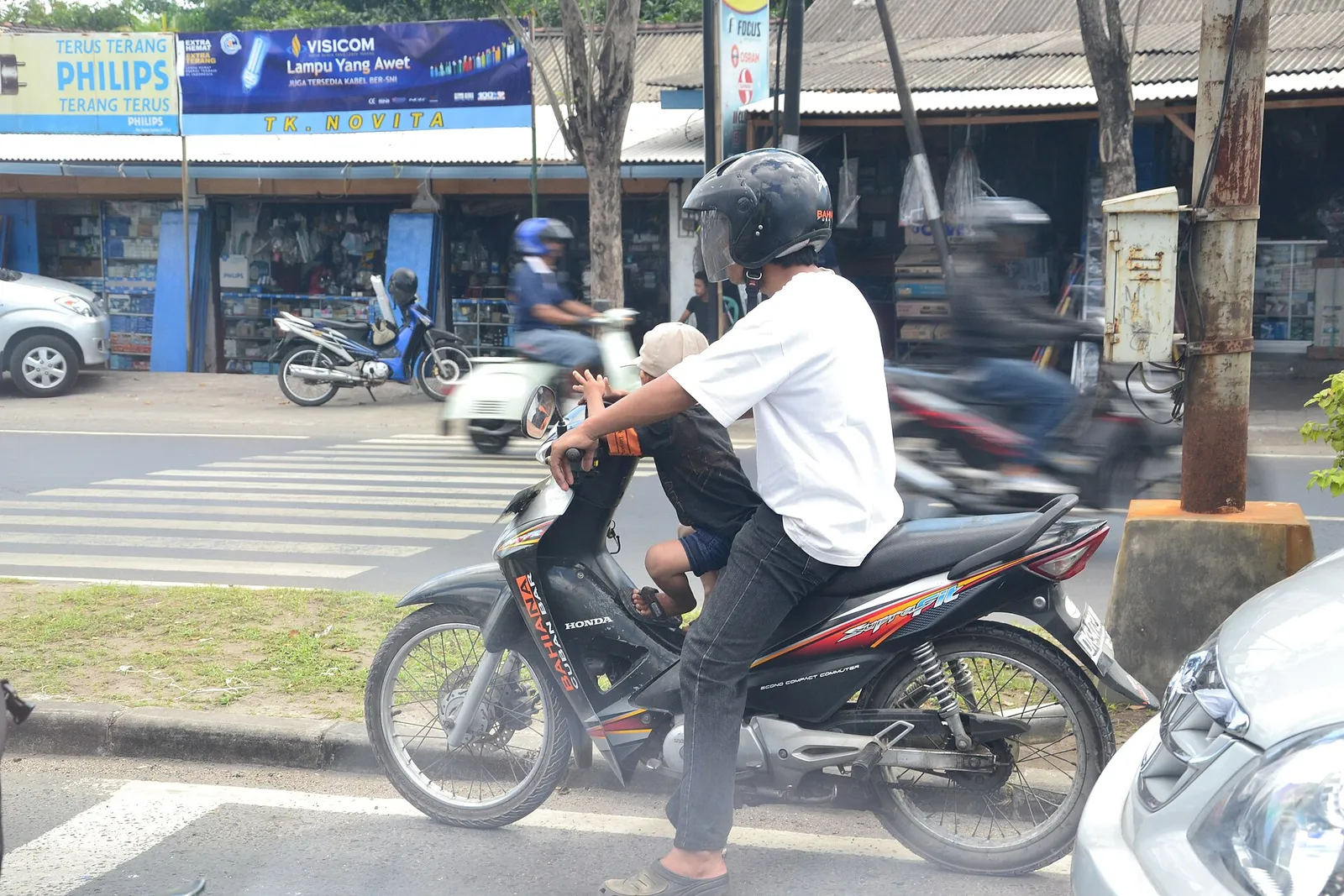
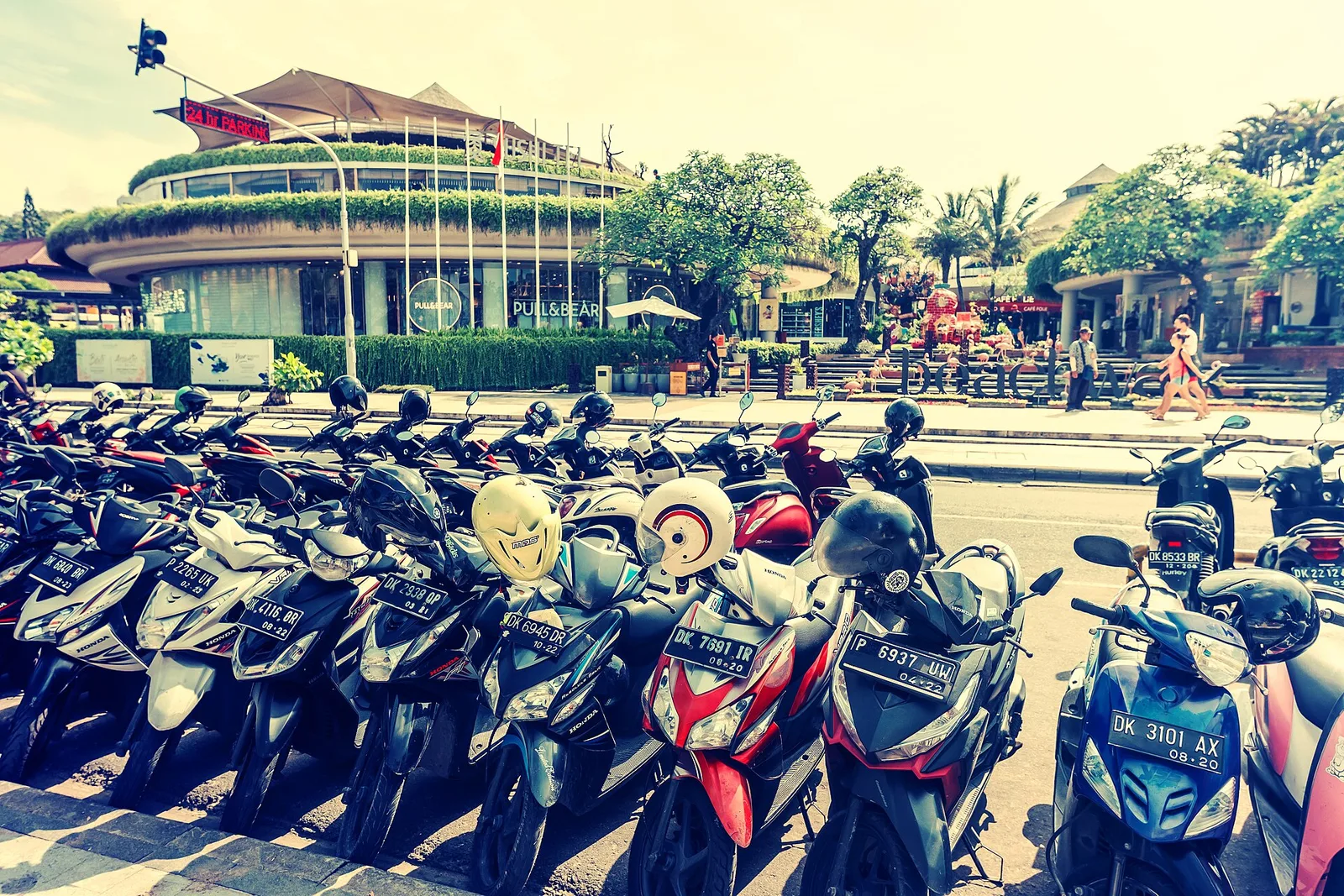
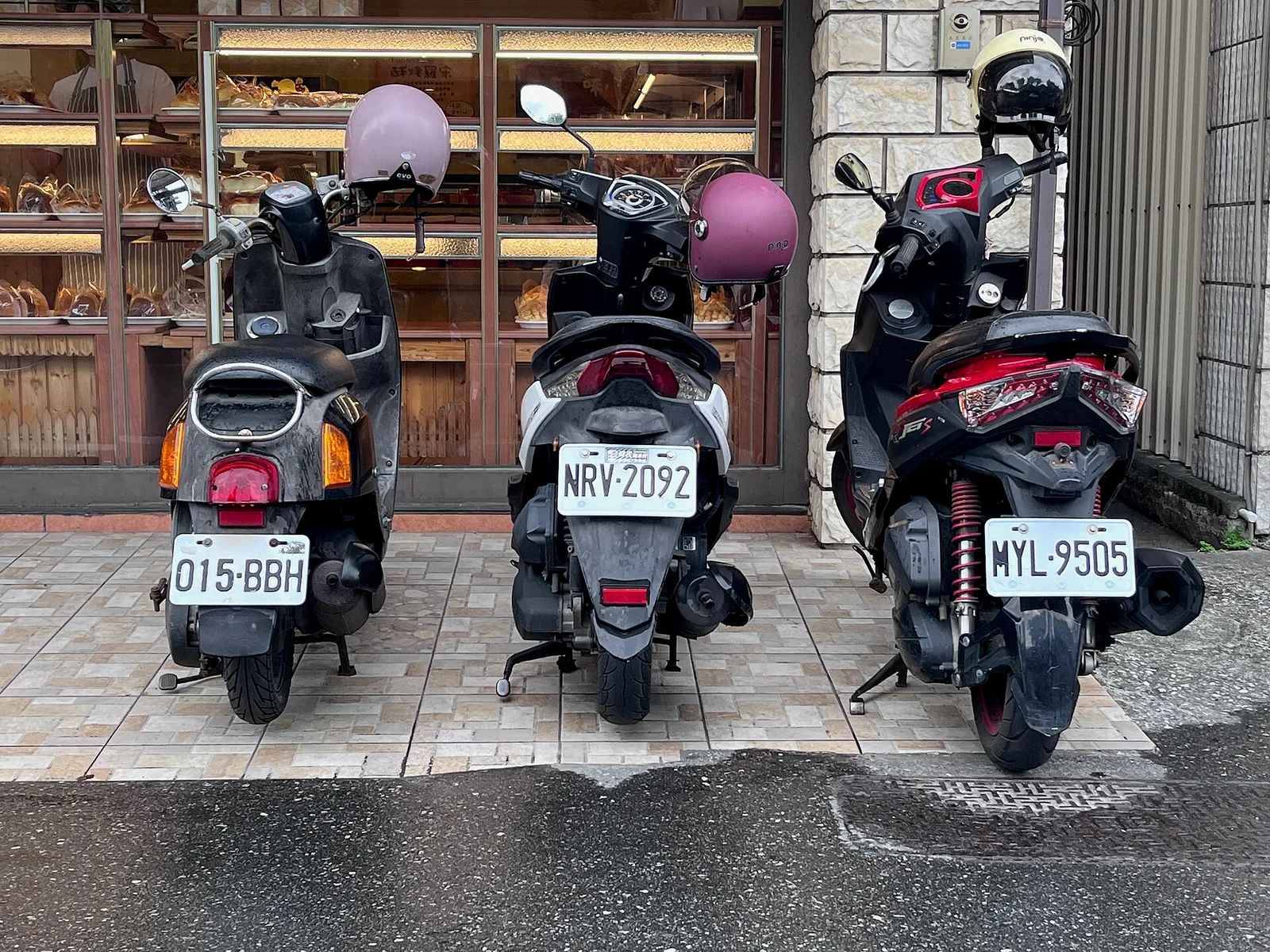
The scooter is the beating heart of Bali transport. It is cheap (roughly 60,000 to 100,000 rupiah a day), easy to park, and the only quick way through the island’s narrow, clogged lanes. For confident riders it is liberating and genuinely fun, letting you reach cafes, beaches and rice-field back roads that cars struggle with.
But be honest with yourself. Scooters are also the number one cause of tourist injuries in Bali, and the roads are chaotic, with unpredictable traffic, sudden potholes and heavy rain. Only ride if you have real experience, always wear a helmet, avoid riding at night or in the wet, never drink and ride, and start on quiet roads before braving Canggu at rush hour. The famous “Bali tattoo”, a road-rash scar, is not a souvenir you want.
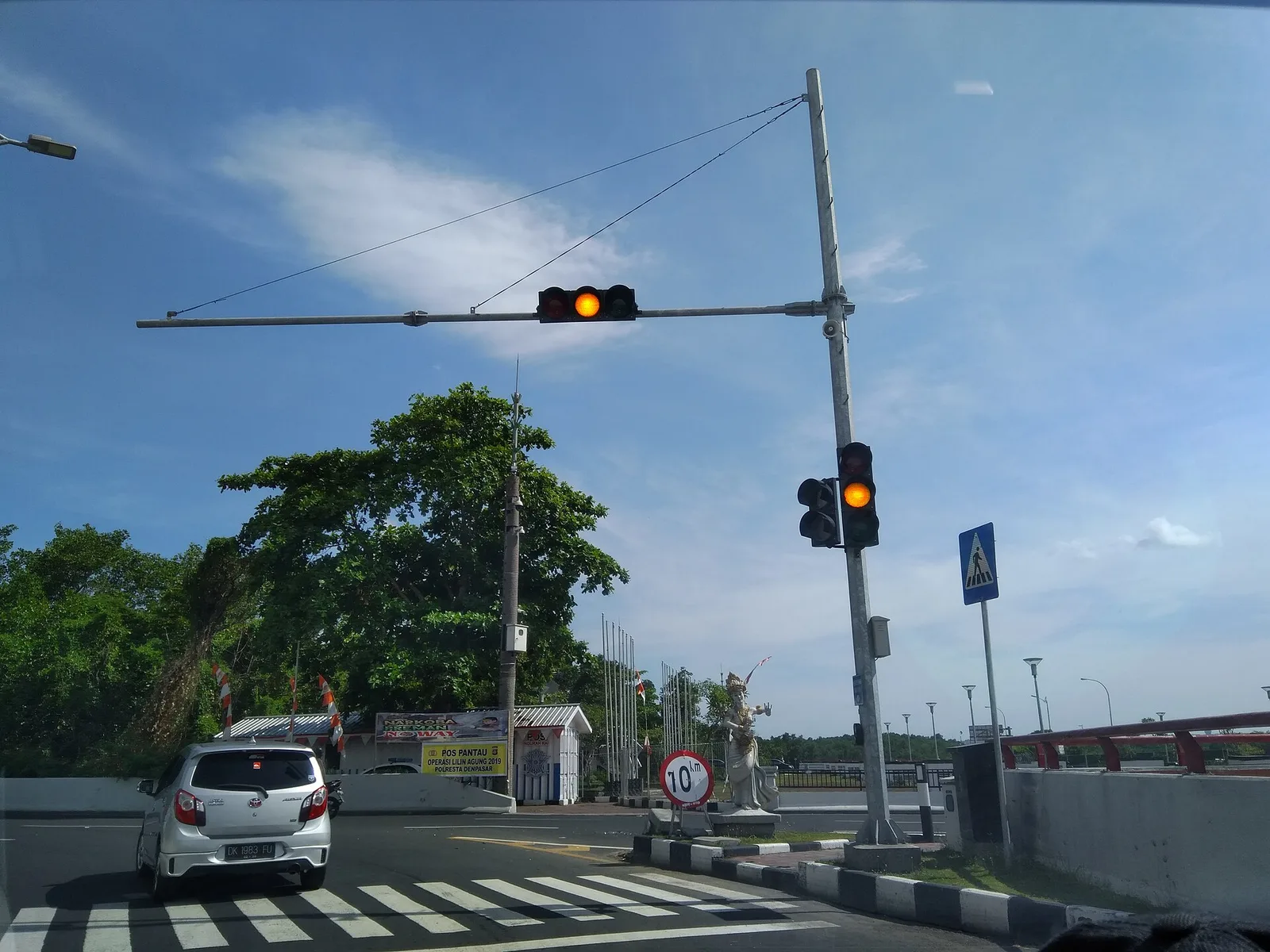
One point that catches out a lot of visitors: traffic here drives on the left. If you are used to the right, you are learning a new side of the road at the same time as learning Balinese traffic, and the old habit reappears at junctions and roundabouts under pressure. That is a strong argument for a first hour on empty back roads.
Renting one without regretting it
Check the bike before you take it: brakes, tyres, lights, horn and mirrors, and photograph the existing damage from every angle so it is not attributed to you later. Rental helmets are frequently poor, and a better one costs very little to buy locally, which is a sensible purchase for a longer stay.
Do not hand over your passport as security. It is a common request and a bad idea, since it is the one document you cannot easily replace abroad; offer a photocopy, a deposit or other ID instead. Fuel is sold at proper stations and also from roadside stalls in bottles, which is fine for topping up. And know where the nearest station is before a longer ride, because the roadside option is not everywhere.
Licences and insurance: the part people skip
This is the bit that catches travellers out. Indonesian law requires foreign drivers to carry a valid International Driving Permit alongside their original home licence, and it has to cover the right category, so a motorcycle endorsement for a scooter. A car licence alone does not make you legal on two wheels. Only the printed IDP booklet is accepted; a photo or a digital copy is not. Police run checkpoints, do stop tourists, and enforcement of traffic rules against foreign riders has been tightened rather than relaxed in recent years, with on-the-spot fines running into the hundreds of thousands of rupiah. More importantly, most travel insurance policies will not cover a scooter accident unless you hold the correct licence, were wearing a helmet and had not been drinking, and medical bills or an evacuation can be ruinous. The licence is the condition people know about; the helmet is the one that quietly decides claims, and it applies to the two-minute ride to dinner as much as to a day out. Get the right permit, wear the helmet, or do not ride. It is that simple.
The permit has to be arranged at home before you travel, from your national motoring body, and it cannot be obtained once you have landed. It sits alongside the rest of your arrival paperwork, and our Bali visa and entry guide covers what else to sort before you fly, including the entry costs that are easy to miss.
Ride-hailing apps: the easy default
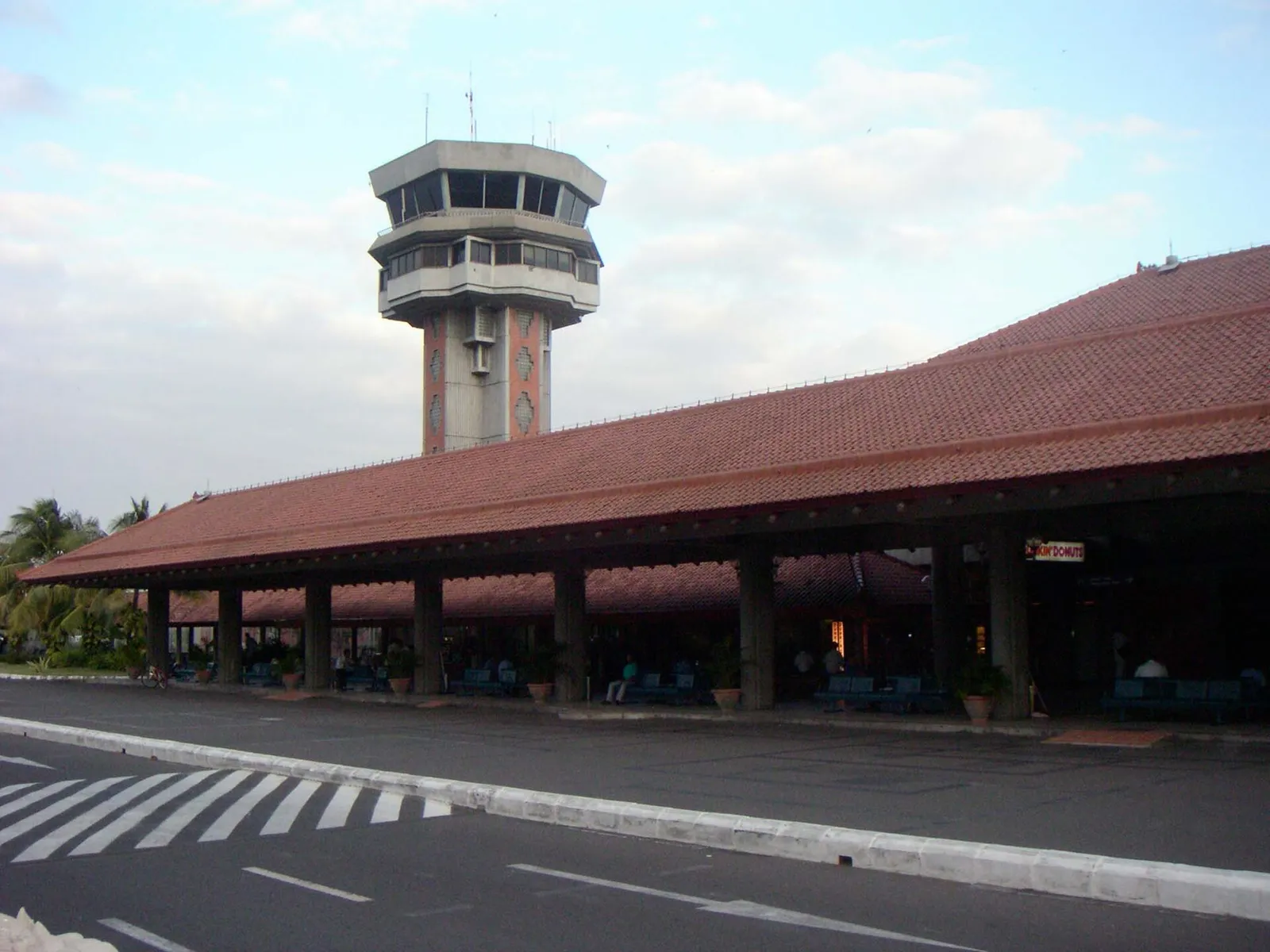
For short hops without riding yourself, the ride-hailing apps Grab and Gojek are your friend. They offer cheap cars and motorbike-taxis with fixed, upfront prices, so no haggling and no getting lost. They are perfect for airport runs, dinner trips and days you would rather not drive. Note that in a few areas local transport groups restrict app pickups, so you may occasionally need to walk a block to meet your driver, but overall they are cheap, reliable and stress-free.
Two things make them work better. Keep cash anyway, since a local driver is your fallback in the restricted areas and many will happily take you for an agreed price. And if you do take a metered taxi instead, stick to the established, clearly branded companies and insist on the meter, rather than accepting a quoted flat fare from an unmarked car.
Book a driver for the big days outA private driver for a day of temples and waterfalls costs little and removes all the stressThe private driver: the sweet spot for sightseeing
For most visitors, the private driver is the best-kept secret of Bali travel. For around 600,000 to 900,000 rupiah a day you get a car, fuel and a local driver for eight to ten hours, who navigates the traffic, parks, waits while you explore, and often shares tips and quiet timings. Split between a group it is astonishingly good value, and it is the ideal way to string together spread-out sights like the temples, the waterfalls or an east-Bali loop. Agree the itinerary and price up front, and you have a relaxed, air-conditioned day.
A few habits make the day better for everyone. Agree the route in advance and be realistic about how many stops fit, since three or four is a full day given the roads. Confirm what the price includes, because entrance fees, parking and the driver’s meal are usually separate and cheap. Ask for an early start, which is the single best thing you can do for both crowds and traffic. And if the day goes well, a tip is genuinely appreciated and a good driver is worth rebooking for the rest of the trip.
Renting a car yourself: only if you are sure
Self-drive car rental is possible but suits few travellers. Bali’s traffic is intense, parking in the busy areas is tight, and the driving culture takes real nerve. Given that a private driver costs little more than a rental and removes all the hassle, most people are better off hiring the driver too. Rent your own car only if you are a confident overseas driver heading somewhere quiet, and again, carry the correct International Driving Permit.
If you do, the same left-hand-traffic warning applies, along with a practical one: navigation apps will happily route you down lanes that are technically roads and practically footpaths with a temple wall on each side. Trust the width of the road over the blue line, and be prepared to reverse.
Getting to the other islands
Land transport stops at the water, and the fast boats take over. Sanur is the departure point for the Nusa islands, while Padangbai and Serangan serve the Gilis and Lombok. Crossings are short, the boats are busy, and the price is significantly higher than anything you will pay on land.
Choose an established operator rather than the cheapest ticket pushed at you, check that life jackets are provided and actually worn, and accept that sailings are weather dependent and can be rough or cancelled outright, particularly in the wet season. The planning consequence matters more than the discomfort: never make a boat the last link in a chain that ends at a flight. Leave a night of slack between the islands and your departure.
If something goes wrong
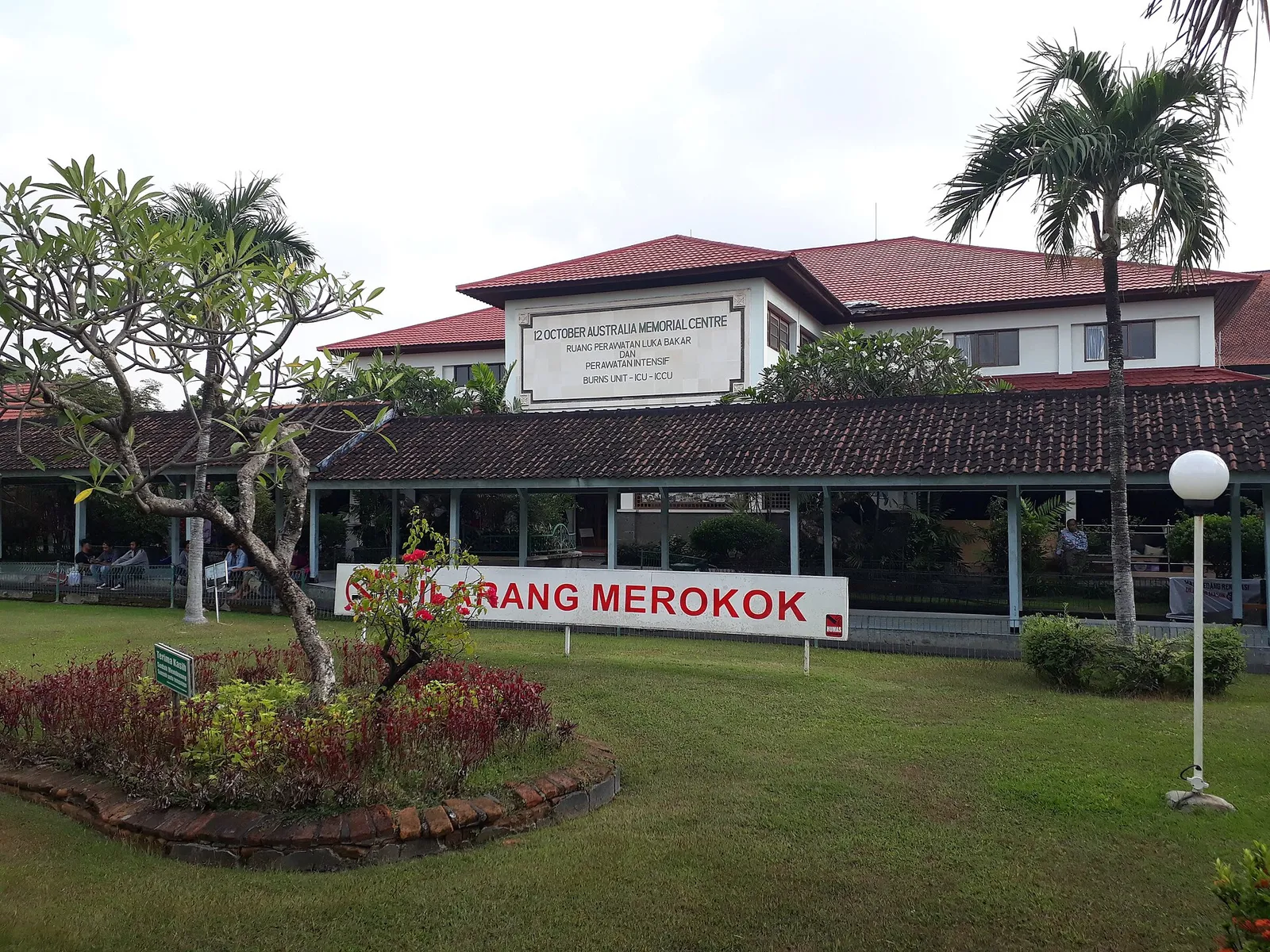
Two habits cover most of it. First, get injuries looked at properly, even minor ones, because road rash infects readily in this climate and a scrape that seems trivial on day one can become the story of the trip by day four. Pharmacies are widespread and clinics used to treating visitors are easy to find in the south.
Second, contact your insurer early, since many policies require notification before treatment and will not reimburse otherwise, and keep every receipt, report and photograph. Know how to summon help before you need it: our guide to emergency numbers in Bali covers who to call and what to expect, and our guide to travel insurance for Bali covers the clauses that decide whether any of it is paid for.
Matching transport to your trip
Here is the simple formula. Use a scooter if you are a confident rider and want freedom, and only with the right licence and helmet. Use the apps for cheap, safe short trips and airport runs. Hire a private driver for your big sightseeing days across the island. Rent a car yourself only if you genuinely want to drive. Most great Bali trips mix all of these: a scooter for the neighbourhood, apps for dinner, and a driver for the day trips.
Walking deserves a footnote rather than a section: it works within Sanur, Seminyak and central Ubud and almost nowhere else, since footpaths are patchy, the heat is serious and the traffic is not built around pedestrians. Choose a walkable base if you would rather not ride at all.
The short version
There is no train and no easy bus, so plan your movement. Remember that traffic drives on the left and that the map lies about journey times. Ride a scooter only if you are experienced, licensed and helmeted, check the bike and keep hold of your passport, lean on the apps for everyday hops, and hire a private driver for the spread-out sights, which is the best value on the island. Sort your licence and insurance before you go, leave slack around any island boat, and Bali becomes a place you move through with ease instead of frustration.
Are you riding, or leaving the driving to somebody who knows these roads?