Bali’s reputation for expense is built almost entirely on a few square kilometres of Canggu, Seminyak and Uluwatu. Drive twenty minutes inland in the evening and you land in a completely different economy: the pasar malam, the night market, where a plate of hot food costs a fraction of a beach club cocktail and the customers are local families rather than visitors. It is the single most reliable way to eat well and cheaply after dark, and it is barely on most itineraries. Our food guide covers the island’s dishes; this is about where to find them at night for almost nothing.
What a pasar malam actually is
Pasar malam translates literally as night market, and in Bali it usually means a market building or square that trades in produce and dry goods by day and fills with food carts, grills and plastic stools once the sun goes down. Some are purely culinary. Others mix food with clothes, toys, phone accessories and household goods, with a fairground edge on busy nights.
The important thing is that these are not attractions built for tourists. They are ordinary local infrastructure, which is why the prices are unremarkable to the people using them and startling to visitors who have been eating in Canggu all week. Nobody will hassle you, nobody is running a tout operation, and the stallholders are mostly indifferent to whether you buy, which is a pleasant change.
Gianyar, and the markets worth the drive
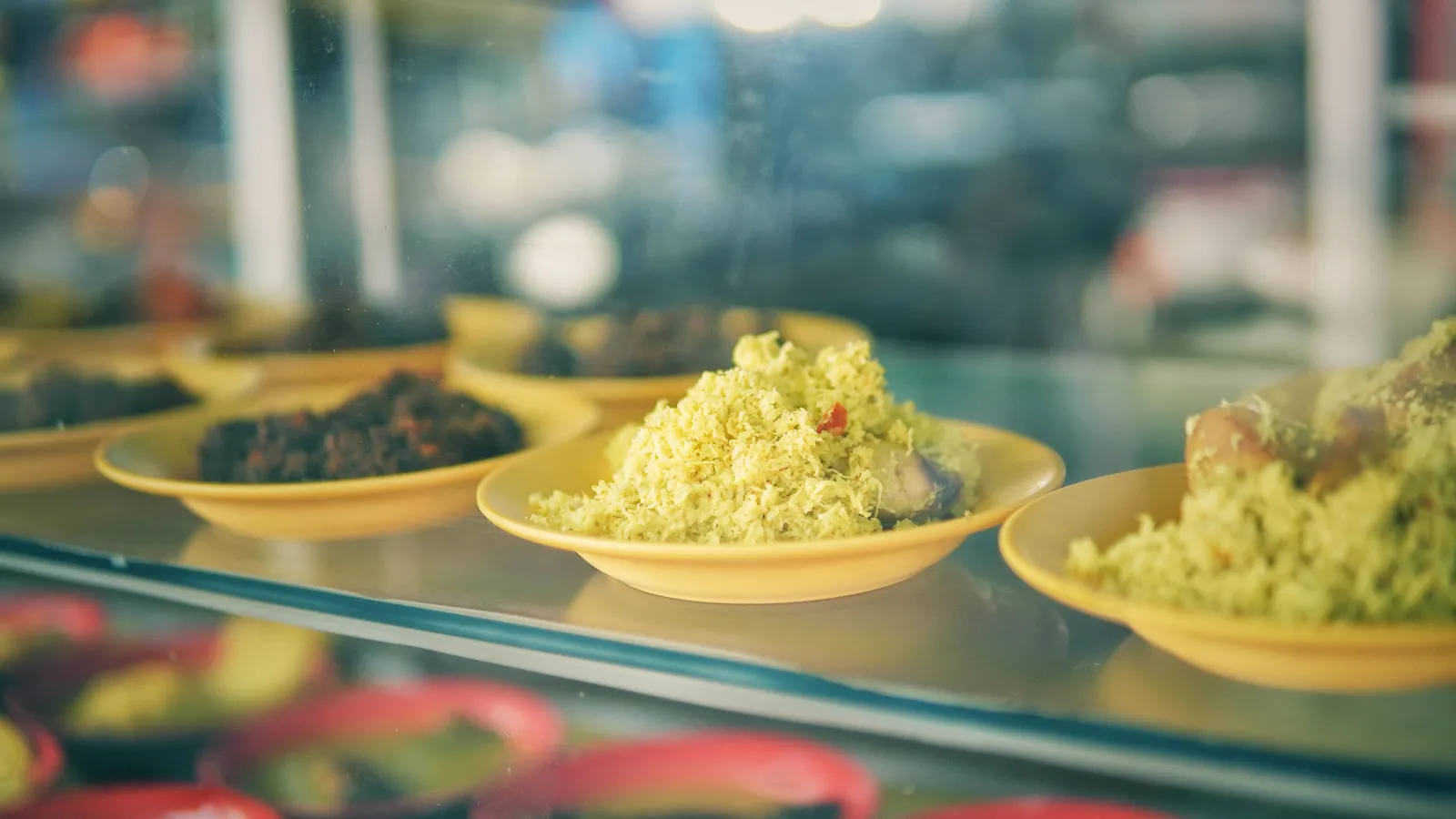
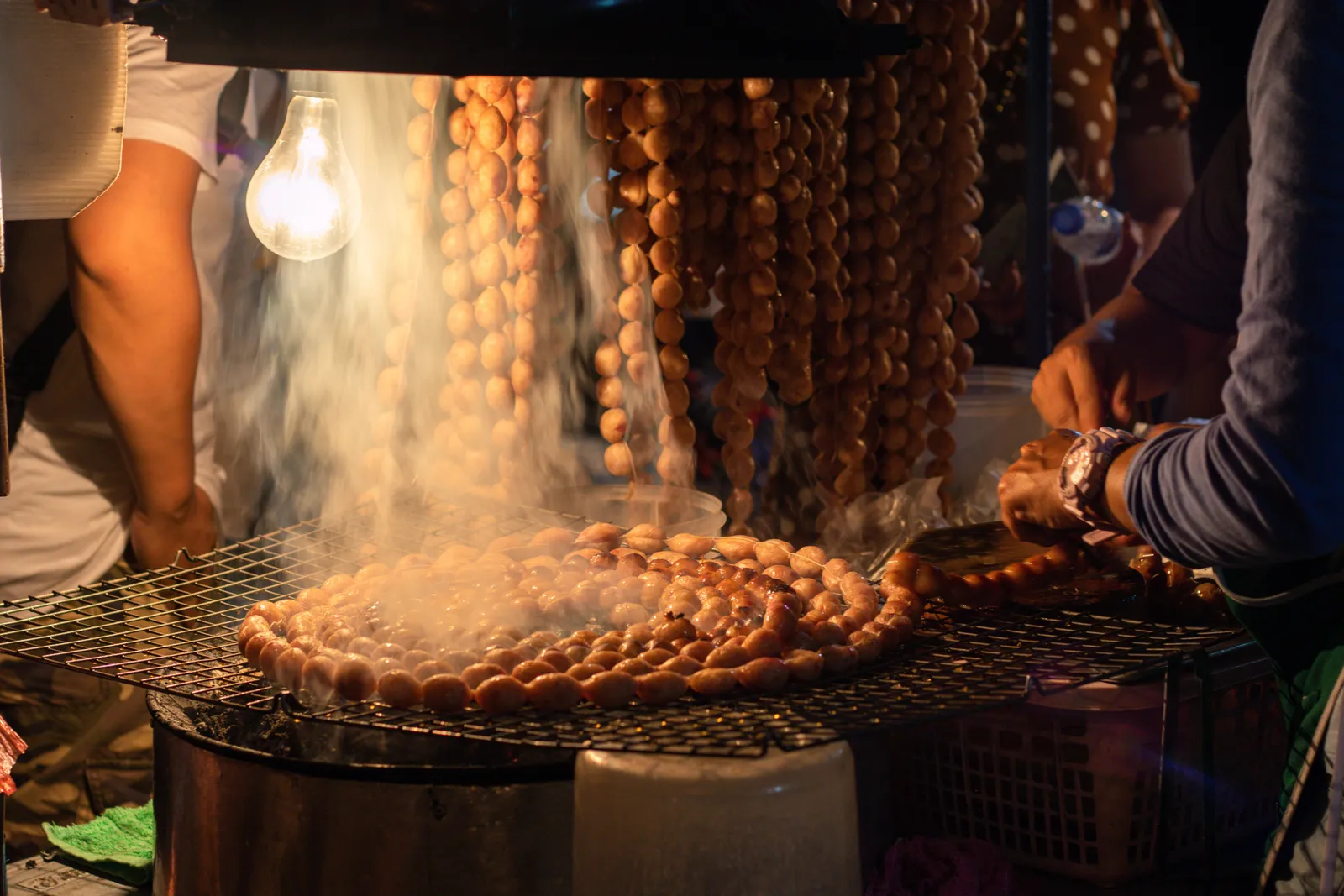
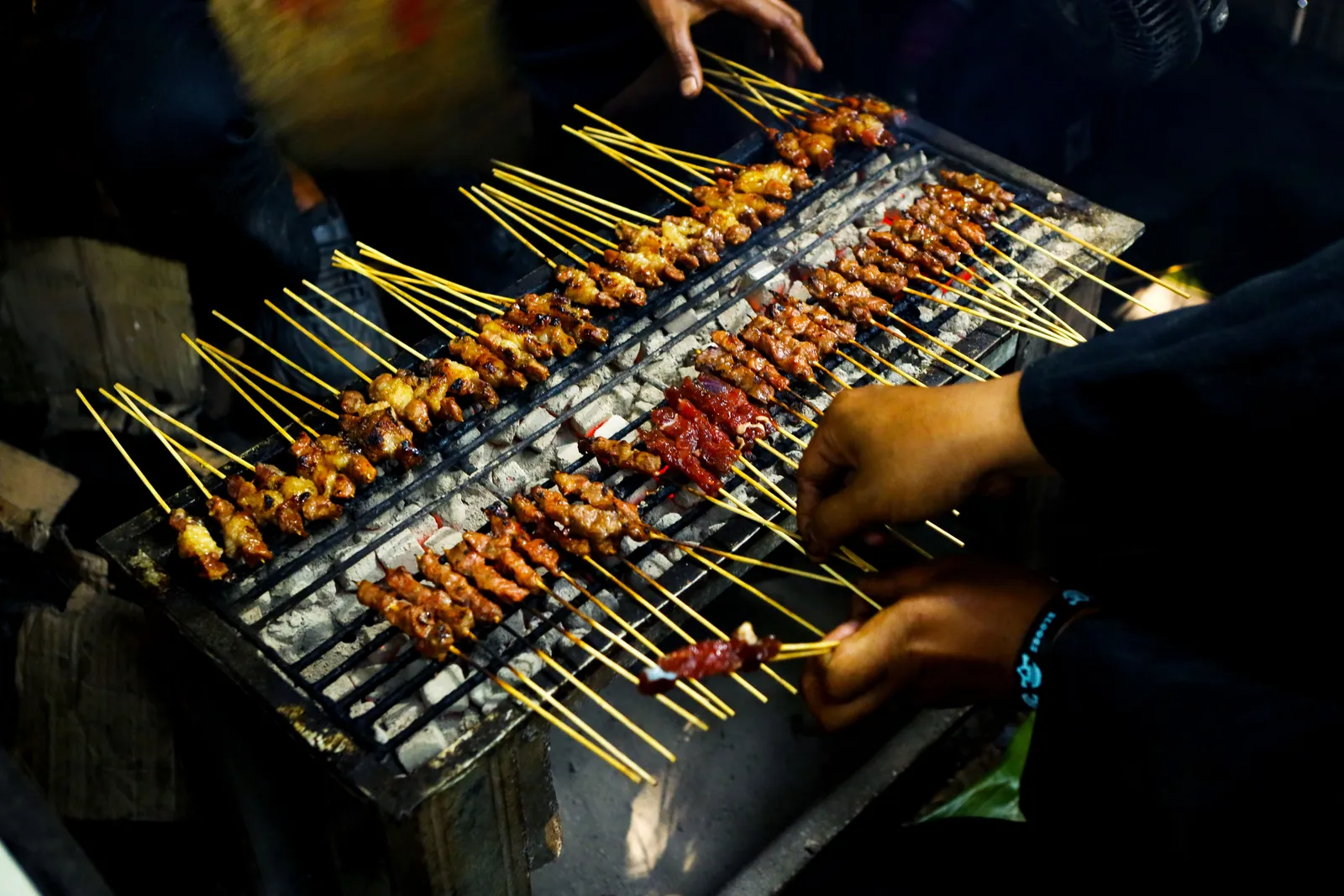
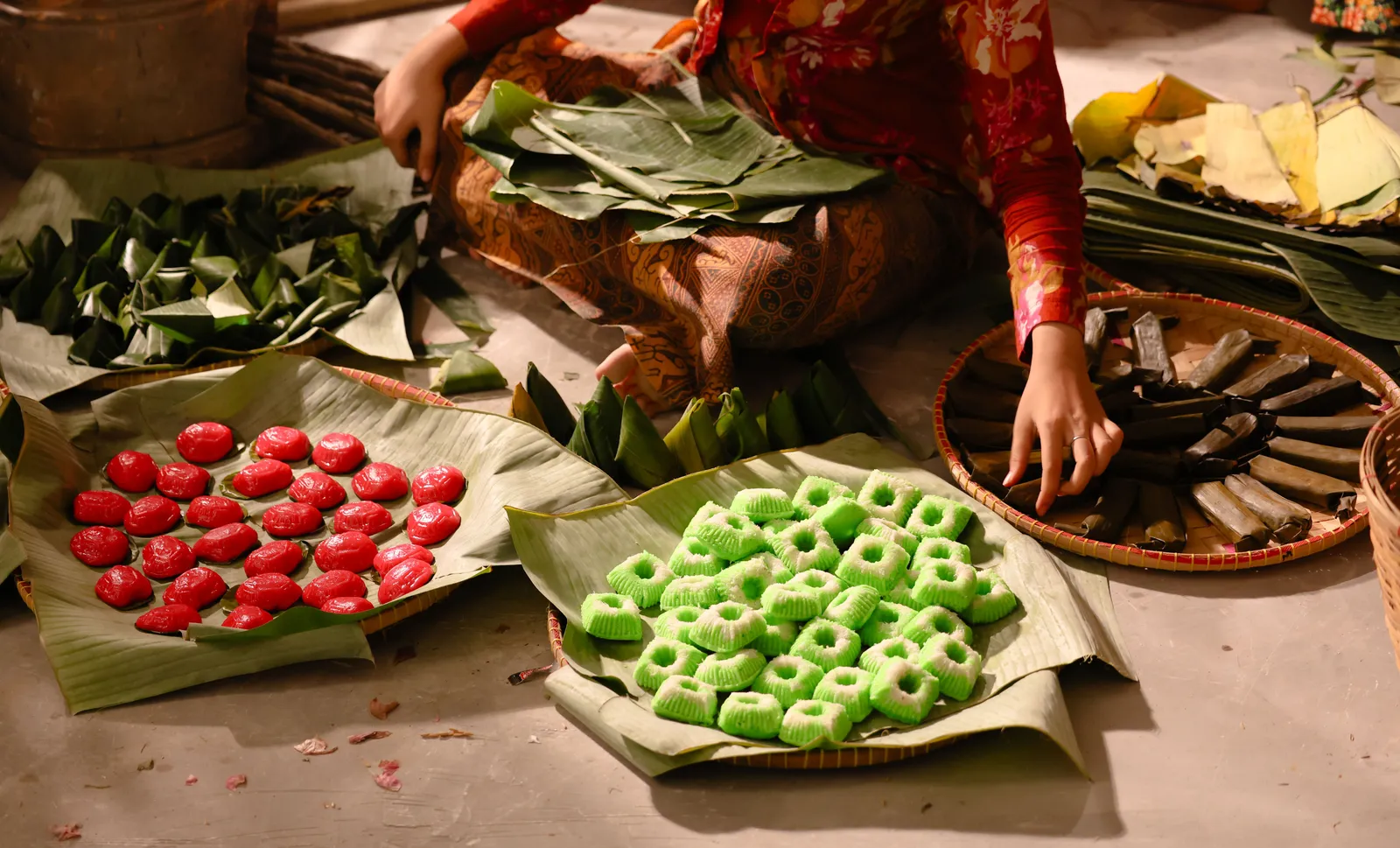
Gianyar night market, often called Pasar Senggol, is the flagship and the one worth planning an evening around. It sits in Gianyar town, roughly half an hour east of Ubud, in front of the old royal palace, and it is the densest concentration of Balinese street food on the island: babi guling by the plate, chicken and pork satay grilling over coals, bakso and soto soups, fried noodles, and long tables of jaja Bali, the coloured rice-flour sweets, alongside laklak pancakes with coconut and palm sugar.
Sanur has a smaller evening market that is far easier to reach if you are based on the east coast, and Denpasar has several, including the long-running Kereneng market, which trades late and is aimed squarely at city residents. Smaller towns across the island run their own on particular nights, and in the north and west these are often the only evening food option that is not a hotel restaurant.
If you are choosing one and you are anywhere near Ubud, choose Gianyar. If you are in Sanur or Denpasar and do not want a drive, the local option is perfectly good and the difference is scale rather than quality.
Timing, and the closures nobody warns you about
Markets generally start assembling in the late afternoon and run into the late evening, with the strongest window somewhere in the early-to-middle part of the evening, when everything is set up and nothing has sold out yet. Individual stalls close when their food is gone rather than at a set hour, so arriving late means a thinner selection rather than a locked gate.
Two things will close a market without notice. The first is Balinese ceremony days, which fall throughout the Hindu ritual calendar and can empty a market or shut it entirely, since the stallholders have temple obligations. The second is Nyepi, the Balinese day of silence, when the entire island shuts down completely: no markets, no restaurants, no traffic, no flights. Nyepi moves each year on the Balinese saka calendar, so if your trip is anywhere near it, check the date against the Bali provincial government calendar rather than a blog, and plan food in advance.
What it costs, and how to pay
Night market food is the cheapest hot food in Bali and is priced for locals, and it is one of the easiest single changes to make to a food budget, as our budget guide sets out. Snacks, sweets and individual satay skewers sit at the very bottom of the scale, in the single-digit thousands to low tens of thousands of rupiah; a proper plate of rice with roast pork or a full bowl of soup costs more but remains far below any restaurant. Prices differ by market and are rising, so read the board at the stall and treat any figure you see online as approximate.
Prices are fixed and haggling is not appropriate. This is a food market, not a souvenir stall, and attempting to bargain over a plate of satay reads as rude. Bring cash in small notes, because change for a large note can be a genuine problem at a small cart, and do not assume card acceptance. QRIS, the Indonesian QR payment system, is spreading fast and many stalls now display a code, but it is not universal enough to rely on.
Sort your ride to Gianyar and backNight market runs are easier with a driver, since pickup around market entrances can be awkward late onWhat to order
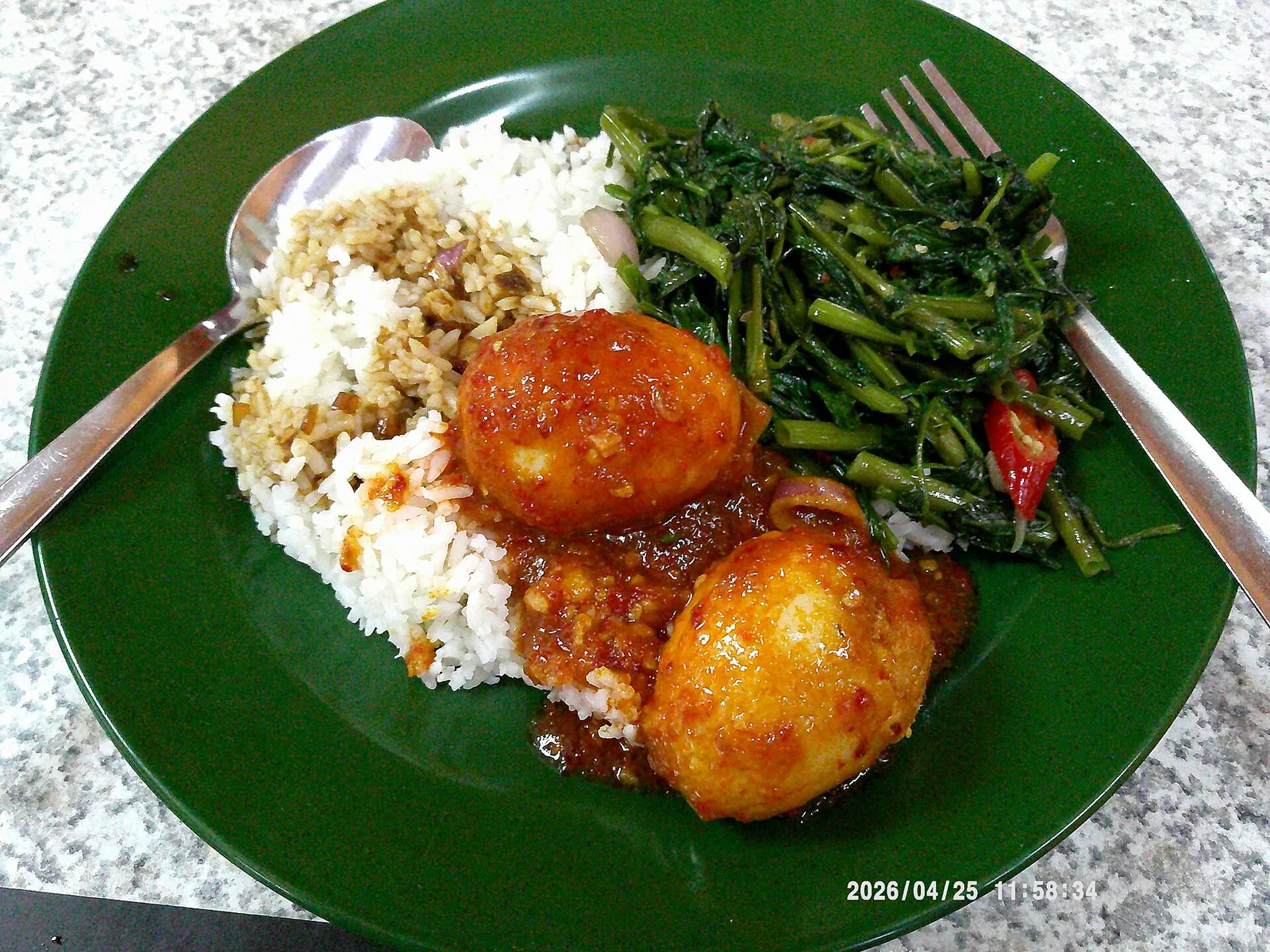
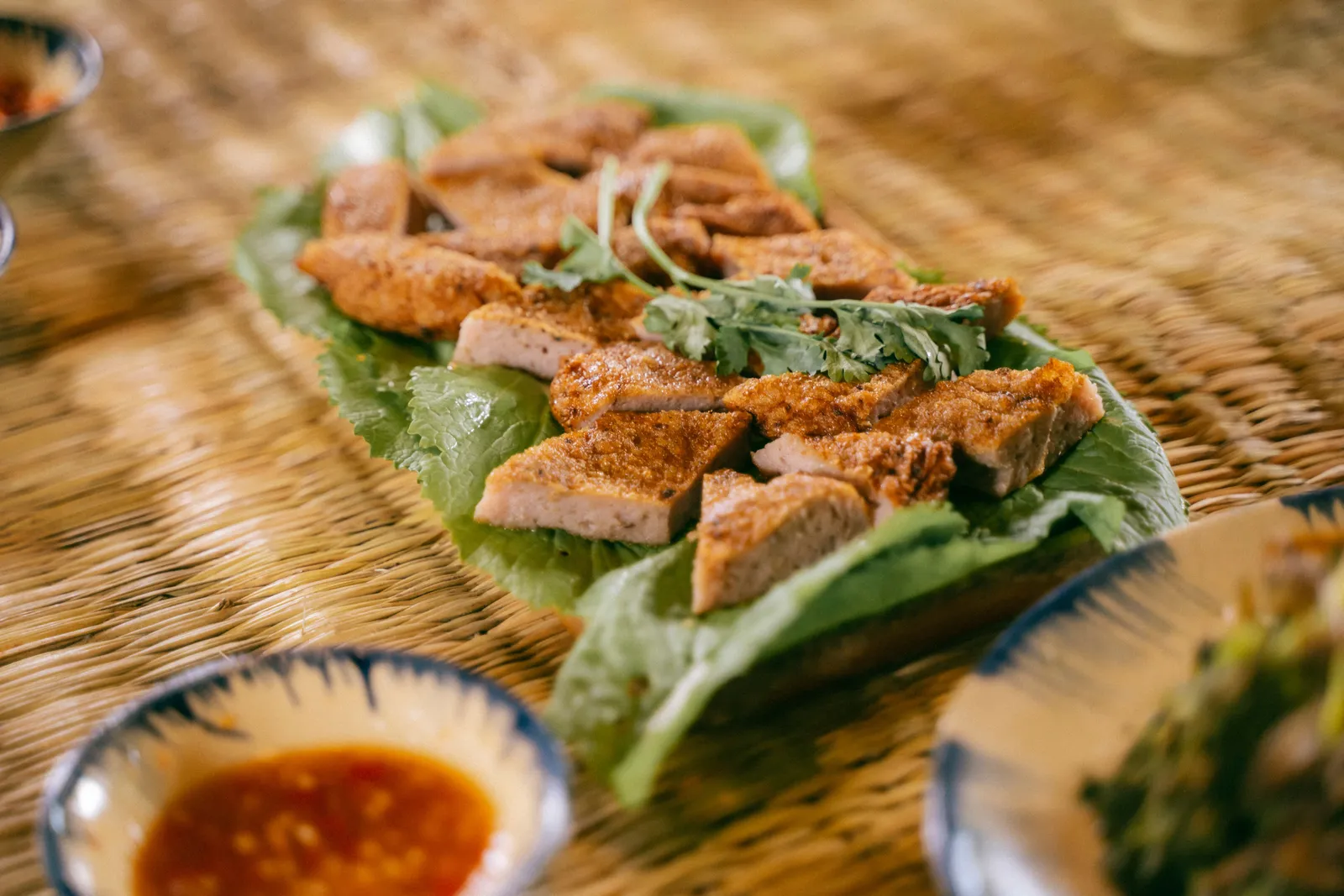
Start with satay: chicken, pork or, in Balinese form, sate lilit, minced spiced meat wrapped around a lemongrass stalk and grilled. Then a bowl of bakso, meatball soup with noodles, or soto ayam, a turmeric chicken soup, both of which are made to order and arrive scalding.
If the market has a babi guling stall, this is a good place to try it, since the evening version is sold by the plate and the queue moves fast. Nasi goreng and mie goreng, fried rice and noodles, are cooked in front of you on a hot wok and are hard to get wrong. Finish at a sweet stall with laklak, green rice pancakes with grated coconut and palm sugar syrup, or klepon, rice balls with a liquid palm sugar centre.
Vegetarians should ask tanpa terasi, without shrimp paste, and be aware that sambal and many vegetable dishes commonly contain it, and that soup stocks are usually meat-based.
Practicalities, safety and common sense
Night markets are not a scam environment, but they are crowded, and the ordinary rules from our safety and scams guide apply: keep your phone and wallet in a front pocket or a zipped bag, do not leave a bag hanging on a chair, and be alert around the tightest aisles. Petty theft rather than anything more serious is the realistic risk.
On food safety, the sensible reference is the CDC travellers health page for Indonesia. In practice: eat things grilled, fried or boiled in front of you and served hot, be more careful with food sitting at room temperature and with raw salads and unpeeled fruit, skip tap water, and think about ice in drinks. Carry hand sanitiser, since handwashing options are limited. Wear closed shoes, because the ground gets wet and slippery near the drinks and seafood stalls.
Finally, arrange your ride home before you are standing outside at ten in the evening. Ride-hailing pickup is restricted or awkward at some market entrances, and a pre-booked driver waiting nearby removes the only genuinely annoying part of the whole evening.