Bali has a genuine claim to being one of the easiest places on earth to eat plant-based. Ubud and Canggu between them hold a density of vegan cafes that most European capitals cannot match, and everyday Balinese cooking leans heavily on tempeh, tofu, rice and vegetables long before anyone thought to market it. But there is a trap that catches a lot of travellers in their first week: a plate of vegetables at a warung is very frequently not vegetarian, because of a fermented shrimp paste called terasi and a habit of building stock from chicken. Here is how to eat well without either compromising or accidentally giving up.
The two Balis, and why your budget depends on which one you eat in
There are effectively two plant-based scenes on this island and they barely overlap.
The first is the dedicated cafe scene: raw food, smoothie bowls, cashew cheese, tempeh burgers, oat flat whites, English menus, allergen icons. It is concentrated in Ubud and Canggu, it is genuinely excellent, and it is priced accordingly, sitting several times above local food and close to European cafe rates. Our cafe guide covers this end in detail.
The second is ordinary Balinese food, covered across our food guide, which is plant-heavy by default and costs a low band of a few tens of thousands of rupiah for a full plate at a warung. It requires a bit of navigation, which is what most of this article is about.
Travellers who eat exclusively at the first end are the ones who go home saying Bali has become expensive. Alternating between the two is the difference between a comfortable food budget and an uncomfortable one, and it also means you actually eat Balinese food rather than international wellness food that happens to be served in Bali.
The hidden animal products, listed plainly
This is the section worth remembering. None of these are universal, but all are common enough that assuming is unwise.
Terasi is the big one: a pungent fermented shrimp paste used in sambal and stirred into vegetable dishes across Indonesia. A plate of green beans in coconut can contain it and look identical to one that does not. Sambal in particular frequently contains terasi, dried shrimp or fish sauce, and sambal accompanies almost everything.
Chicken stock or chicken powder is the default base for soups and is often added to fried rice and noodles. Nasi goreng, the dish most travellers order first, commonly contains both terasi and chicken stock even in its plain vegetable form.
Egg turns up in the batter used to fry tofu, tempeh and corn fritters, and is often added on top by default. Krupuk crackers, served alongside almost every meal, are sometimes prawn-based rather than rice-based. Kecap manis, the sweet soy sauce, is usually plant-based but not invariably.
The reliable fix is not the word vegetarian, which is often interpreted loosely and may still include chicken or a little shrimp paste. It is naming exclusions: tanpa terasi for without shrimp paste, tanpa daging without meat, tanpa ayam without chicken, tanpa telur without egg, tanpa ikan without fish. Say the ones that matter to you, and say them at the point of ordering.

What to order at a warung
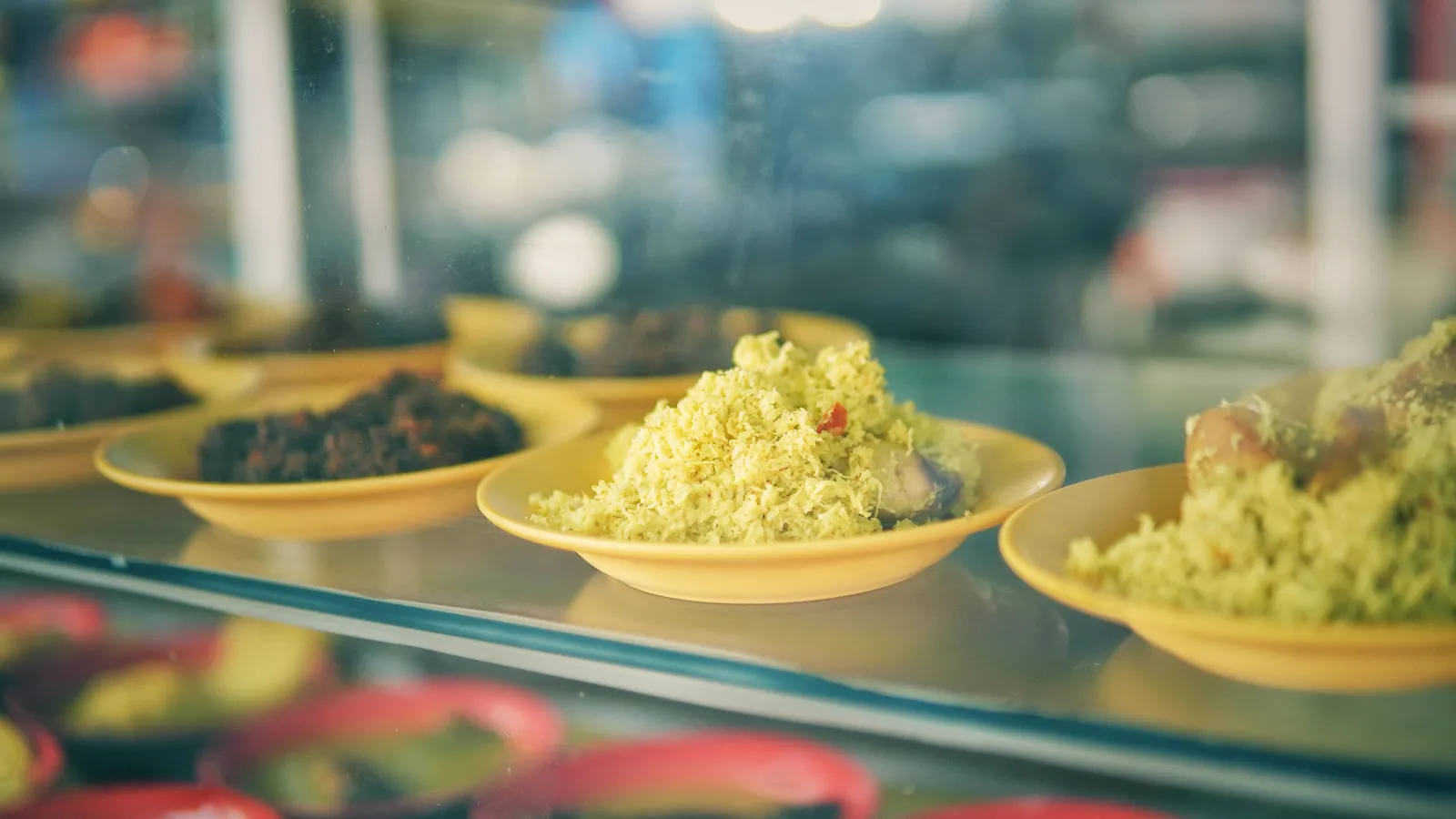
Once you can ask, warungs become straightforward and cheap. The nasi campur system, where you point at dishes in a display case and they are added to a plate of rice, is ideal, because you can simply build an entirely vegetable plate by pointing. Ask about the sambal separately and take it on the side rather than on the rice.
Dishes worth knowing: urap, blanched vegetables tossed with spiced grated coconut; gado-gado, boiled vegetables with peanut sauce, checking that the sauce is terasi-free; cap cay, a simple vegetable stir fry; tempe goreng and tahu goreng, fried tempeh and tofu, checking the batter for egg; sayur lodeh, vegetables in coconut milk; tumis kangkung, stir-fried water spinach; and pisang goreng, fried banana, for afterwards.
Tempeh deserves particular attention. It is Indonesian in origin, it is everywhere, it is fresh rather than vacuum-packed, and it is served in a dozen preparations from sweet-soy braised to crisp-fried with chilli. It is the single best argument for eating local rather than at a cafe.
Learn to cook it yourselfBalinese cooking classes routinely run plant-based versions, and you leave knowing exactly what goes in the sambalUbud and Canggu, and how they differ
Ubud is the older plant-based hub, tied to the yoga and retreat scene, and its style leans towards raw food, ayurvedic plates, juices and quiet garden cafes. It is also the easiest place on the island to eat entirely plant-based without ever having a conversation about it, and it sits within easy reach of the rice terraces and temples covered in our Ubud guide.
Canggu is younger, louder and more Western in its food: plant-based burgers, tacos, bowls, brunch, specialty coffee. It also has the fastest turnover of any food scene in Bali, which brings a practical warning.
Do not trust a two-year-old article, or a review listing, on whether a specific restaurant is fully vegan. Kitchens change hands, menus get widened to include fish or eggs, and places close outright. Read the current menu when you arrive, and if somewhere describes itself as vegetarian rather than vegan, ask specifically about dairy, eggs and honey. This is not paranoia, it is just how fast Canggu moves.

Elsewhere on the island
Outside the two hubs it takes slightly more effort but is rarely difficult. Seminyak and Sanur both have dedicated plant-based places and plenty of restaurants with a clear vegetarian section. In the north and west, in Amed, Munduk, Lovina and the villages, dedicated vegan restaurants thin out, but tempeh, tofu, rice and vegetables are on every warung display and the exclusion phrases work exactly as well there.
The one thing to plan for is long travel days and remote areas, where the realistic options are a warung plate or nothing. Carrying fruit and a few snacks removes the problem entirely, and Balinese fruit, from snake fruit to mangosteen to rambutan, is worth eating on its own terms.
A note on wellness marketing
Bali’s plant-based scene sits inside a much larger wellness industry, and a certain amount of what gets published about it, including confident-sounding statistics about mood, clarity and health outcomes, originates in operator surveys and retreat marketing rather than research. Treat the numbers on a retreat’s website as advertising.
The genuinely good reasons to eat this way here need no statistics: the produce is excellent and grown nearby, tempeh is better than anywhere else you will eat it, and it costs very little if you spend at least some of your meals pointing at a display case rather than ordering a bowl with a name.