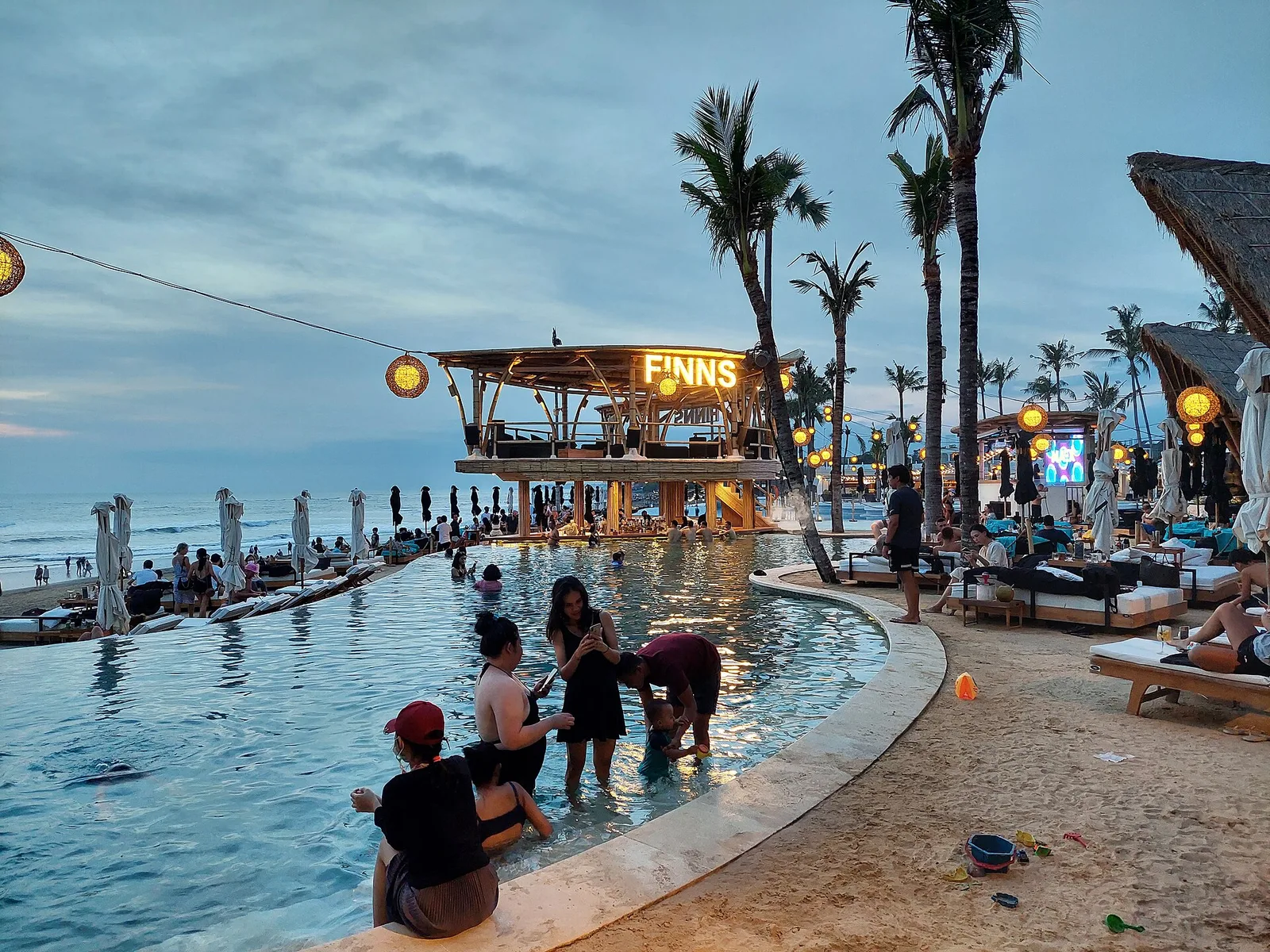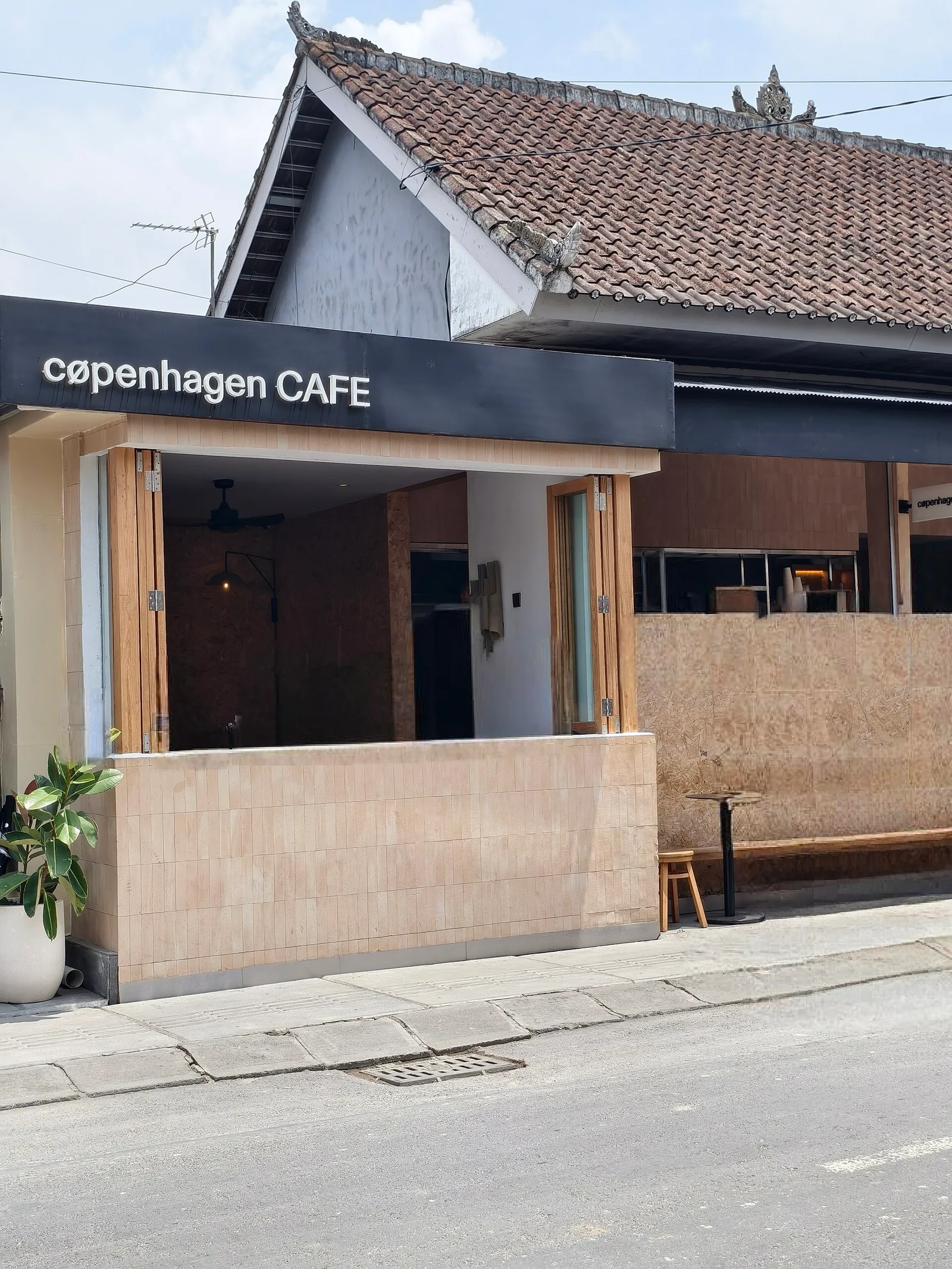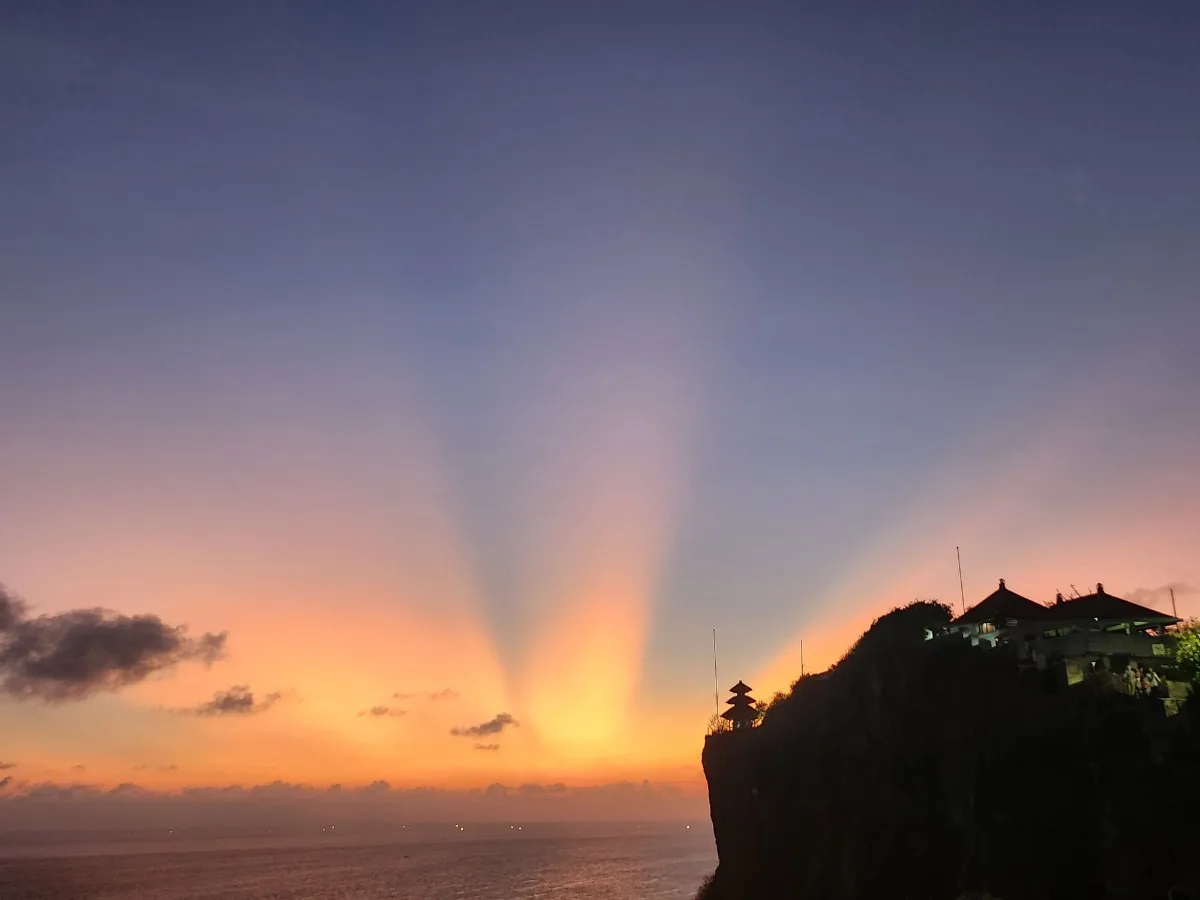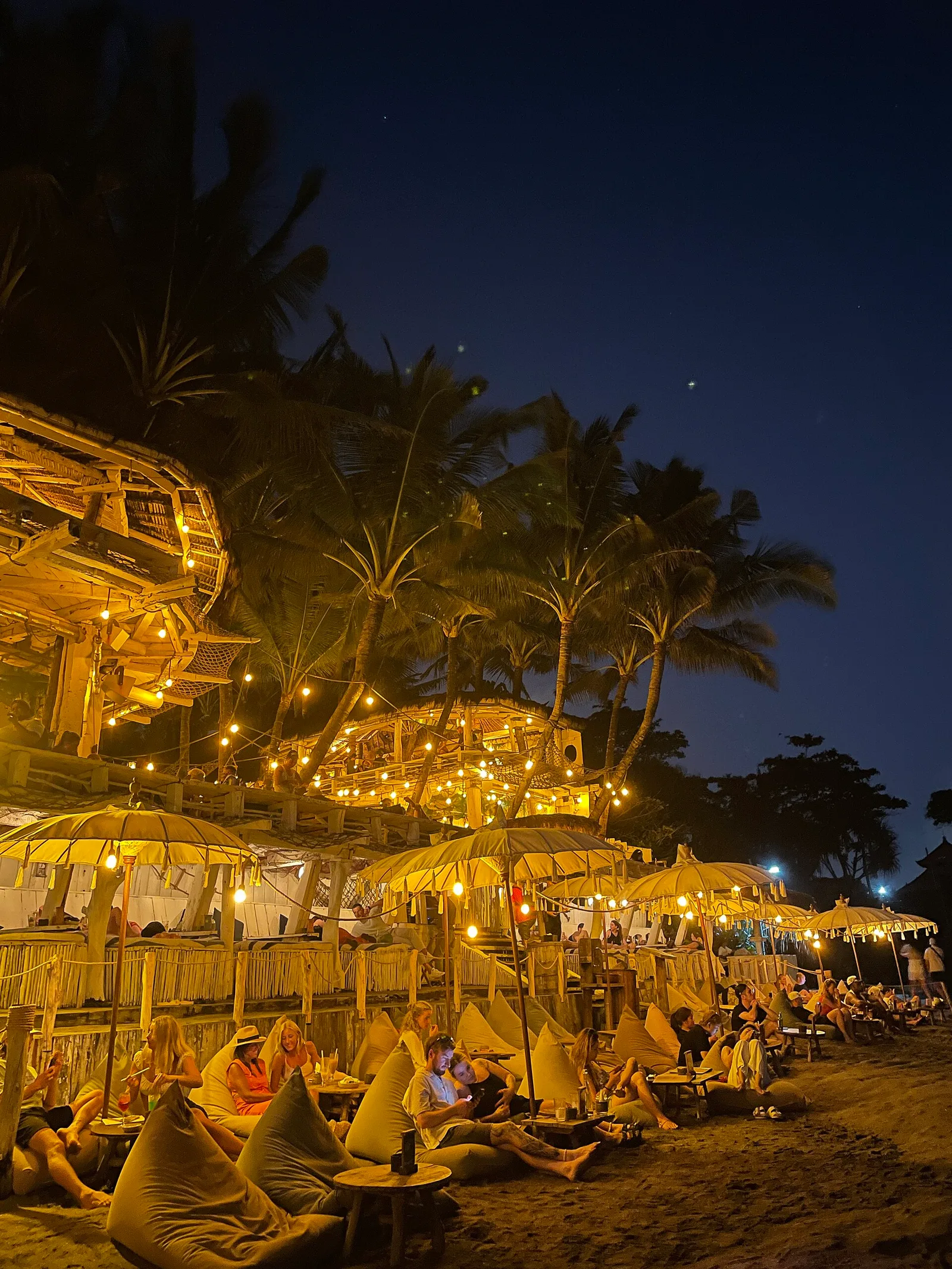
Bali does not have one nightlife scene, it has five or six that happen to share an island, and the gap between them is wider than most first time visitors expect. The mistake is booking accommodation for the beach and then discovering that the night you wanted is forty slow minutes away in traffic. This guide compares the areas rather than listing venues, because venue lists in Bali go stale within a season. For the daytime end of the same story, our beach club guide covers the sunset product specifically.
Canggu: the current centre of gravity
Canggu is where a large share of Bali’s younger visitors now go out, and it has the most distinctive character of the southern areas. The scene is built around surf culture and the remote working crowd, which means the dress code is loose, the music leans towards house and live sets rather than commercial club playlists, and the crowd skews international and repeat visiting rather than package holiday.
Practically, the appeal is that a lot of it is walkable or a very short ride apart. The bar strips run along the main roads inland from the beach, and an evening can move from a sunset drink to dinner to a late bar without ever getting into a car for long. Prices sit between Kuta and Seminyak.
The honest downside is congestion. Canggu’s growth has outpaced its road network, and the narrow lanes that were charming five years ago now carry far more traffic than they were built for. Airport transfers are the clearest illustration: the run is short in distance but widely reported to stretch towards ninety minutes at peak times, against a much quicker trip late at night. Our Canggu guide covers how the sub areas differ and where it pays to be based.
Seminyak: the polished version
Seminyak is the grown up option, and the difference shows in the drinks. This is where you find the serious cocktail bars, the restaurants worth booking, and the beach clubs with a dress code that means something. The crowd is older on average and spending more, and the night tends to run through dinner into a bar rather than starting at eleven.
It is also the easiest area to have a good night without much planning, because the density of decent venues within a walkable stretch is high and the taxi and ride hailing situation is more straightforward than in Canggu’s back lanes. If your ideal evening is a long dinner, two well made cocktails and a walk back to the hotel, this is the area. Our Seminyak guide covers where the strips sit relative to each other.
The trade off is price. Seminyak is the most expensive of the southern areas for both drinks and accommodation, and it has less of the spontaneous, wander into something feel that Canggu still has.
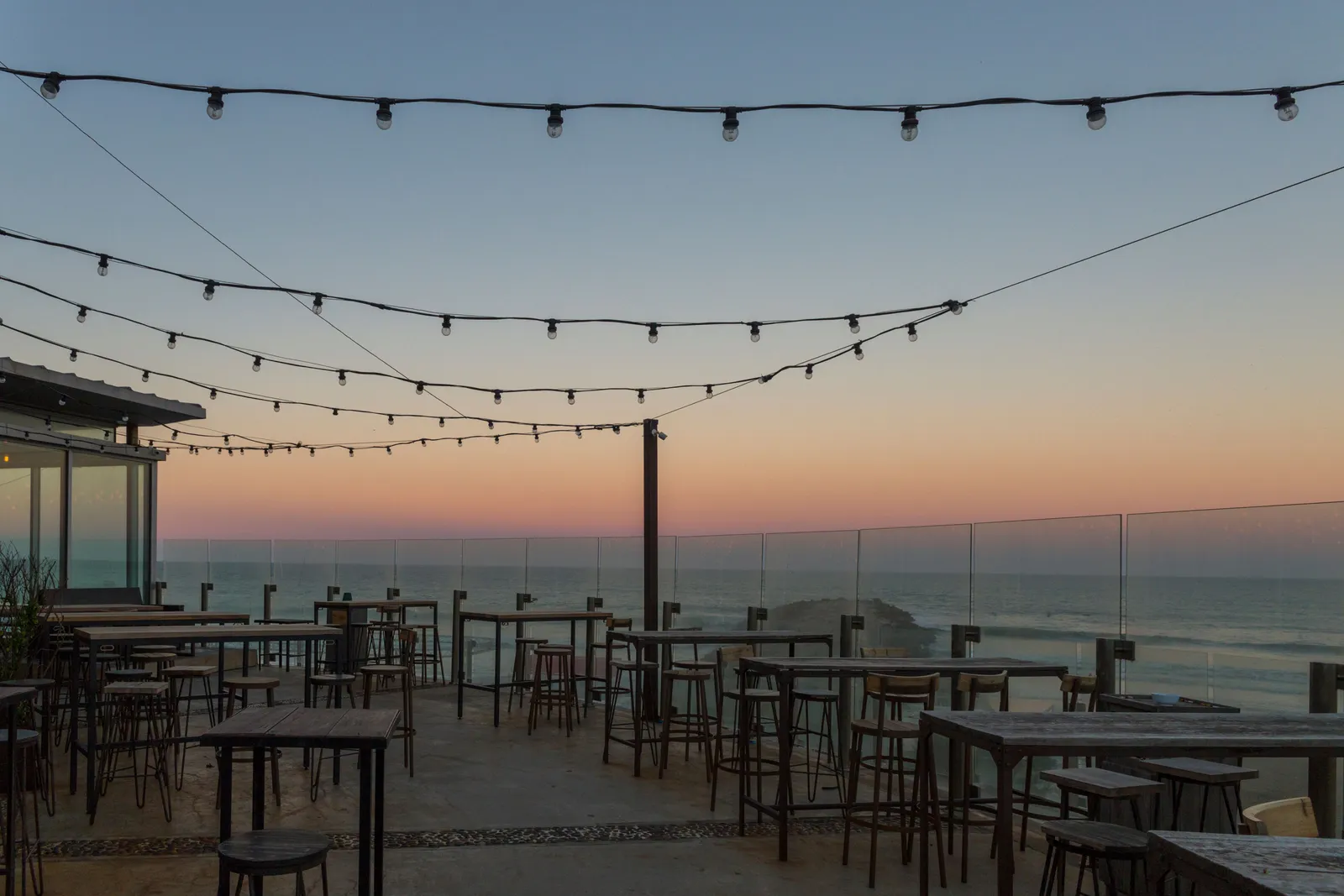
Kuta and Legian: cheap, loud, still standing
Kuta’s reputation preceded it for decades and it has not entirely lived up to it recently, but the fundamentals are unchanged: this is the cheapest and loudest place to go out in Bali. The strip along Legian Street carries a high concentration of bars with drinks deals, live cover bands, large capacity clubs and the late opening venues that run when everything else has closed.
If your priority is volume and price rather than atmosphere, it works. If you want a considered cocktail, it does not. The area is also the one where the ordinary nightlife annoyances concentrate, from aggressive touts to overpriced taxis and the various approaches covered in our safety writing, so it rewards the usual sense.
What has genuinely changed is that Kuta is no longer the default. A decade ago most visitors going out at night went here; now it is one option among several, and a substantial share of visitors never set foot in it.
Book the transfer rather than gambling on the night trafficAirport to Canggu can stretch towards ninety minutes at peak, and a prebooked driver removes the negotiationUbud: an evening, not a night
Ubud is not a party town and does not pretend to be. The evening here is a long dinner, live gamelan or a traditional dance performance, perhaps a jazz bar or a wine list, and then bed. Most venues are closed well before midnight and the town is genuinely quiet afterwards.
That is a feature rather than a shortcoming. If you are in Bali for the inland side of the island, the mismatch is only a problem if you booked Ubud expecting a night out. There is a small cluster of live music bars and a handful of late venues, but the scale is a few places rather than a district, and anyone whose trip is built around nightlife should not base themselves here.
Uluwatu and the Bukit: sunsets on a cliff
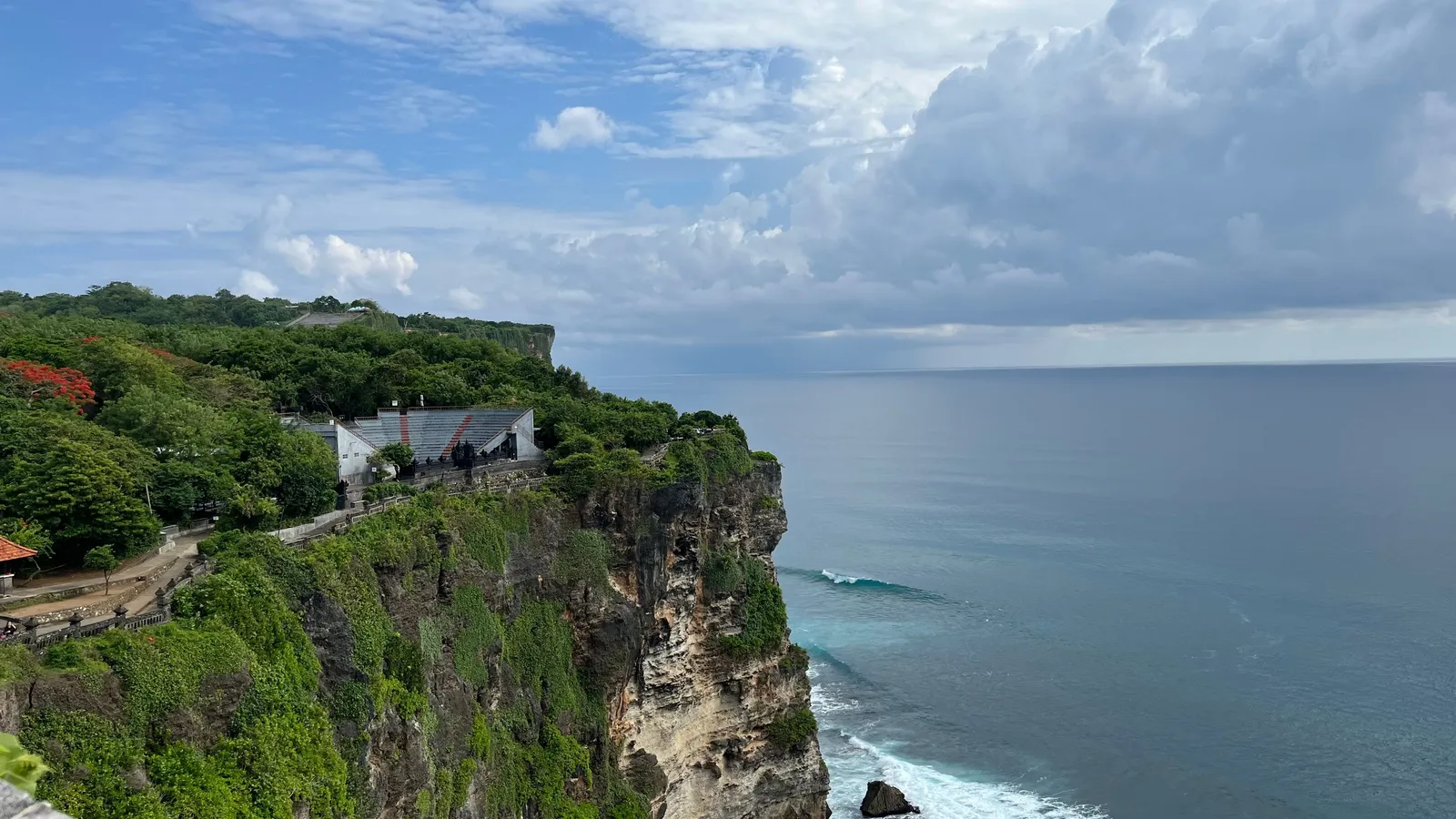
The Bukit peninsula in the far south has a scene built almost entirely around sunset on a clifftop, which is a different product from a night out. The famous venues here are spectacular in the two hours around sunset and much quieter afterwards, and they are spread far apart along a peninsula with poor road links and no walkable centre.
Uluwatu works brilliantly for one memorable evening built around a specific booking, especially combined with the clifftop temple and its dance performance. It works badly as a base for a week of going out, because every venue is a drive and the drive back to the southern strip at night is long.
How to actually choose
Two practical rules cover most decisions.
First, pick the area, then book the accommodation, rather than the other way round. The scenes are different enough that the wrong choice cannot be fixed by travelling, and travelling between them at night in Bali traffic is slow, expensive and irritating enough that most people simply stop bothering after the second attempt.
Second, do not build a night around a specific venue you read about. Bali’s bar and club scene turns over faster than almost anywhere: places close, rebrand, change nights and move, and any list you read is a snapshot. What is stable is the character of each area, which is why this guide is written that way.
On timing: beach clubs run through the day and fade in the evening, bars pick up from around nine, and the late clubs concentrated in Kuta, Legian and Seminyak carry on into the small hours. Closing times differ by venue and there is no single island wide rule, so check the specific place. The exception every visitor should know about is Nyepi, the Balinese day of silence, when the entire island shuts down completely, including the airport, and there is no nightlife of any kind. Check the date before you book if your trip falls in that window.