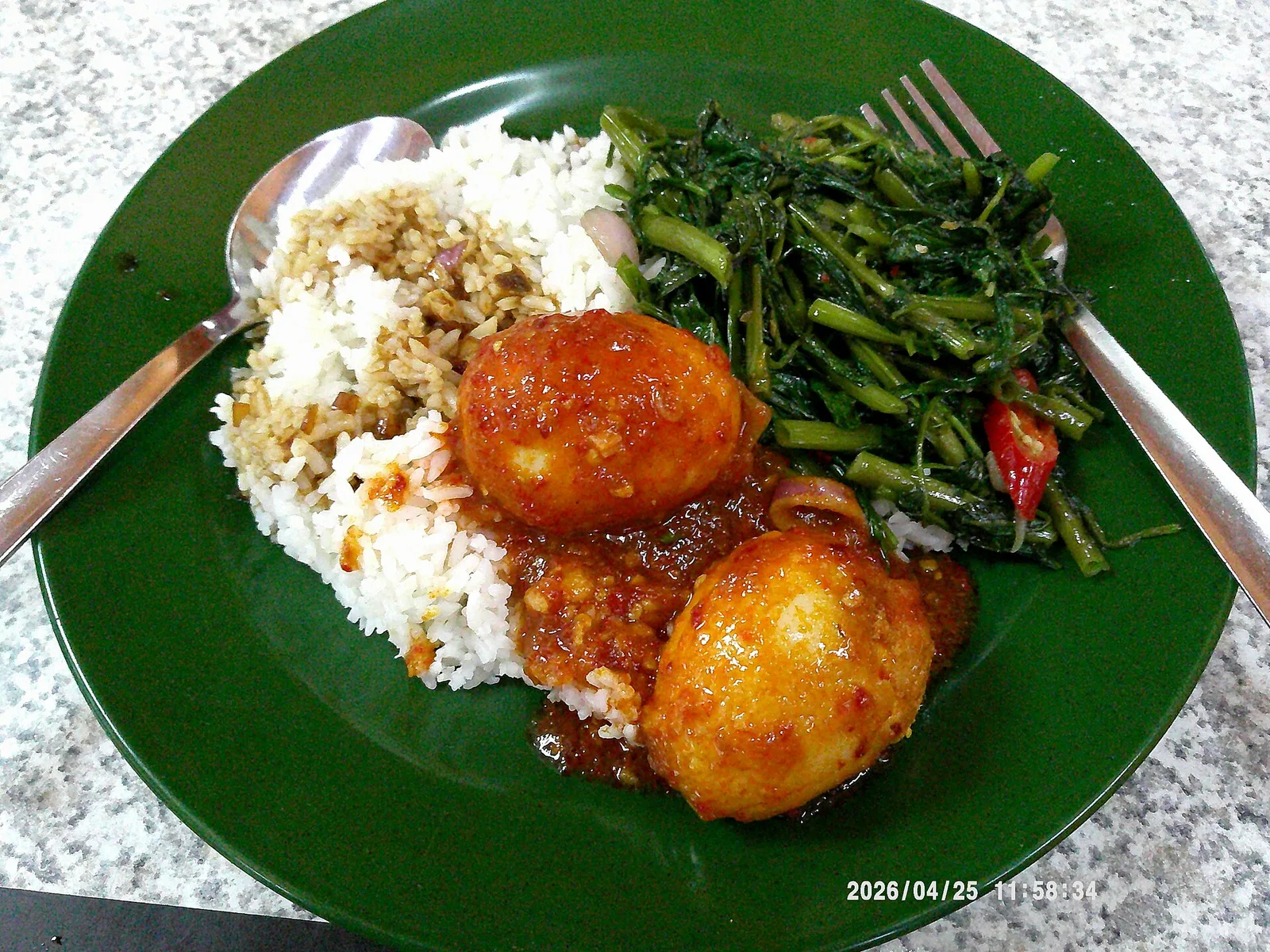
Eating is one of the great pleasures of Bali, and the island makes it easy to do cheaply and gloriously to do well. You can eat a plate of the real thing for a couple of dollars at a family warung, then splurge on a cliffside dinner the same day. The trick is knowing what to order and where to look. Here is the short course.
Balinese food is not Indonesian food
This is the distinction that unlocks the menu. Bali is predominantly Hindu, unlike most of Indonesia, and that single fact shapes the island’s kitchen. Pork is celebrated here, which is why the signature dish is a slow-roasted suckling pig, and why you will find it on menus in a way you would not in Java or Sumatra.
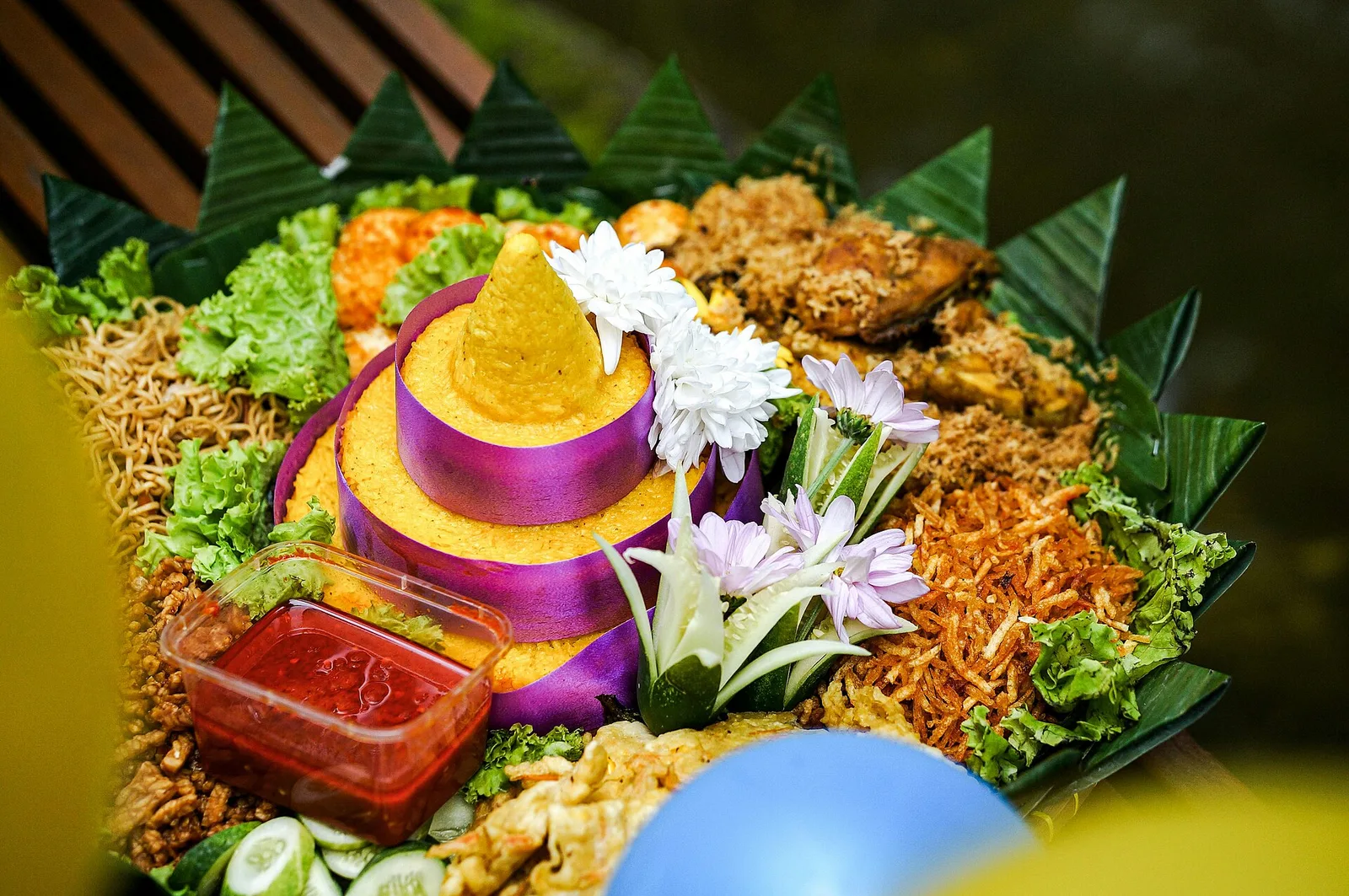
The island also has its own repertoire alongside the national one. Nasi goreng and mie goreng are Indonesian, eaten from one end of the country to the other. Babi guling, lawar, bebek betutu and sate lilit are Balinese, tied to the island’s ceremonies and its own spice paste, base genep, built from turmeric, galangal, chilli, shallot, garlic and shrimp paste. Ordering one of each is the fastest way to understand where you actually are.
Start at the warung
A warung is a small, family-run eatery, and it is the soul of Balinese eating. The star dish is nasi campur, a plate of rice with a rotating cast of small sides: vegetables, tempeh, egg, sambal and a protein you point to. Order it once and you understand the whole cuisine. Warungs are cheap, delicious and everywhere, so if a place is full of locals and grandmothers are cooking, sit down.
Two habits make warung eating easy. First, point rather than read: many places display the day’s dishes behind glass, and you assemble a plate by indicating what you want, which removes the language problem entirely. Second, go at lunchtime, when the food has just been cooked and turnover is highest. A warung that is busy at one o’clock is a good warung, and the same tray at eight in the evening is a different proposition.
The dishes to order
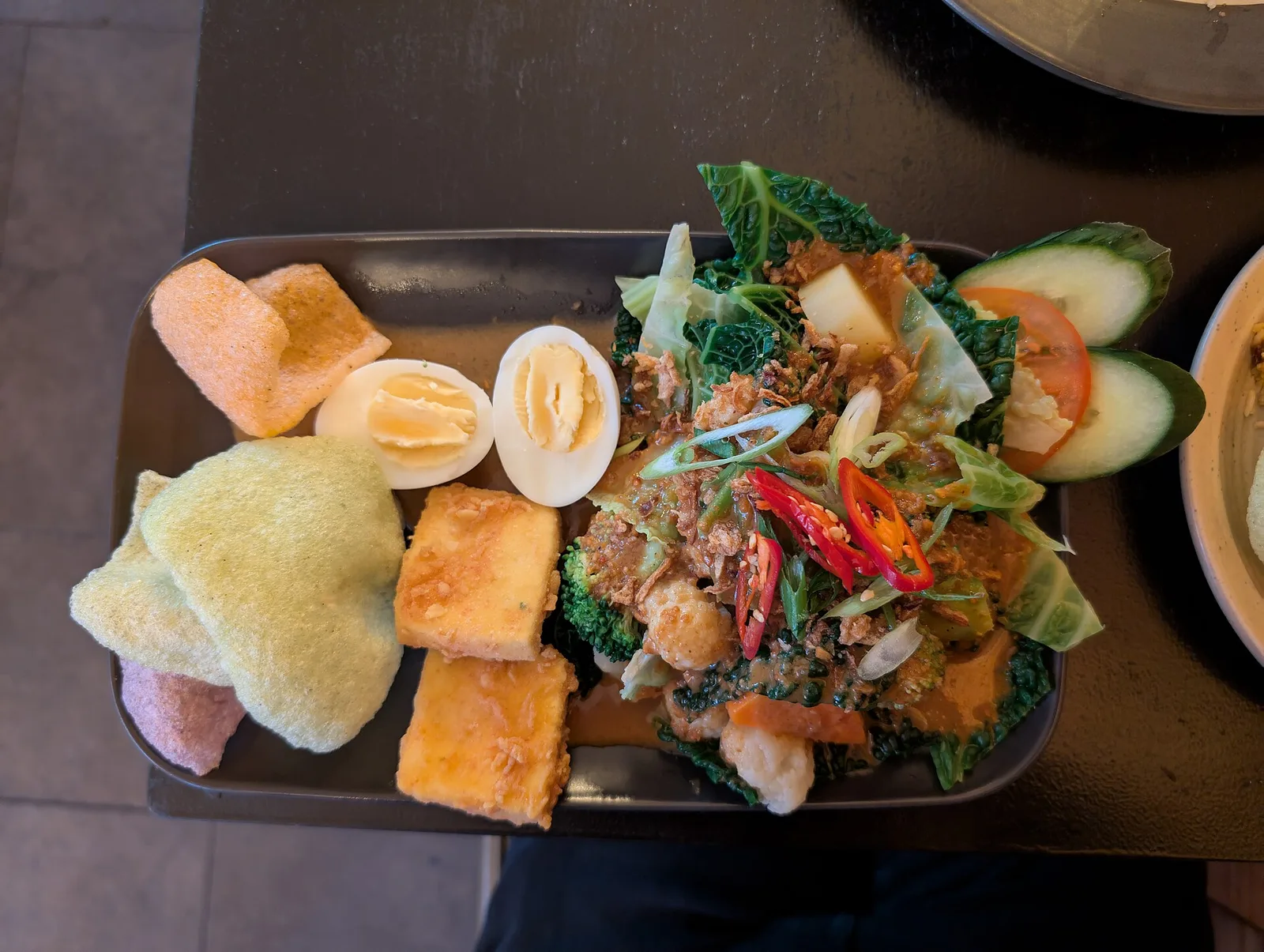
Work through the classics and you will not go wrong. Nasi goreng (fried rice) and mie goreng (fried noodles) are the comfort staples, usually topped with a fried egg. Satay (sate) brings skewers of grilled, marinated meat with peanut sauce. Babi guling, Bali’s famous slow-roasted suckling pig with crackling and spices, is a true island specialty worth seeking out at a dedicated spot. Round it off with gado-gado, a vegetable salad in peanut sauce, and cool down with es campur, a shaved-ice dessert.
Go one layer deeper
Once the classics are ticked off, four more are worth hunting down. Sate lilit is the Balinese satay, minced and spiced and moulded onto lemongrass stalks rather than cubed on a skewer, and it is better than the standard version. Bebek betutu is duck packed with spice paste and slow-cooked for hours, traditionally a ceremonial dish, and it usually has to be ordered in advance, which is why most visitors never eat it.
Lawar is the most Balinese thing on any menu, a fine mix of chopped vegetables, coconut and minced meat with spices; note that traditional versions can include fresh blood, so ask if that matters to you. And for cheap comfort, bakso meatball soup and martabak, a stuffed pancake sold sweet or savoury from evening street carts, are what locals actually eat when they are hungry at ten at night.

The cafe scene
Bali, especially Canggu, Seminyak and Ubud, has become one of the world’s great cafe destinations. Expect gorgeous open-air spaces, excellent local coffee, and menus built around smoothie bowls, avocado toast, fresh juices and hearty vegan and vegetarian plates. This is where the digital-nomad crowd lives, and while it is not traditional Balinese food, the quality is genuinely high and the settings are beautiful. Great for a slow breakfast between beach and pool.
Where you base yourself changes which version of this you get. Canggu leans towards surf-and-brunch culture, long tables and laptops. Ubud leans towards jungle views, plant-based menus and health-focused kitchens. Both are excellent and they are not interchangeable, since your base decides what your everyday breakfast looks like for the whole trip.
Learn to cook the classics yourselfA market-to-table cooking class is the food memory you take homeWhere to eat, from cheap to special
For everyday meals, follow the crowds to the busy warungs, where a full plate rarely costs more than a few dollars. For a mid-range treat, the cafes and casual restaurants of Canggu, Seminyak and Ubud deliver beautiful food in beautiful rooms. And for a splurge, Bali does memorable destination dining: sunset seafood grills on Jimbaran Beach, cliffside restaurants in Uluwatu, and long tasting menus in the hills around Ubud. You do not need to spend much to eat well here, but the occasional splurge is worth it.
One line item to plan for: the smarter the restaurant, the more likely the menu price is not the final price. Government tax and a service charge are commonly added on top, often flagged with two plus signs beside the price. It is entirely legitimate, but it does mean a bill can land above what you expected, and it is the single most common source of confusion at the end of a nice meal.
Coffee, drinks and the water rule
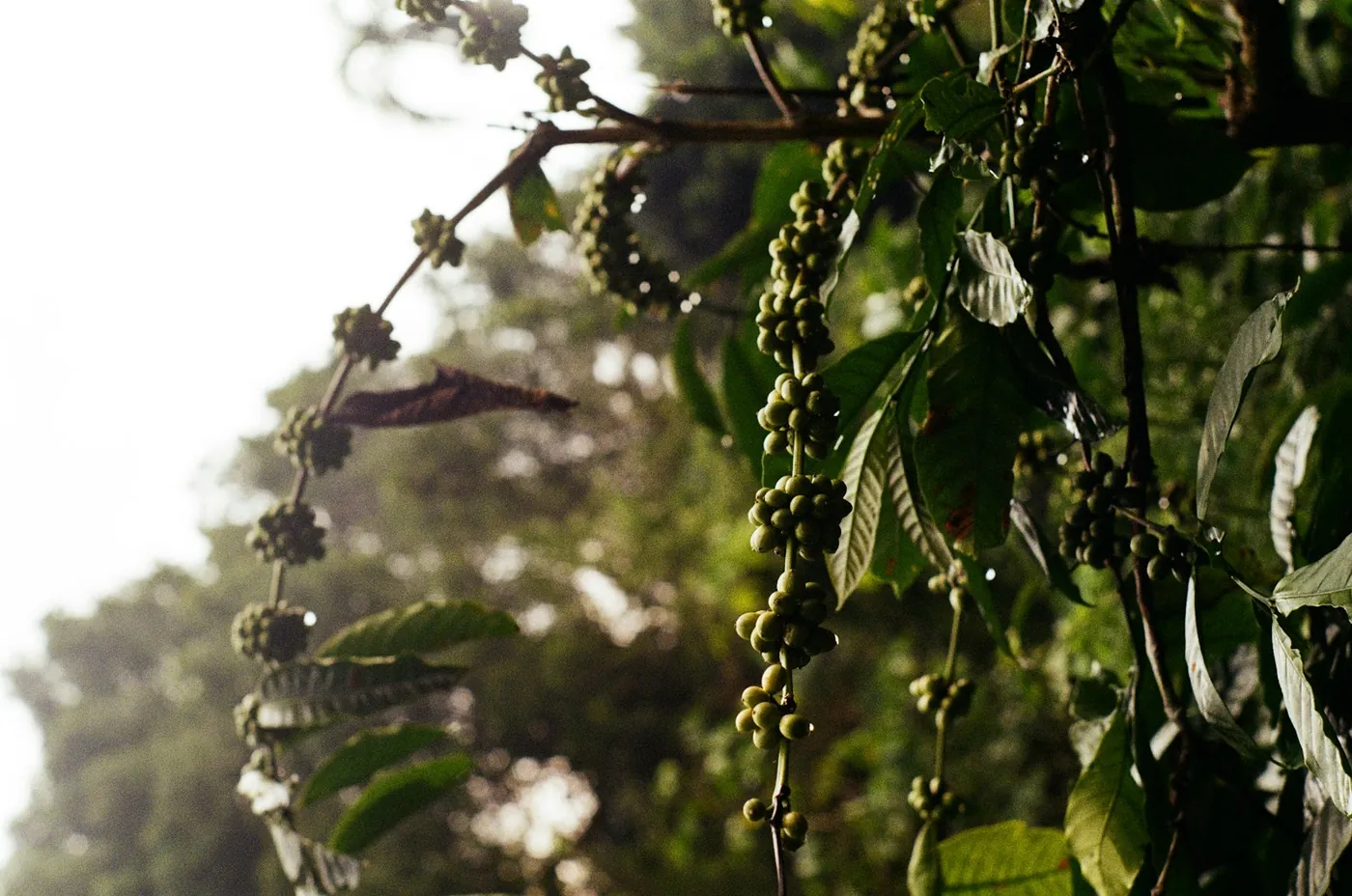
Indonesia grows superb coffee, and Bali cafes take it seriously, so try a local single-origin. The famous luwak coffee is best skipped for animal-welfare reasons. For a fresh, cheap thirst-quencher, order a young coconut straight from the shell. And the golden rule: do not drink the tap water. Stick to sealed bottled or filtered water, use refill stations where you can, and be a little cautious with ice at the smallest roadside stalls, though most tourist areas are fine.
Beyond the flat whites, try kopi tubruk, the traditional preparation where the grounds sit in the cup and you let them settle rather than filtering them. Jamu is the local herbal tonic, usually turmeric-based, sold fresh and worth a glass. Bintang is the everyday beer. And arak, the local spirit, deserves one honest caution: drink it branded and in reputable places, since illegally distilled batches have caused serious poisoning cases in Indonesia. Unmarked bottles and the cheapest free-pour cocktails are where that risk sits.
Eating with dietary needs
Bali is one of the easiest places in Asia to eat vegan or vegetarian, thanks to both the cafe scene and the tempeh-and-tofu heart of local cooking. Say “tanpa daging” for no meat. Spice levels are adjustable, so ask for sambal on the side if you are unsure. And if you have allergies, Bali’s international kitchens are used to the question, so speak up and you will be well looked after.
Three refinements are worth knowing. Strict vegans should ask about shrimp paste and fish sauce, which appear in spice pastes and sambals where you would not expect them, and about the stock in soups. Halal eating needs more attention here than elsewhere in Indonesia precisely because Bali is Hindu and pork is common, so look for places marked halal rather than assuming. And nut allergies are the genuinely hard case, since peanut runs through satay sauce, gado-gado and many dressings, and separation in a small kitchen cannot be relied on. Carry a written explanation in Indonesian and choose kitchens used to the question.
Staying well, and the Bali belly question
Most visitors eat street food happily and never have a problem, and the ones who do usually got unlucky rather than careless. The habits that stack the odds: eat where there is turnover, prefer food cooked to order over dishes sitting warm for hours, be sensible with raw salads and peeled fruit at the smallest stalls, and stick to the water rule without exception, including for brushing your teeth if you want to be thorough.
If something does go wrong, it is usually a day of misery rather than a medical event, and pharmacies here are widespread and helpful. Know in advance how to get help for anything more serious: our guide to emergency numbers in Bali covers who to call and what to expect, which is a much better thing to read at home than at three in the morning.
Markets, temples and eating around ceremonies
Two food experiences are worth building a morning around. The markets open very early and are largely finished by the time most visitors surface, so a market walk is a dawn activity, and it is the best possible start to a cooking class. Expect spices, palm sugar, mounds of chilli, and produce you will not recognise.
The other is the connection between food and ceremony, which is closer here than almost anywhere. Offerings appear everywhere, temple festivals reshape the calendar, and the great Balinese dishes were ceremonial before they were restaurant items. Our guide to Bali’s temples covers the etiquette side of that, including the small woven offerings on pavements that you step around rather than over. Be aware too that during Nyepi, the island’s day of silence, everything closes completely, restaurants included, which is worth checking against your dates.
Etiquette and paying
A few small things smooth every meal. Eat and pass things with your right hand, since the left is considered unclean; if you are eating by hand, that matters more than it sounds. Tipping is not obligatory and is appreciated, and note that a service charge on the bill does not necessarily reach the staff. Small warungs and market stalls are cash, while cafes and restaurants take cards. The QR wallets you will see everyone else scanning are a local system that generally needs an Indonesian bank account or phone number, so treat cards as the convenience and notes as the default, and carry them for the places worth eating at most.
The short version
Eat at warungs for the real thing, order nasi campur, satay and babi guling, ask a day ahead for bebek betutu, treat yourself to the cafe scene for breakfast, and splurge once on a sunset seafood grill. Remember that Balinese food is not Indonesian food, watch for the tax and service charge on smarter bills, take peanut allergies seriously, drink young coconuts, respect the water rule, and take a cooking class so you can bring a taste of Bali home. Do that, and the island will feed you very, very well.
And for the drink the island is famous and slightly infamous for, our guide to Balinese coffee culture covers the plantations and the tourist trap version.
What are you most looking forward to eating, the warung plate or the cliffside splurge?