Bali is often called the Island of a Thousand Temples, and the count is closer to tens of thousands. They are not museums but living places of worship, woven into daily life, and visiting them well means seeing something beautiful and treating it with respect. Here are the temples worth your time, and how to visit them the right way.
What a Balinese temple actually is
A pura is not a building you go inside, it is a walled compound open to the sky, usually laid out in three courtyards that grow progressively more sacred as you move inward. The outer one is social space, the middle one holds pavilions for preparation, and the innermost holds the shrines, which is why visitors are often welcome in the first two and not the third.
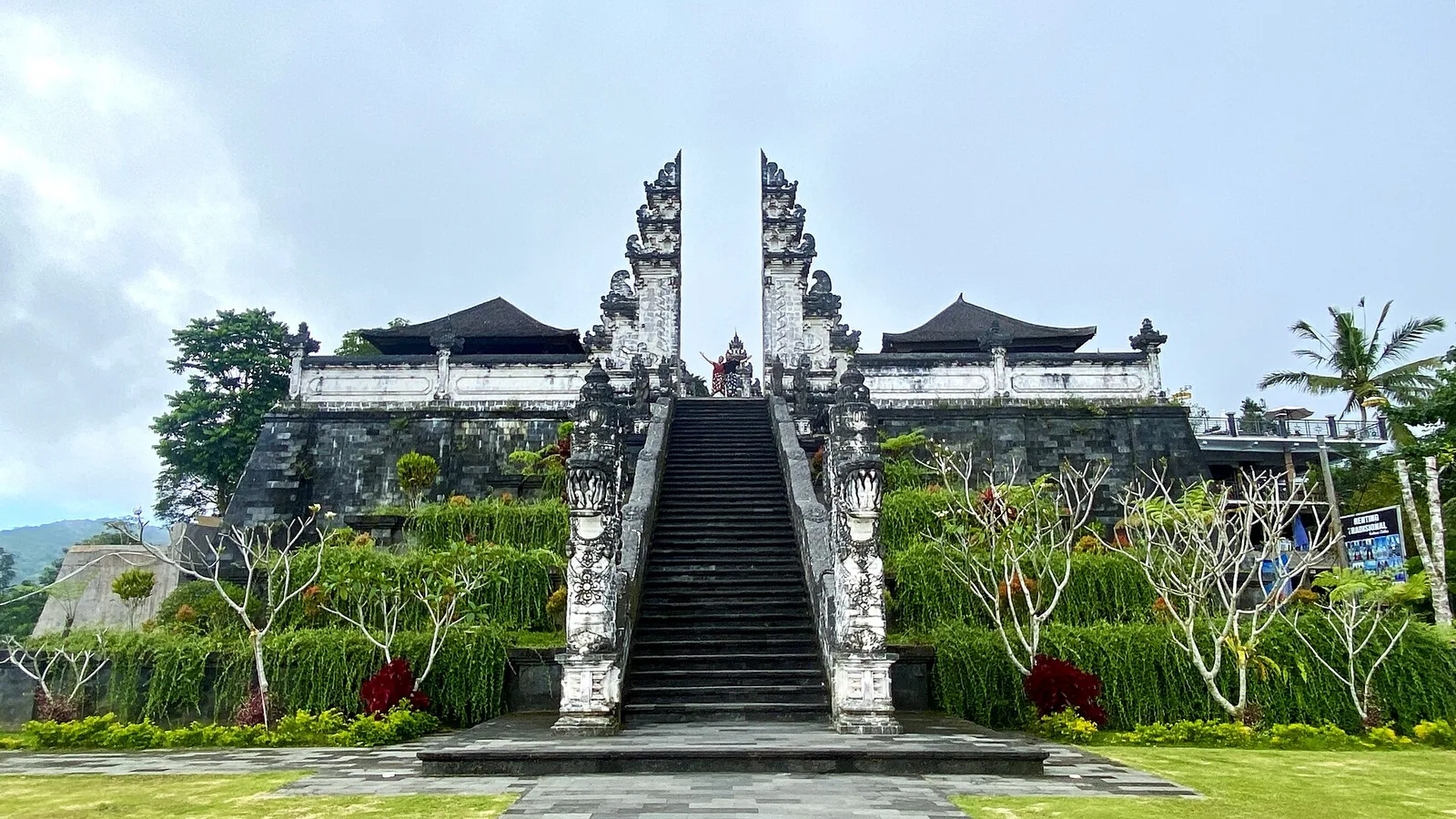
The signature structure is the meru, a slender tower of stacked thatched roofs, always an odd number, with more tiers for more important deities. You will also meet the candi bentar, the split gate that looks like a single tower cut in half, which is the shape the Gates of Heaven photograph made famous. Balinese Hinduism has its own character, blended with ancestor veneration and older local belief, which is why the atmosphere here differs from temples anywhere else in Asia.
Every temple also has an odalan, its own anniversary festival on the Balinese calendar, which comes round far more often than once a year. That is why you can arrive at a quiet village temple and find it full of offerings, gamelan and people in white: not a special event laid on for anyone, just the temple doing what it does.
Uluwatu: cliffs, sunset and the fire dance
Perched on a sheer cliff at the southern tip of the island, Uluwatu (Pura Luhur Uluwatu) is one of Bali’s six key spiritual pillars and one of its most dramatic sights. Come toward the end of the day, when the light turns golden over the ocean, and stay for the nightly Kecak fire dance, a hypnotic chanting performance set against the sunset. Watch your belongings: the resident monkeys are notorious for snatching sunglasses and phones.
Take the monkey warning literally rather than as colour. They are practised, they target sunglasses, hats, phones and anything dangling, and they have learned that a stolen item can be traded back for food. Put loose items away before you walk in rather than after the first attempt. For the dance, arrive well before the start, since seating is open and the good places go early.
Tanah Lot: the sea temple
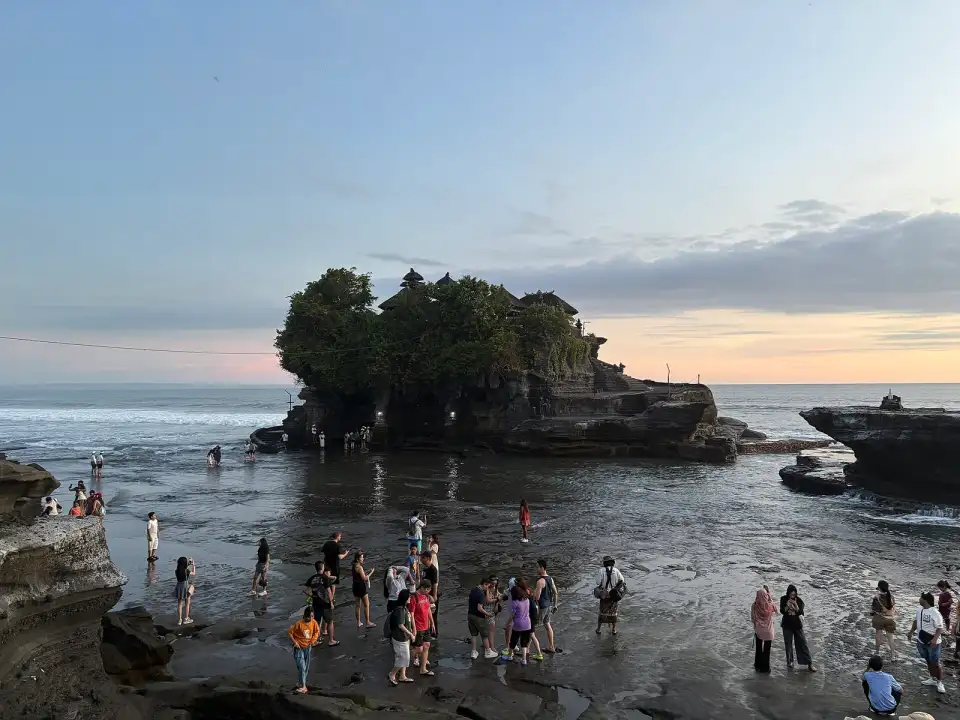
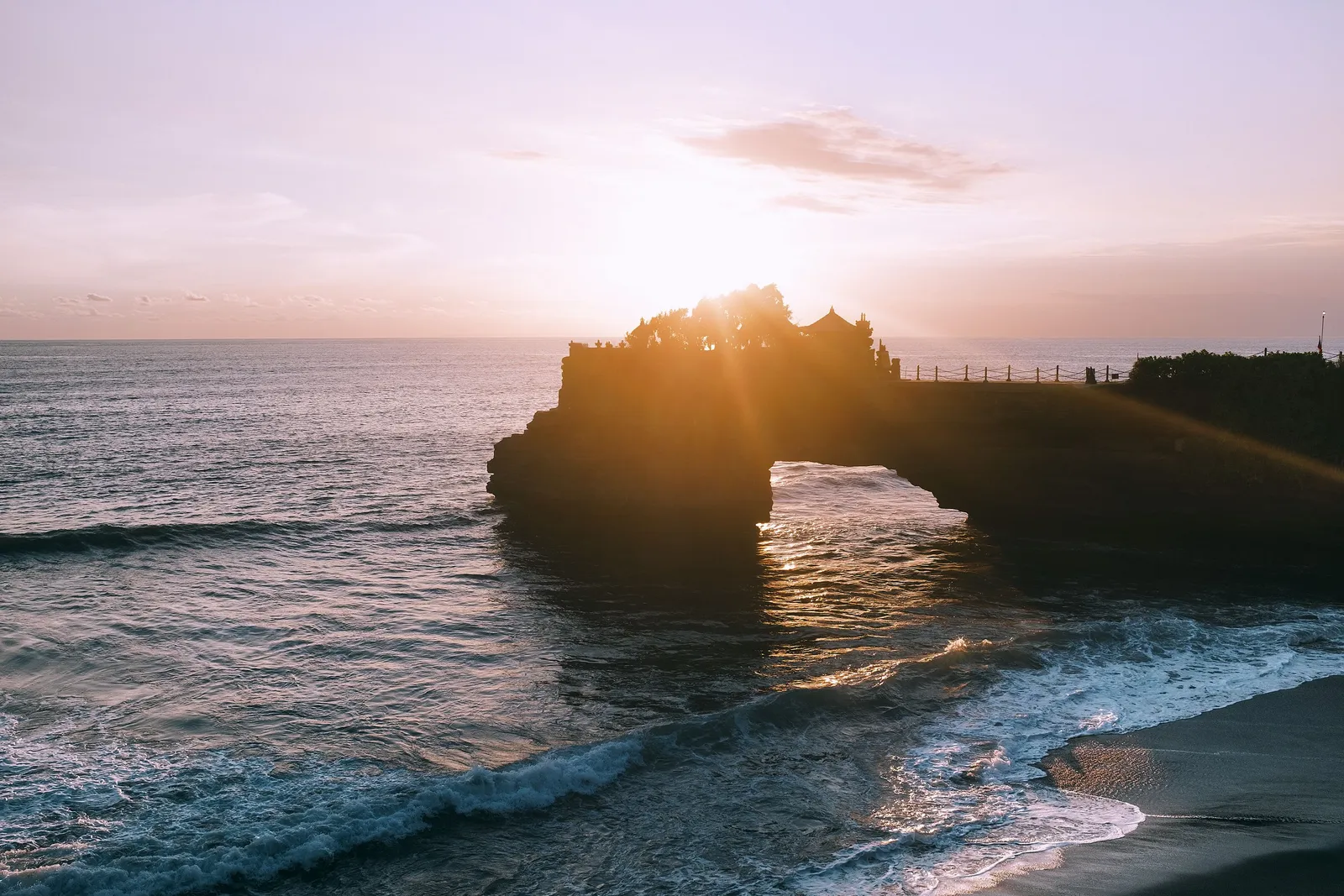
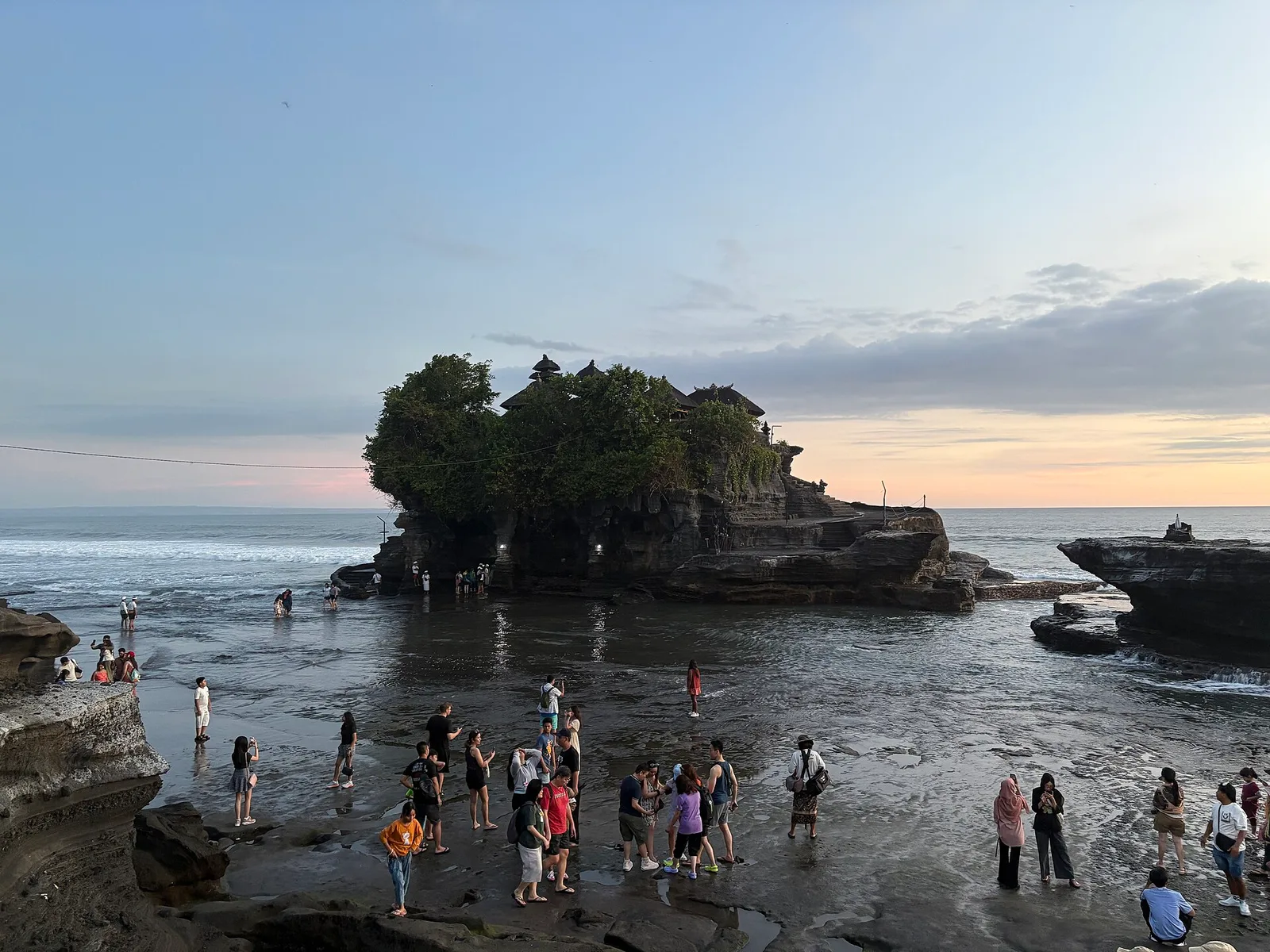
Tanah Lot sits on a rocky outcrop just offshore, surrounded by the sea at high tide and reachable across the sand at low tide. It is Bali’s most photographed temple and a classic sunset spot, so it draws crowds, but the silhouette against a burning sky earns its fame. Check the tide times, arrive before the sunset rush, and wander the clifftop paths for the best angles.
Note that the temple itself is not open to visitors, who view it from the shore and the surrounding paths, so this is a place you photograph rather than enter. That makes the tide the whole game: at low water you can walk out to the base of the rock, and at high water you cannot.
Besakih: the mother temple
On the slopes of Mount Agung, Bali’s holiest volcano, Besakih is the largest and most important temple complex on the island, a sprawling series of shrines climbing the mountainside. It is grand, atmospheric and deeply sacred. Access now runs through a modern visitor centre below the temple, and the single foreign-visitor ticket bundles in a compulsory local guide, sarong and sash hire, and a shuttle up to the main entrance, so you cannot simply wander in alone. Expect to pay noticeably more here than at a small village temple. Go in the morning for clearer mountain views before the afternoon cloud rolls in, and check ahead for major ceremony dates, when parts of the complex close to sightseers.
Let a guide connect the dotsA driver-guide links Besakih, Tirta Empul and the east into one smooth dayTirta Empul: the holy springs
Tirta Empul, near Ubud, is a water temple built around sacred springs, where Balinese Hindus come to perform melukat, a purification ritual, moving under a row of fountains in a spring-fed pool. Respectful visitors can take part, but the rules have tightened: since 2025 anyone entering the water for the ritual must be accompanied by a licensed guide, and you change into a special bathing sarong provided at the temple rather than your ordinary one. Bring a towel and a full change of clothes, follow the order of the fountains, and treat the ritual as the sacred act it is rather than a photo op. Women who are menstruating are asked not to enter the temple at all, a rule that is genuinely observed. It is one of the most moving experiences on the island.
Lempuyang: the Gates of Heaven
High on the eastern slopes, Pura Lempuyang Luhur is famous for its split gate framing distant Mount Agung, the shot known online as the Gates of Heaven. The reflection in the photos comes from a piece of glass held under a phone, not a real lake, and there is usually a long queue for the picture. Manage expectations, but know the setting itself is spectacular, and the full temple involves a long climb up thousands of steps for the devoted.
Two practicalities decide whether this one is worth your morning. The photo queue runs on a numbered ticket system, and in high season the wait can run to hours, which is why the advice is always to arrive early. And the mountain is only visible when the cloud allows, which in practice means the first part of the day, since the view clouds over as the morning goes on. Arriving at eleven for a photograph of a cloud after a two-hour wait is a genuinely common outcome.
The temples the tour buses skip
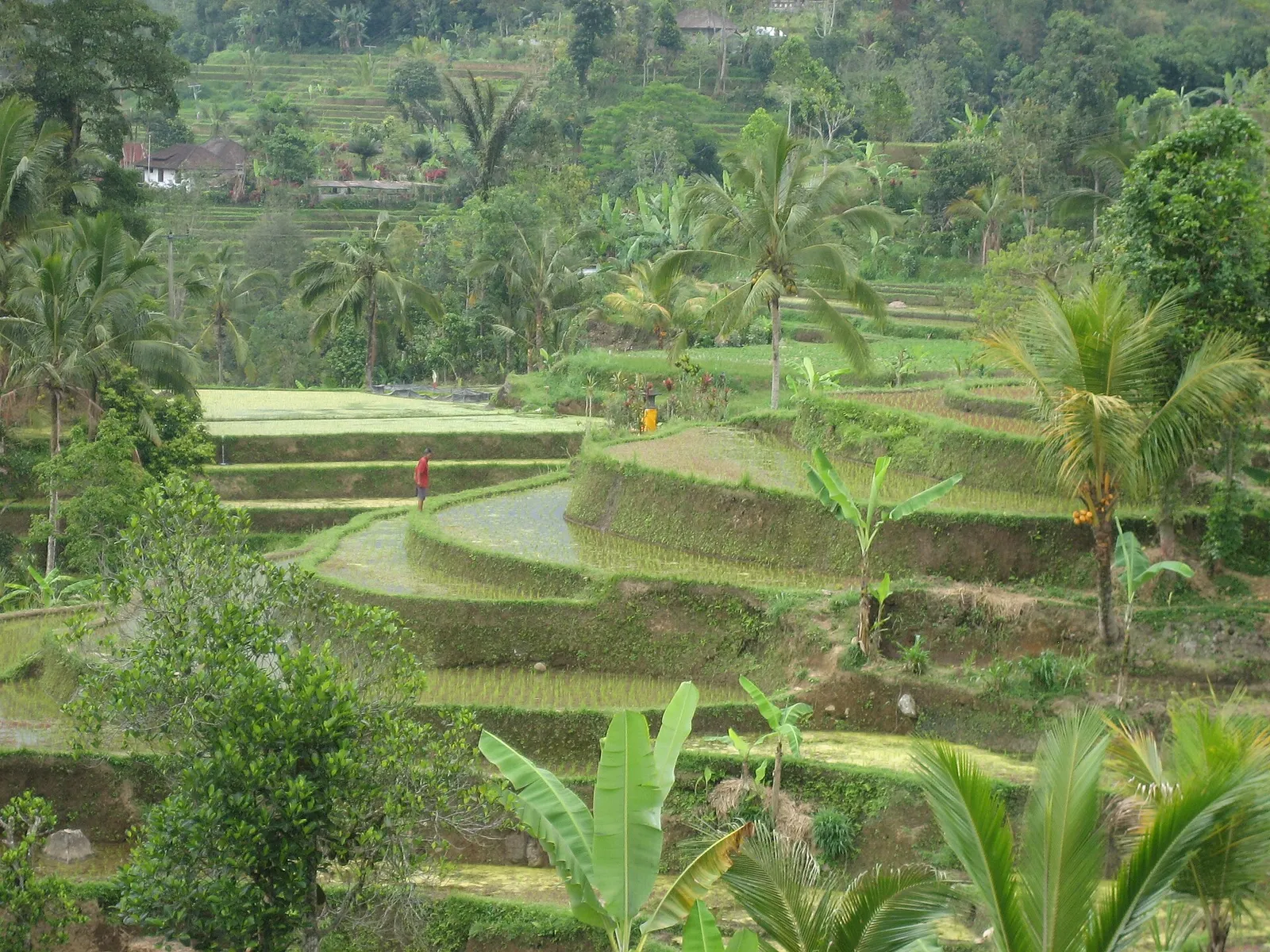
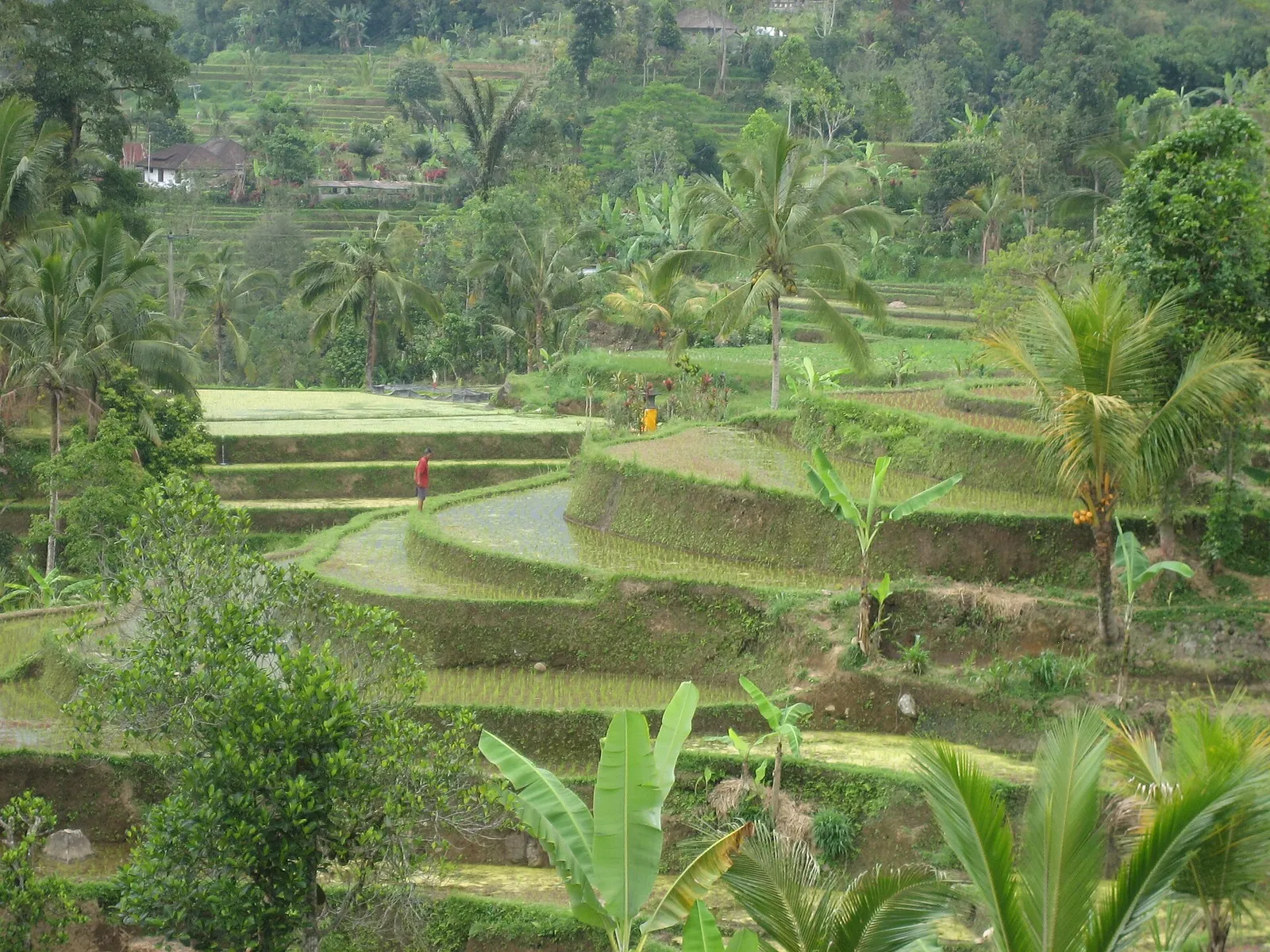
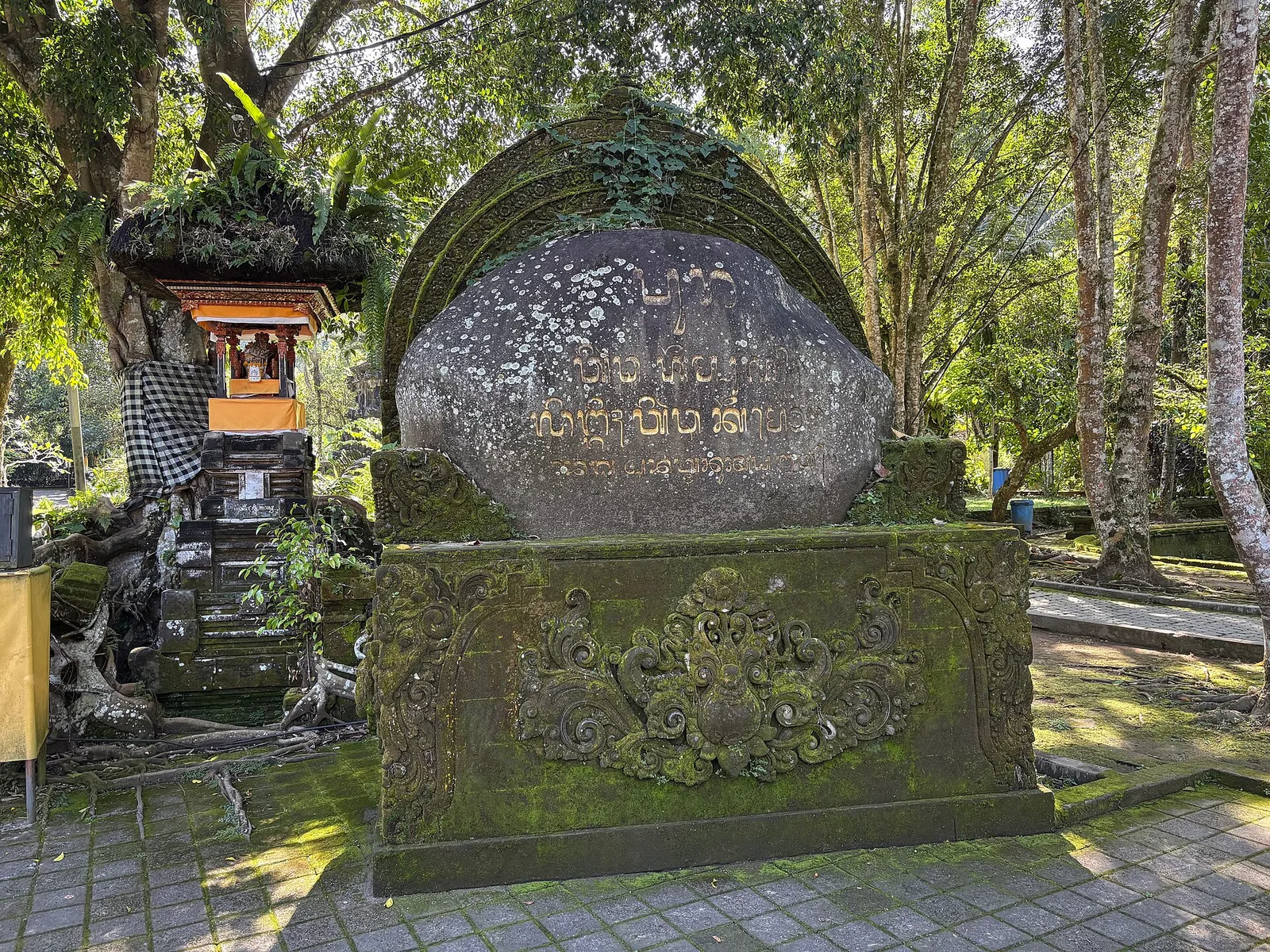
Beyond the famous five, four more are worth building a day around. Ulun Danu Beratan sits on a highland lake with its meru towers apparently floating on the water, cool, misty and quite unlike the coast. Taman Ayun near Mengwi is a serene royal temple in a moat, part of the UNESCO-listed cultural landscape and blessedly uncrowded. Goa Gajah, the Elephant Cave near Ubud, is an ancient carved rock sanctuary with bathing pools. And Gunung Kawi near Tampaksiring hides enormous shrines cut directly into a river gorge, reached down a long flight of steps through rice terraces.
One clarification that saves confusion: Tirta Gangga is a water palace rather than a temple, a former royal garden of pools and stepping stones. It is lovely and it is not a place of worship, so the etiquette is different and the photographs everybody takes there are entirely acceptable.
Temple etiquette: the rules that matter
A temple visit comes with simple, non-negotiable courtesies. Dress modestly: cover shoulders, upper arms and knees, and wear a sarong and sash, almost always provided or rented at the gate. Crop tops, vests and swimwear cover-ups will not get you through the entrance. Step around the offerings, the small palm-leaf baskets of flowers you will see everywhere, never over them. Do not enter if a ceremony is in progress unless invited, do not climb on shrines or sacred trees for photos, and follow signs asking women not to enter certain areas during menstruation, a traditional rule that is genuinely observed. Speak quietly, and let worshippers pass first. Bali’s provincial government has tightened its rules on visitor conduct at sacred sites, and the penalties for serious disrespect now run to fines and deportation, so this is courtesy with consequences attached.
Three more that come up constantly. Do not stand or sit higher than a priest or a shrine, which rules out climbing walls and gates for a better angle. Ask before photographing people at prayer, and accept a no gracefully. And treat drones as not allowed unless you have explicit permission, since flying one over a ceremony is exactly the sort of conduct the new rules were written for.
Planning a temple day that works
Group by geography, not by fame. Uluwatu belongs to a Bukit day that ends with the sunset dance. Tirta Empul, Goa Gajah and Gunung Kawi sit near each other north of Ubud and make one comfortable morning. Besakih and Lempuyang are both east, and both are long drives, so they pair with each other rather than with anything in the south. Tanah Lot is a west-coast sunset, best on the way back from somewhere.
That is also why your base matters more than it seems: a temple day from Ubud looks completely different from one starting on the south coast, and the drive is the difference. Our comparison of Ubud and Canggu covers what each puts within easy reach, which is worth reading before you decide where the temple days fit.
Hire a driver for these days. It is not extravagance, it is the difference between three temples and one, and a good driver will know which entrance to use and when the coaches arrive.
Timing, weather and the festival calendar
The dry season, roughly May to September, gives you the clearest mountain views and the most reliable sunsets, which matters at Lempuyang and Tanah Lot in particular. In the wet months the light can be dramatic and the highland temples spend a lot of the day in cloud. Our month-by-month guide to Bali’s weather sets out what to expect and when.
Two calendar events are worth checking against your dates. Galungan and Kuningan, the great festival cycle, fill the island with tall decorated bamboo poles and bring families to their temples in white; it is a wonderful time to be here and a busy one. Nyepi, the day of silence, shuts everything down completely, airport included, and the effigy parade the night before is one of the most extraordinary things you can witness in Bali. Neither is a reason to change a trip, both are a reason to know in advance.
Bali or Thailand, if temples are the draw?
They are both extraordinary and they are not the same experience. Balinese temples are Hindu, open to the sky, built of dark stone and thatch, and above all still in constant everyday use by the community around them. Thai temples are Buddhist, enclosed, gilded and often monastic, with a different kind of grandeur and a different kind of quiet.
If the appeal is living ritual woven through daily life, Bali is the stronger answer; if it is architectural spectacle and interiors, Thailand has the edge. Our comparison of Bali and Thailand weighs the wider trip, from cost to beaches to how much travelling each involves.
The short version
See Uluwatu for the cliffs and the fire dance, Tanah Lot for the sunset, Besakih for the grandeur, Tirta Empul for the springs, and Lempuyang for the view, then add Ulun Danu Beratan or Taman Ayun when the famous five are done. Two temples a day is plenty, group them by geography, go at opening, hire a driver to link them, dress respectfully with a sarong, step around the offerings, and remember these are living temples first and photo spots second. Do that, and Bali’s spiritual heart will be the part of the trip you remember longest.
Which one are you most drawn to, the clifftop sunset or the holy springs?