Two rice terraces get mentioned constantly in the same breath when people plan a Bali trip: Tegalalang, the green amphitheatre a short drive north of central Ubud, and Jatiluwih, the wider UNESCO-listed valley in the hills of Tabanan, an hour or more further west. They look similar enough in photographs that visitors often assume one will do. They are a genuinely different day out. Tegalalang is the terrace you can fit in on the way back from lunch; Jatiluwih is the terrace you build a morning around. Our guide to Ubud covers the town both are usually reached from, and if quiet countryside rather than a quick photo stop is what you are actually after, our guide to Sidemen is worth reading before you commit a full day to either one.
Tegalalang: convenient, crowded, still worth it
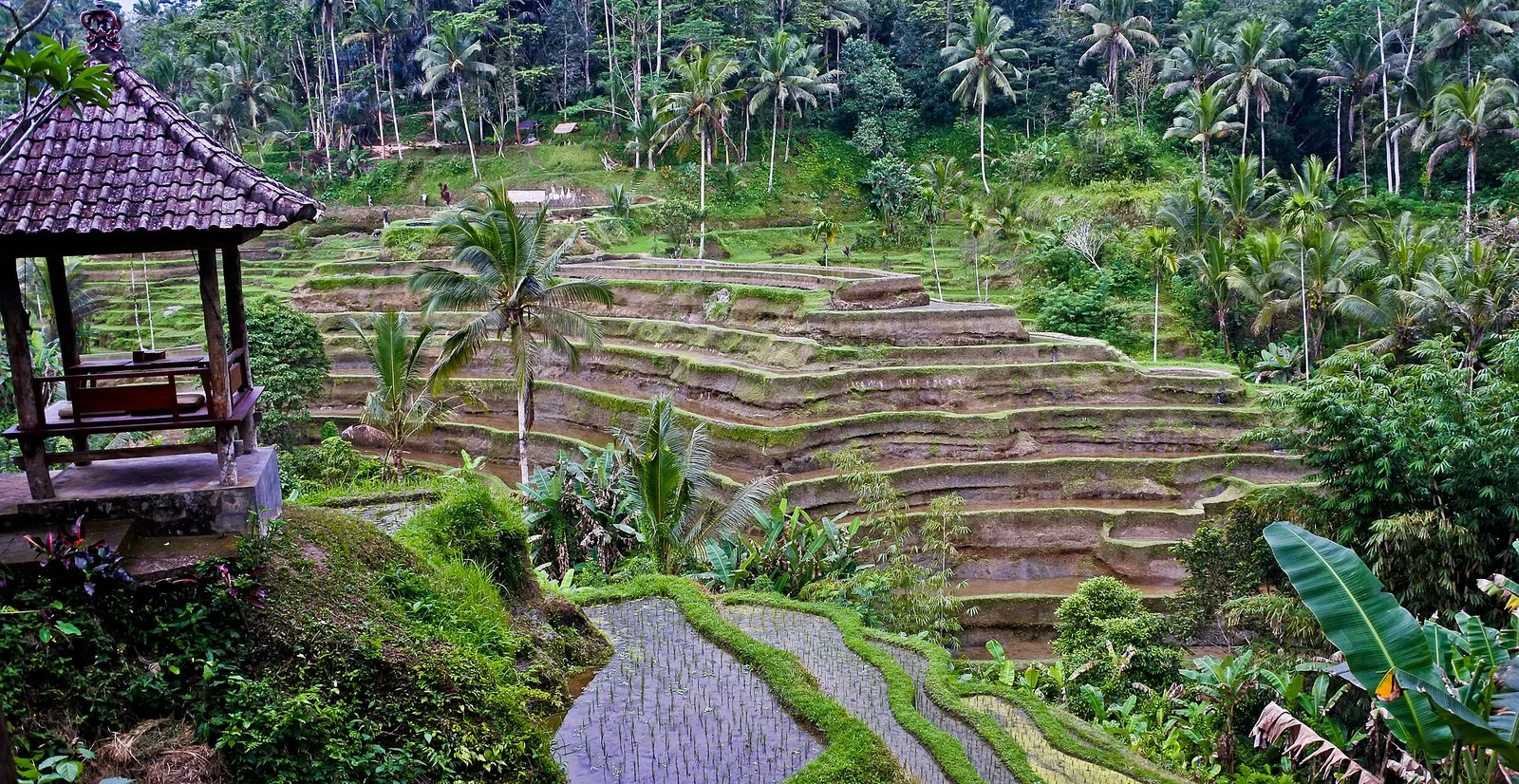
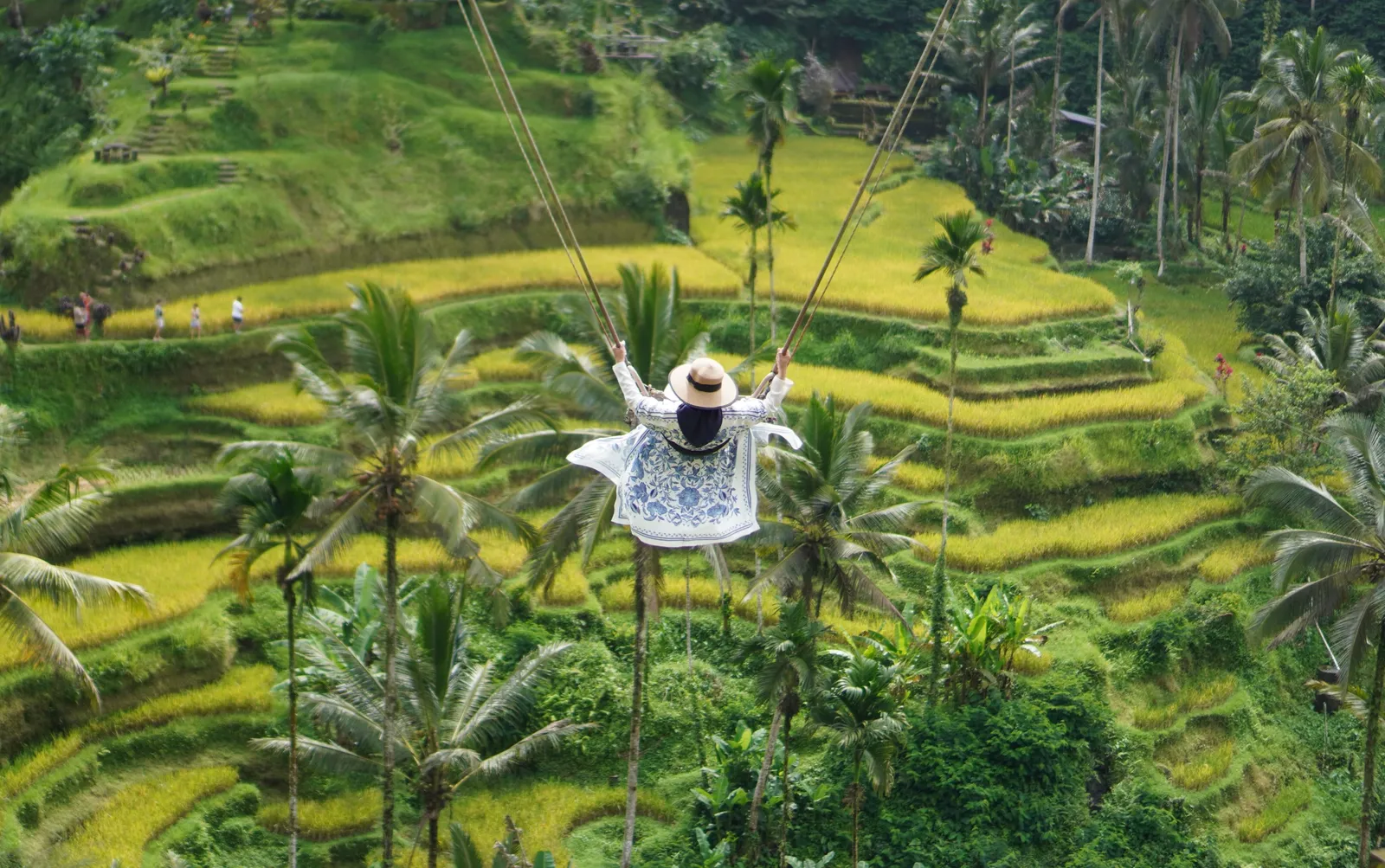
Tegalalang sits maybe fifteen minutes north of central Ubud along a road that has become an attraction in its own right, lined on both sides with cafes and viewpoints looking down into the valley. The terraces step down steeply on both flanks, still farmed and irrigated in the traditional subak system, and the classic view, a stack of curving green tiers with palms breaking the lines, is the one that ends up on every Bali mood board.
The crowds are real. Because it is so close to Ubud and so easy to reach, Tegalalang absorbs a large share of the day-tour traffic that passes through the area, and by mid-morning the main viewpoints and the road itself can be genuinely busy. That does not make it not worth seeing. It makes timing the visit the whole trick.
Walking down into the terraces is possible on marked paths for those who want a closer look than the road viewpoints give, and a few sections have been developed with small cafes built into the hillside itself, which is a pleasant if slightly commercial way to sit with the view for a while.
The swings, the nests and the donations
Tegalalang is also where most visitors first meet Bali’s rice-field swing platforms and giant nests, wooden structures built out over the terraces for photographs, usually run by individual families as a small side business alongside farming.
Expect to pay at several points, not once. Because the land is subdivided among different family plots, you will often be asked for a small entrance donation as you move along the road, and again separately if you want to walk down into a particular section or use a swing or photo platform. This is the normal, established way the whole strip works rather than anything to be suspicious of, and it is worth carrying a supply of small notes so you are not caught without change.
Prices for the swings and platforms vary by operator and change often, so it is worth treating any figure you read in advance as a rough guide only and asking directly on the day rather than assuming a fixed rate.
Jatiluwih: the UNESCO valley
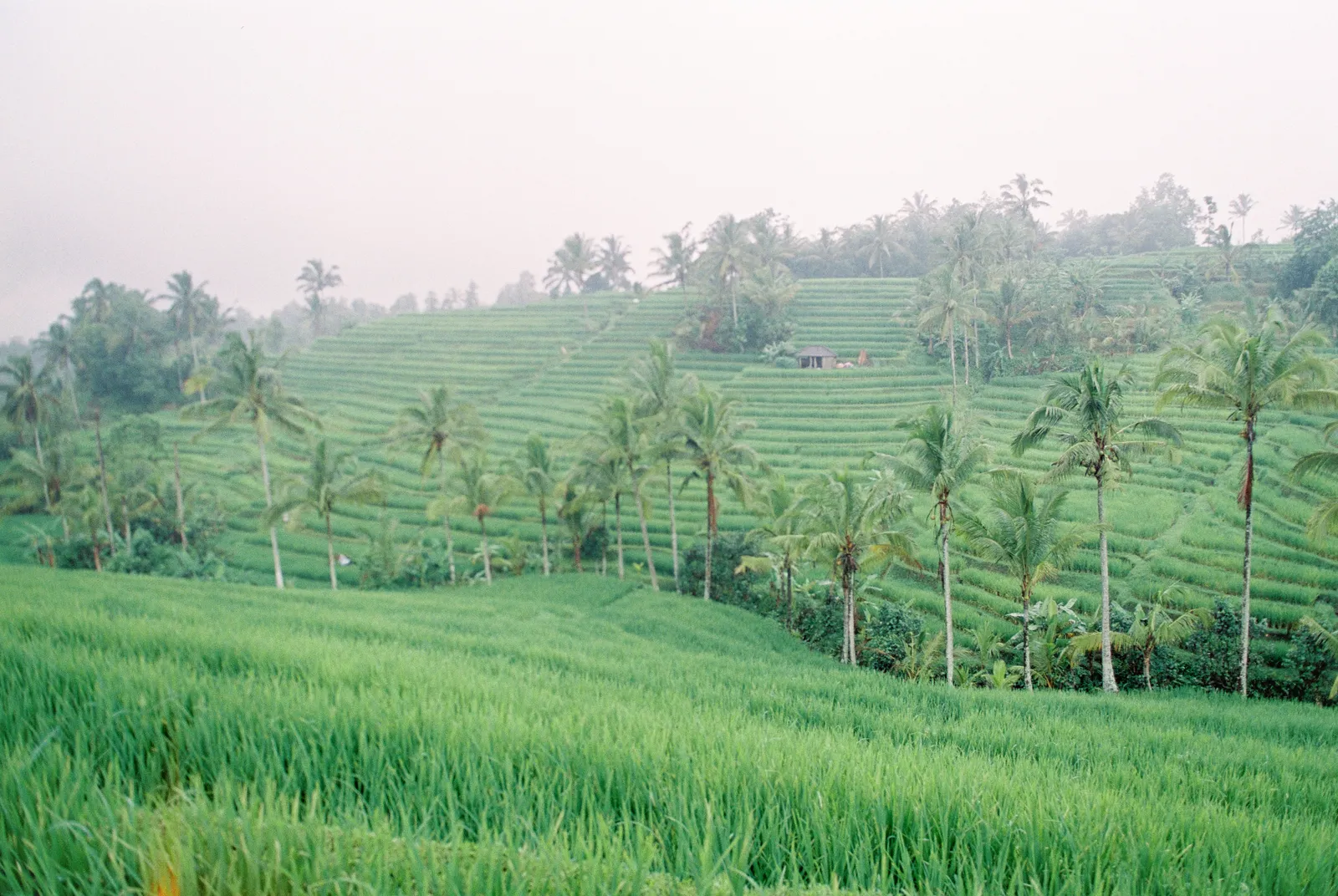
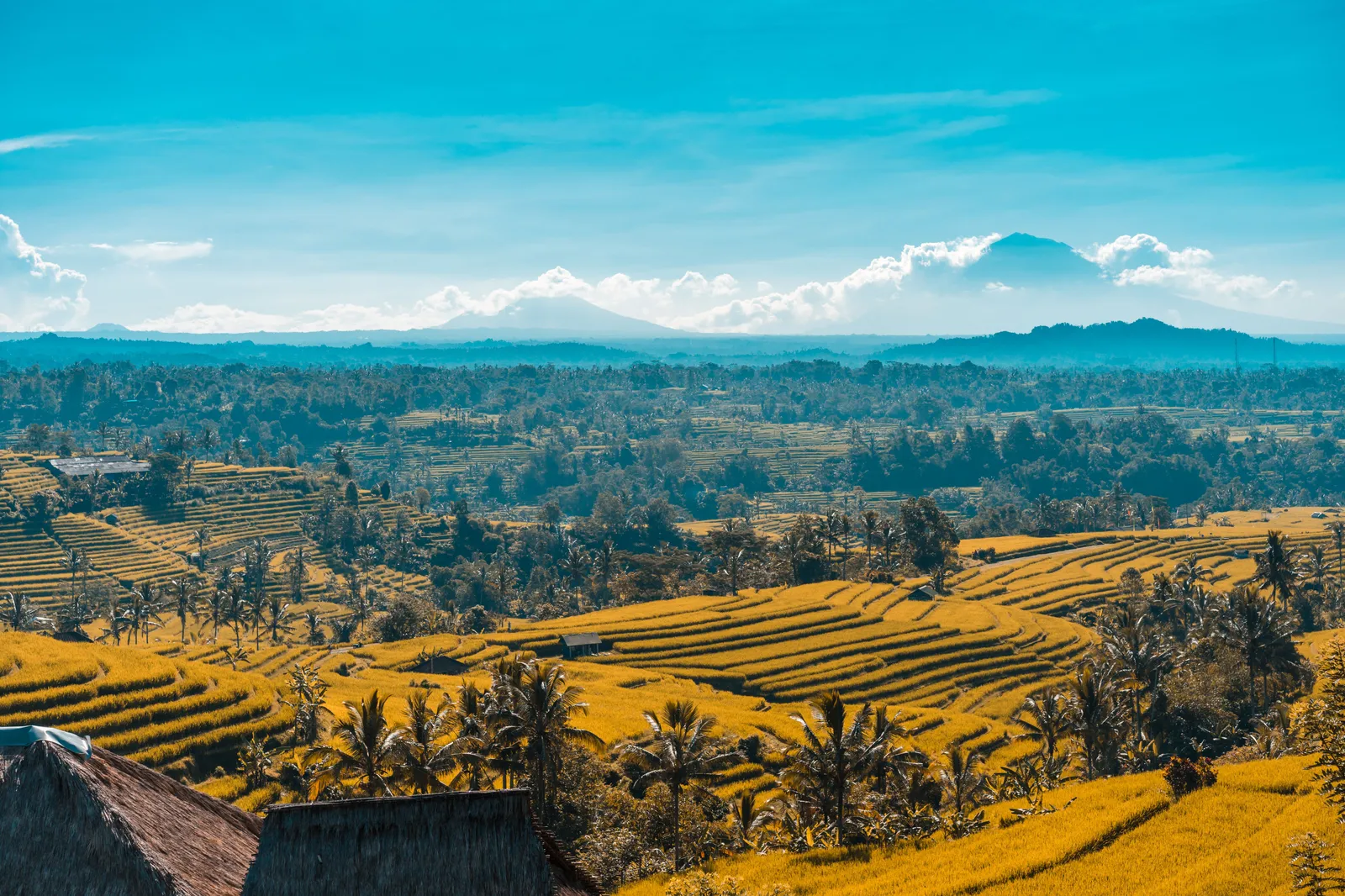
Jatiluwih sits well beyond Tegalalang, in the Tabanan regency, and belongs to a different order of scale. The valley opens out wide rather than folding into a narrow ravine, with Mount Batukaru rising behind it, and the terraces here were formally recognised by UNESCO in 2012 as part of the Cultural Landscape of Bali Province, honouring the centuries-old subak system of cooperative water management that shapes the whole island’s rice farming.
It is far less commercial. There are fewer cafes, fewer swing platforms and, above all, far fewer people, even in the middle of the day. What Jatiluwih offers instead is space: proper walking loops through the terraces themselves, of varying length, and views that stretch across the whole valley rather than down into a single fold of it.
A single entrance ticket at the main gate covers access to the site and goes towards the upkeep of the subak system that keeps the terraces functioning, rather than the point-by-point donations of Tegalalang.
Getting there and how long to allow
Tegalalang barely counts as a detour from Ubud: a short scooter ride or a quick taxi covers it, and it slots easily into a morning that also includes a temple or a coffee stop nearby.
Jatiluwih is a different commitment. From Ubud or the south, allow roughly ninety minutes to two hours each way, on roads that narrow and wind noticeably in the final stretch through the hills. A private driver is the more relaxed option unless you are a confident, experienced rider, since the route climbs and the corners tighten well before you arrive. Treat it as a half-day trip at minimum once you factor in walking the terraces themselves.
The terraces are early or they are crowdedA guided morning gets you there before the coaches and handles the driving on roads that are slower than they lookPractical notes
Go early for both. Tegalalang before eight in the morning and Jatiluwih before the late-morning tour groups arrive are the versions of each place that actually match the photographs.
Wear proper shoes. The paths, especially at Tegalalang, are narrow, uneven and can be slippery after rain, and Jatiluwih’s walking loops cover genuine distance on unpaved tracks.
Bring water and sun cover. Both sites are largely unshaded once you are among the terraces themselves, and the walking at Jatiluwih in particular can take an hour or more.
Carry small notes, particularly at Tegalalang, where the informal entrance and photo-platform payments are usually cash only.
Respect the working land. Both terraces are still actively farmed, and the paths, bunds and irrigation channels you walk alongside are part of somebody’s livelihood rather than a set built for visitors. Stick to marked paths, keep clear of planted sections, and treat the farmers you pass as people at work rather than part of the scenery.
Allow more time than you think for Jatiluwih. The walking loops are longer than they look from the entrance, and rushing them to fit in a return drive the same afternoon undercuts the reason for coming this far in the first place.
If the appeal of Jatiluwih is the quiet rather than the terraces alone, doing a wider highland loop makes the detour worth it rather than a long round trip on the same road there and back. Our guide to Munduk and north Bali covers the waterfalls, coffee plantations and cooler air that make a natural continuation once you are already in the hills west of Ubud, turning a single rice-terrace stop into a proper day in the highlands.
What to pair it with
The terraces are a morning rather than a day, which leaves the question of what fills the rest of it. Heading east, the royal water gardens at Tirta Gangga make a natural continuation and sit in the same green, inland half of the island.
For a bigger change of scene, the Gili Islands are a fast boat away and are about as far from a rice terrace as Bali gets: flat, sandy, car-free and entirely built around the water.