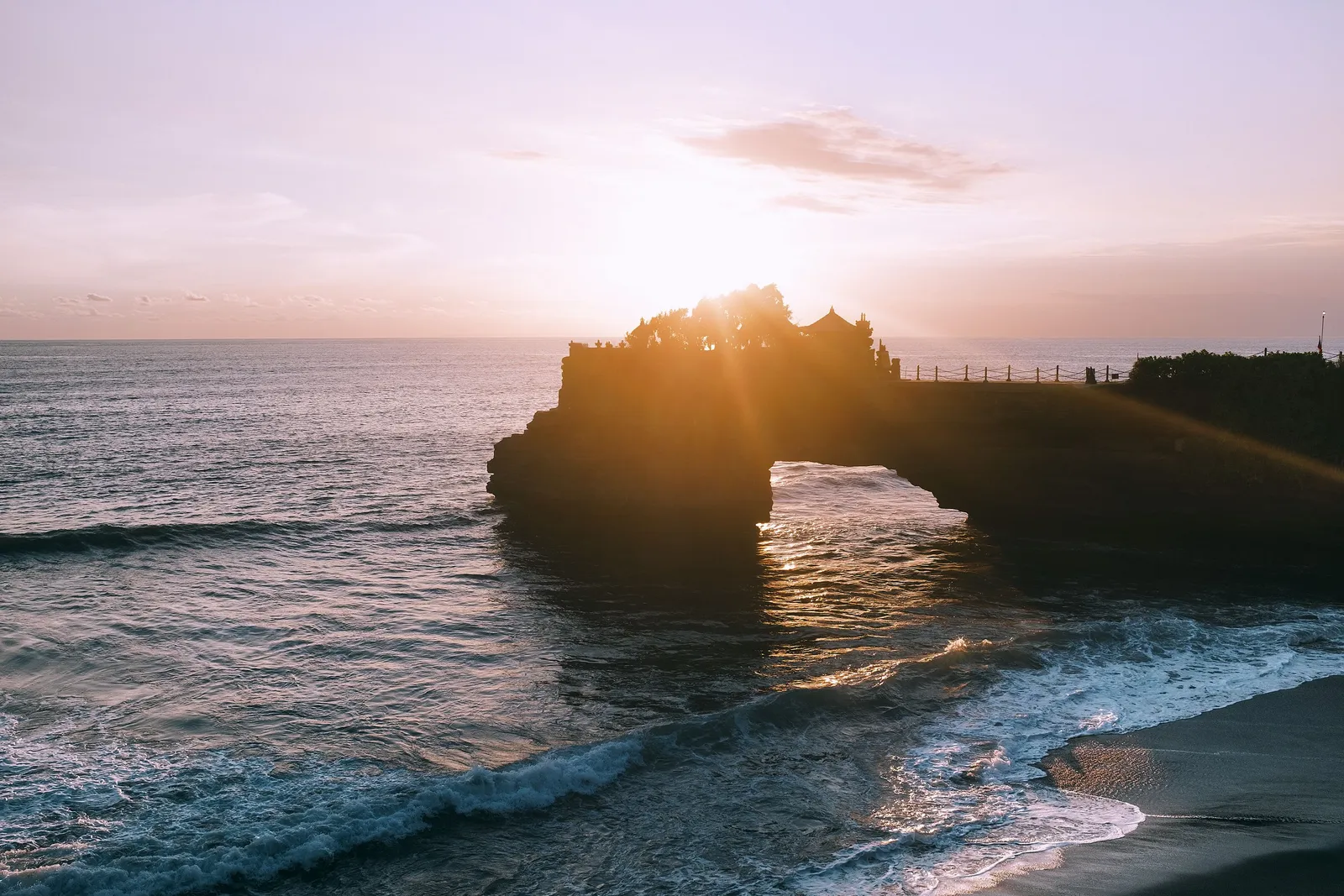
Tanah Lot is the single most photographed sunset in Bali, and also one of the most crowded, which makes it a place worth planning for rather than simply turning up to. Our wider guide to Bali’s temples covers where it sits among the island’s other sacred sites, but the tide times, the crowds and the timing here deserve their own detail. Many visitors base themselves in Canggu, a short drive away, specifically to make an evening at Tanah Lot easy to fit in.
What Tanah Lot actually is
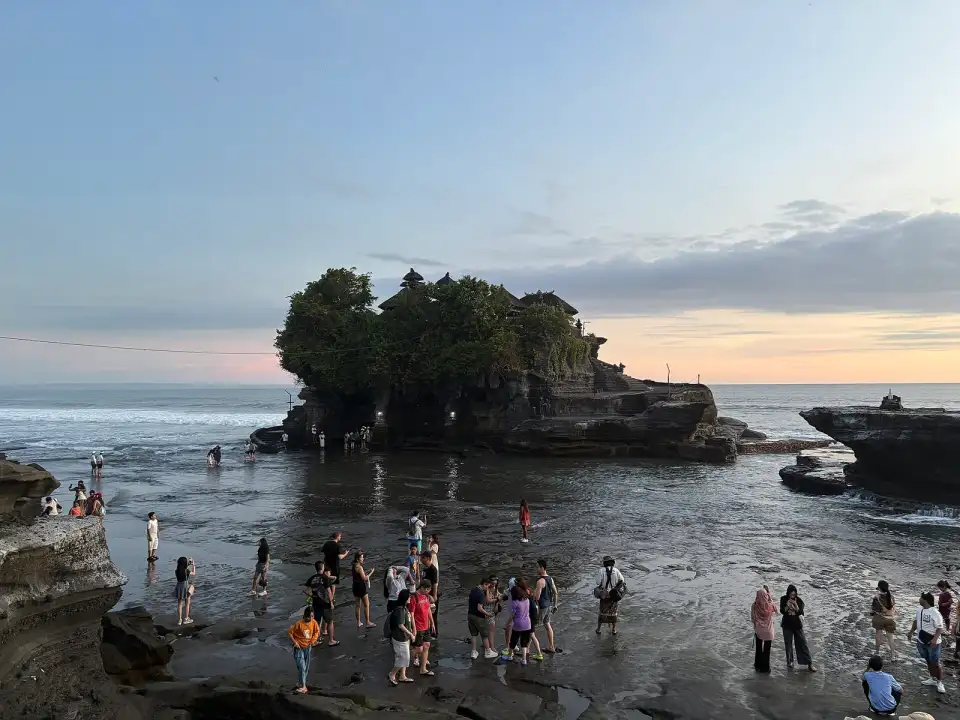
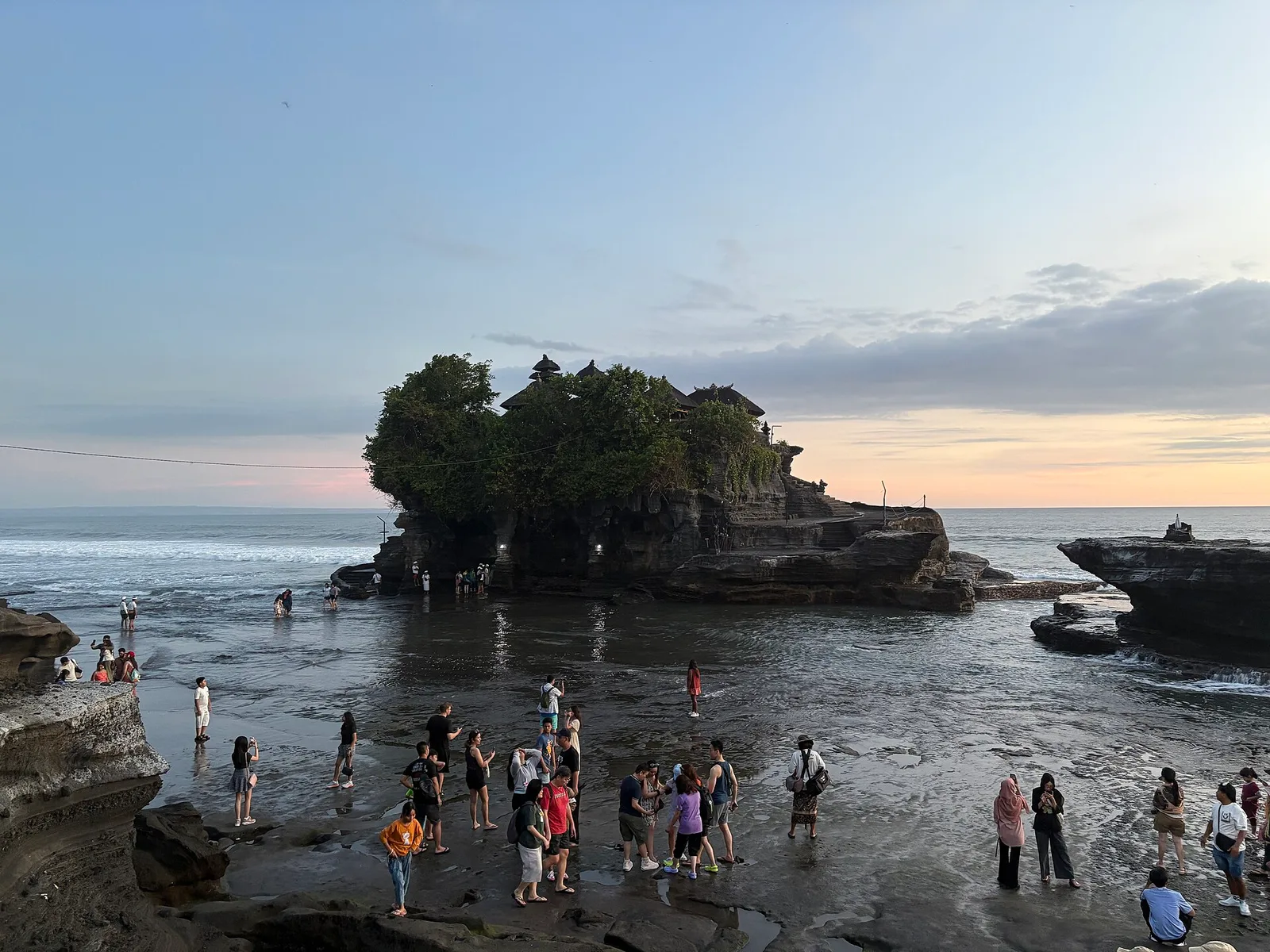
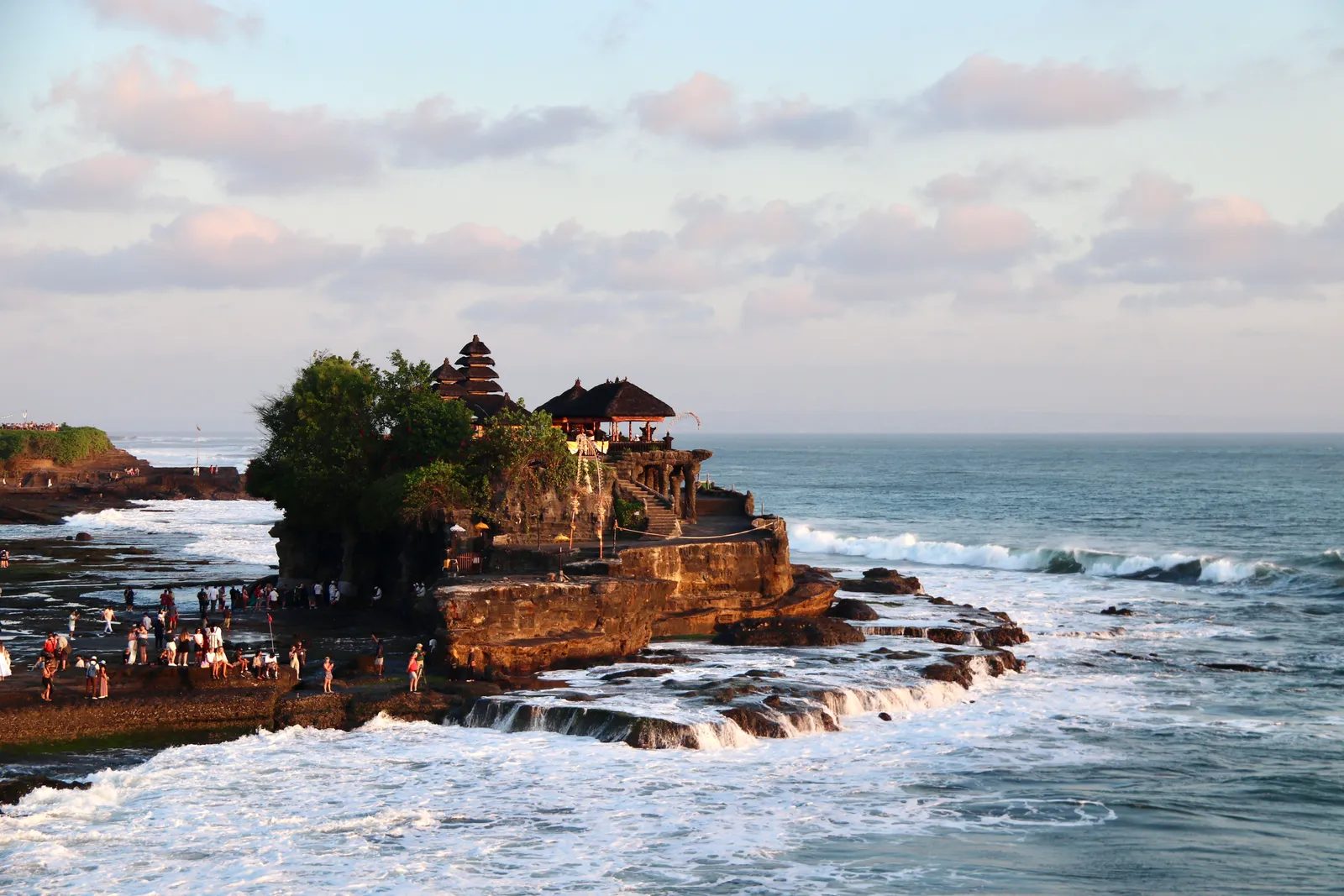
Tanah Lot means “land in the sea”, a fitting name for a temple built on a rock outcrop just off the shore, surrounded by water at high tide and reachable across the sand at low tide. It is a pura segara, a sea temple, one of a chain that Balinese tradition holds were built within sight of one another along the island’s southwestern coast, each one honouring the guardian spirits of the ocean. According to legend, it was founded by the wandering Hindu priest Dang Hyang Nirartha during his travels establishing sea temples around Bali, and the story of local priests asking him to move on, and his rock rising from the sea in response, is told at the site to this day.
Like the other headline temples covered in our broader guide, Tanah Lot is not a building you walk into. It is a walled compound viewed from the shore, the market lane and the clifftop paths that run south from the main viewing area, and that is exactly why the sunset shot works so well: you are looking at the whole silhouette from a distance, not standing inside it.
The tide decides your visit
Everything about a Tanah Lot visit hinges on the tide, and it is worth checking before you set a time. At low tide, the sand between the shore and the rock is exposed, and you can walk out towards the temple base, close enough to see the details of the stonework and the small offerings left along the way. At high tide, the rock sits properly ringed by water, which is the more dramatic, more classically “floating temple” look that most sunset photographs go for.
Neither is objectively better, they are simply different pictures, so look up the tide chart for your date rather than assuming. A high spring tide combined with rough weather can also mean the walkway along the base gets splashed or closed off entirely, which is worth knowing if you are set on getting close.
Getting in: entrance, dress code and the market lane
The approach to Tanah Lot runs through a long lane of stalls selling sarongs, snacks, carvings and the usual beachside souvenirs, which is part of the experience whether you plan to shop or not. A ticket booth near the car park charges a modest entrance fee for foreign visitors, which is adjusted from time to time, so check the current figure on the day rather than relying on an old number, and keep small rupiah notes on hand since card machines are not always working at the counter.
As with every active Balinese temple, dress modestly: shoulders and knees covered, and a sarong tied at the waist if you are wearing shorts or a short skirt. Sarongs are rented at the entrance for those who need one, so you do not have to bring your own, though packing a light one saves the queue. Because Tanah Lot is viewed from outside rather than entered, the dress code applies most strictly if you plan to approach the temple base at low tide, where the atmosphere is closer to being at the shrine itself.
Let someone else handle the trafficA driver-guide gets you there for golden hour and out before the exit queueBeyond the main shot: what else is on the site
The Tanah Lot headland holds more than the one famous view. A short walk along the clifftop paths south of the main temple leads to smaller shrines and quieter viewpoints looking back at the rock from a distance, which is where a lot of the calmer, less crowded photographs actually come from. Near the base of the main temple, a rock crevice is home to what locals describe as a guardian sea snake, said to protect the site; visitors are sometimes able to see it up close for a small offering to the attendant, though this is a local custom rather than a fixed attraction, and it is worth treating with the same respect as the rest of the temple grounds.
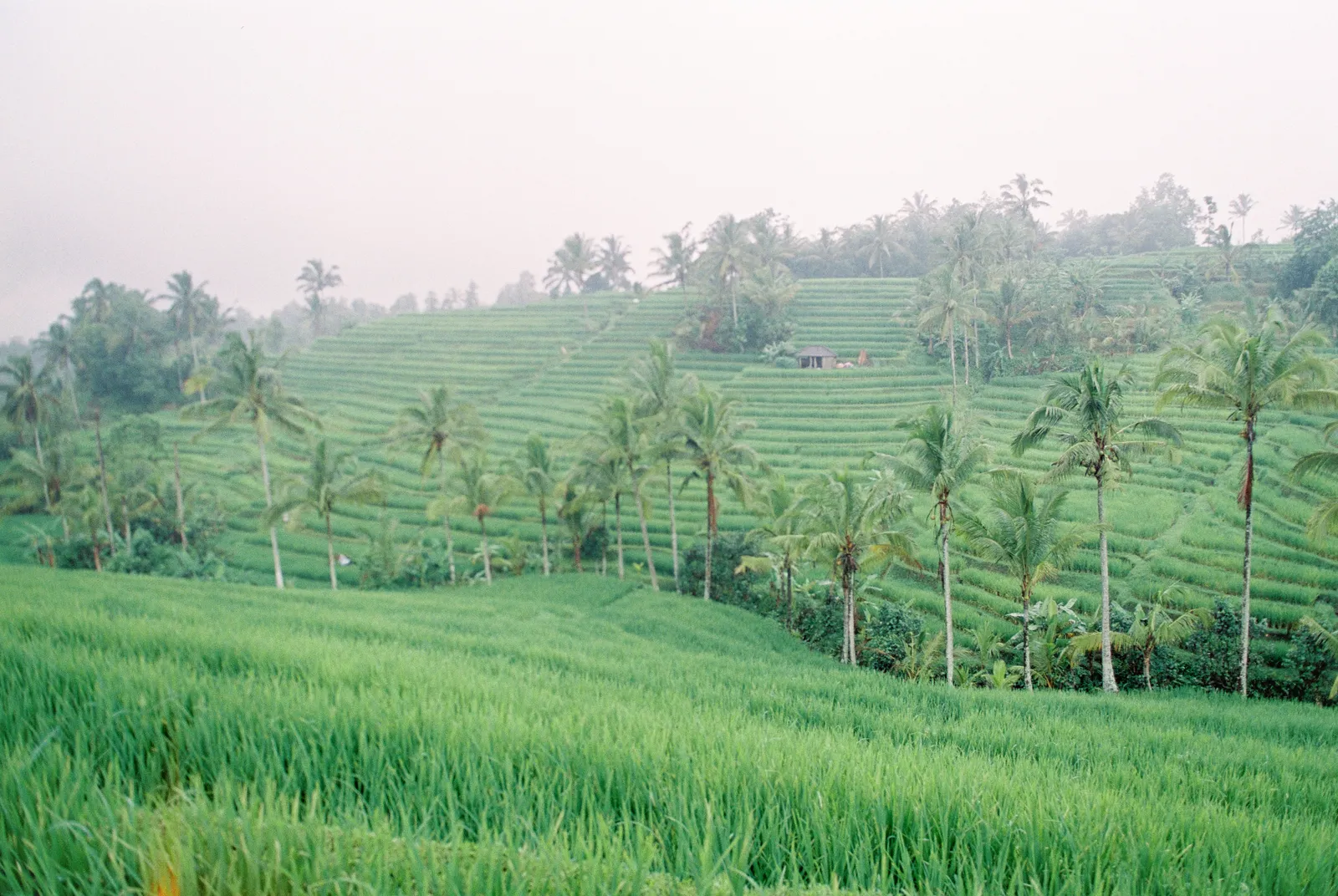
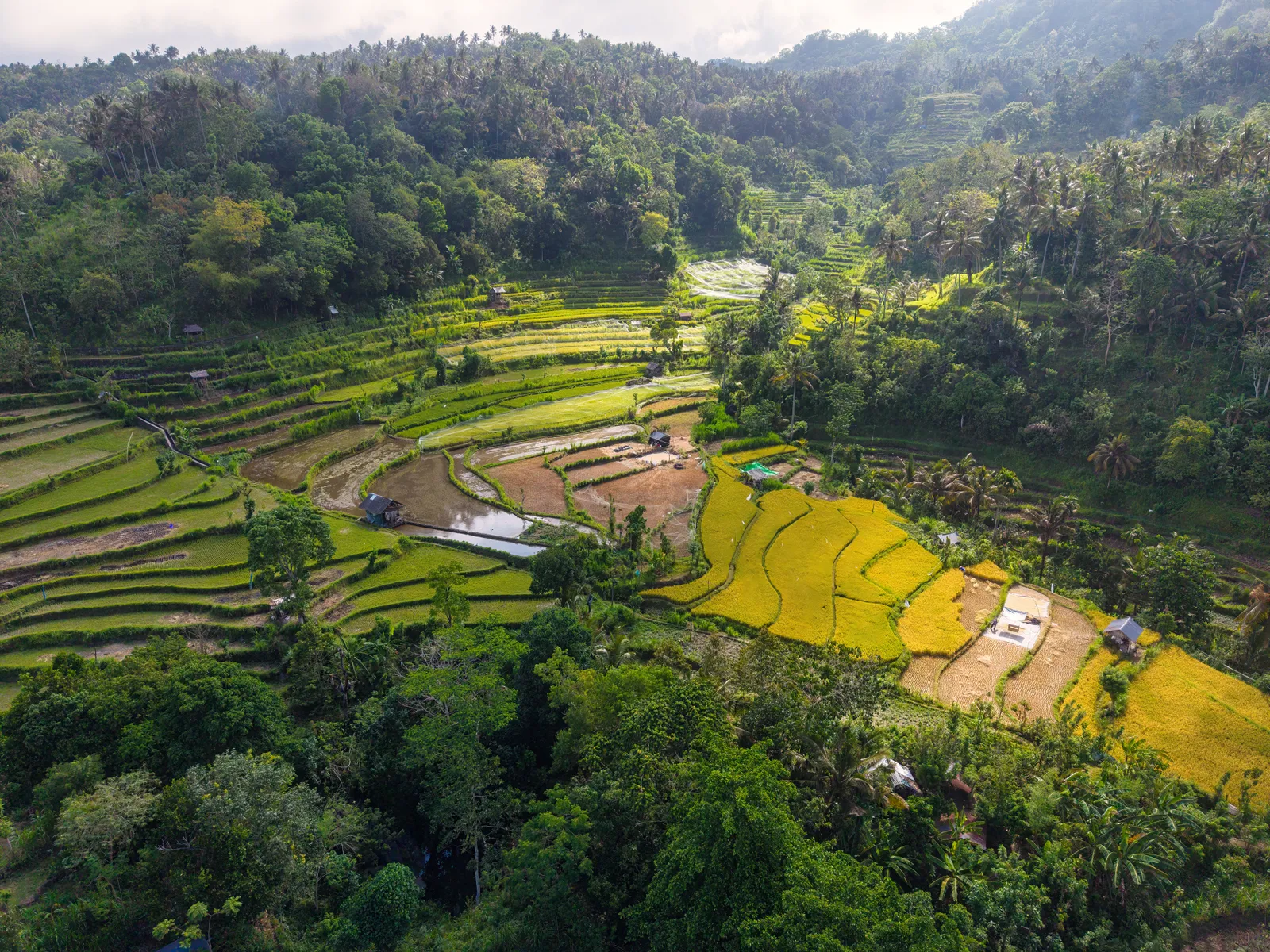
The wider Tabanan regency around Tanah Lot is quiet, green rice country, a genuinely different Bali from the beach towns a short drive away. If you have the time and a driver for the day, it pairs naturally with a stop among the rice terraces further inland before you loop back for the sunset.
When to go, and when to skip the sunset crowd
The honest trade-off at Tanah Lot is this: the sunset is the best version of the view, and the sunset is also when everyone else has the same idea. If a quieter visit matters more to you than the golden light, come in the late morning or early afternoon instead. You will still get the sea temple, the market lane and the walk along the shore, just without the crush of tripods and tour buses along the clifftop paths in the final half hour before the sun goes down.
If you are set on the sunset, the trade worth making is arrival time, not avoidance. Get there with plenty of margin, as covered above, walk the paths south of the main viewpoint rather than fighting for space directly opposite the rock, and treat the crowd as part of the spectacle rather than an inconvenience to be avoided. It rarely feels as busy once the sky actually starts to turn.
Is it worth the trip?
For the specific thing Tanah Lot offers, a silhouetted sea temple against a burning sky, yes, it earns its reputation, and no other single site in Bali delivers quite that image. What it is not is a peaceful, contemplative temple visit; for that, a smaller village temple away from the tour circuit will serve you far better. Come to Tanah Lot for the spectacle, plan around the tide and the crowd rather than being surprised by them, and you will leave with the photograph everyone comes for.
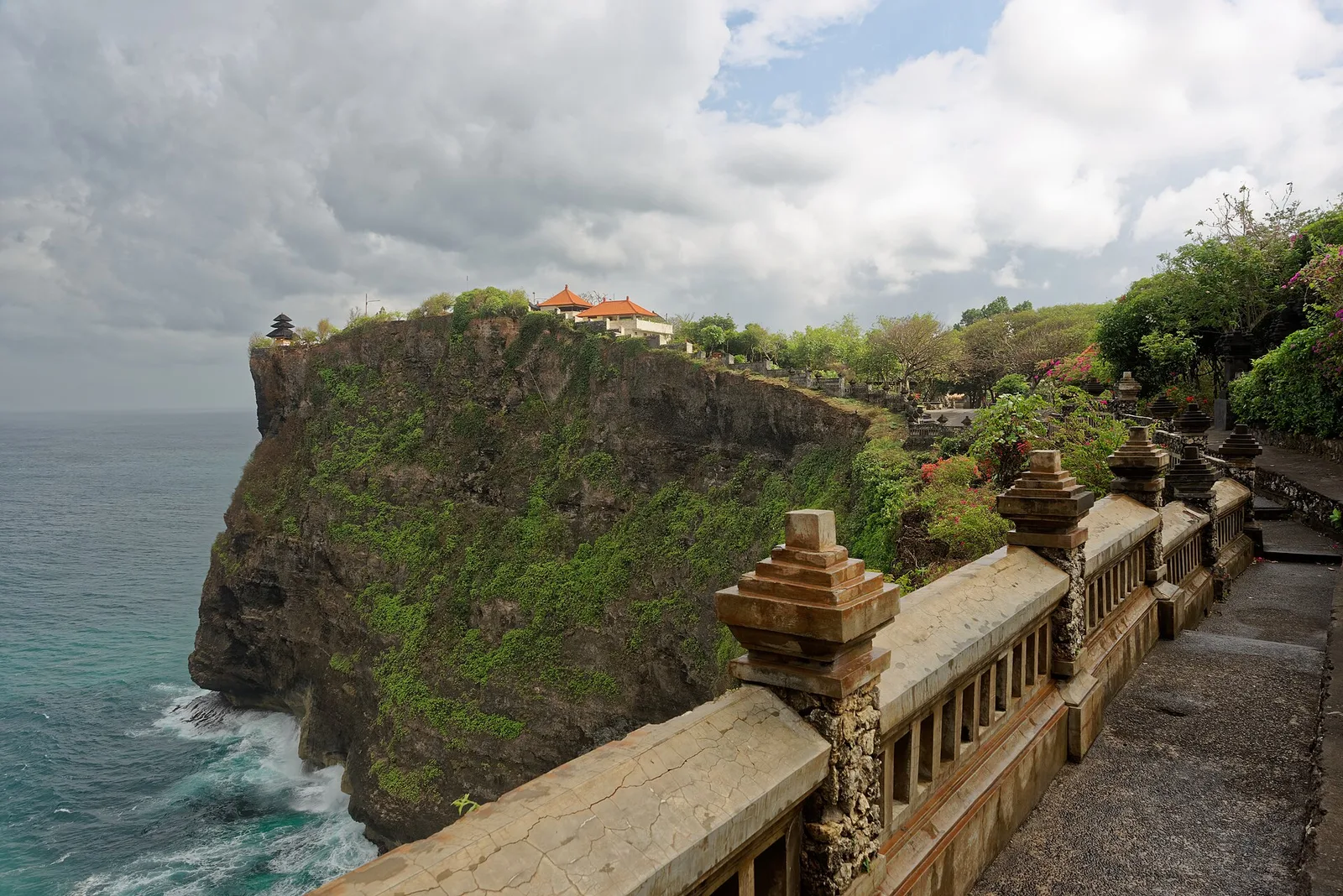
Weather plays a real part in whether the sunset actually delivers, since a cloudy horizon can flatten the whole show. If the sky does not cooperate, the island’s other great sunset temple is the obvious second attempt: our guide to Uluwatu covers the clifftop version of the same evening.