The first time I saw one, I honestly thought something had gone wrong with a small aircraft. I was cycling the back lanes behind Sanur on a bright August morning when a shadow slid across the road, and I looked up to see a kite the size of a delivery van hanging in the blue, tail streaming forty metres behind it. Then I heard the sound: a low, buzzing hum from a bow lashed across its nose. That was my introduction to kite season in Bali, and to the giant layang-layang that turn the dry-season skies over the south into a slow, noisy, gloriously chaotic gallery.
If you are on the island between roughly July and September, this is one of the most Balinese things you can stumble into, and almost nobody plans for it. Here is what it is, where to see it, and how to enjoy it without becoming the tourist the launch crew has to shout at.
Why kites fill Bali’s skies in the dry season
The timing is not an accident. Bali’s dry season brings steady trade winds off the south and east, and those reliable afternoon breezes are exactly what a heavy traditional kite needs to climb and stay up. This is the same weather window that makes the middle of the year the busiest travel stretch on the island, and if you want the full picture of when the winds and the crowds arrive you can read our Bali weather by month guide.
But the kites are more than a weather quirk. Flying layang-layang is a genuine tradition here, often described as a way of sending a message of thanks to the gods for a good harvest and asking for the next one. Whole villages (banjar) build kites together over weeks, and the flying season doubles as a fierce, friendly competition between neighbourhoods.
What exactly is a layang-layang?
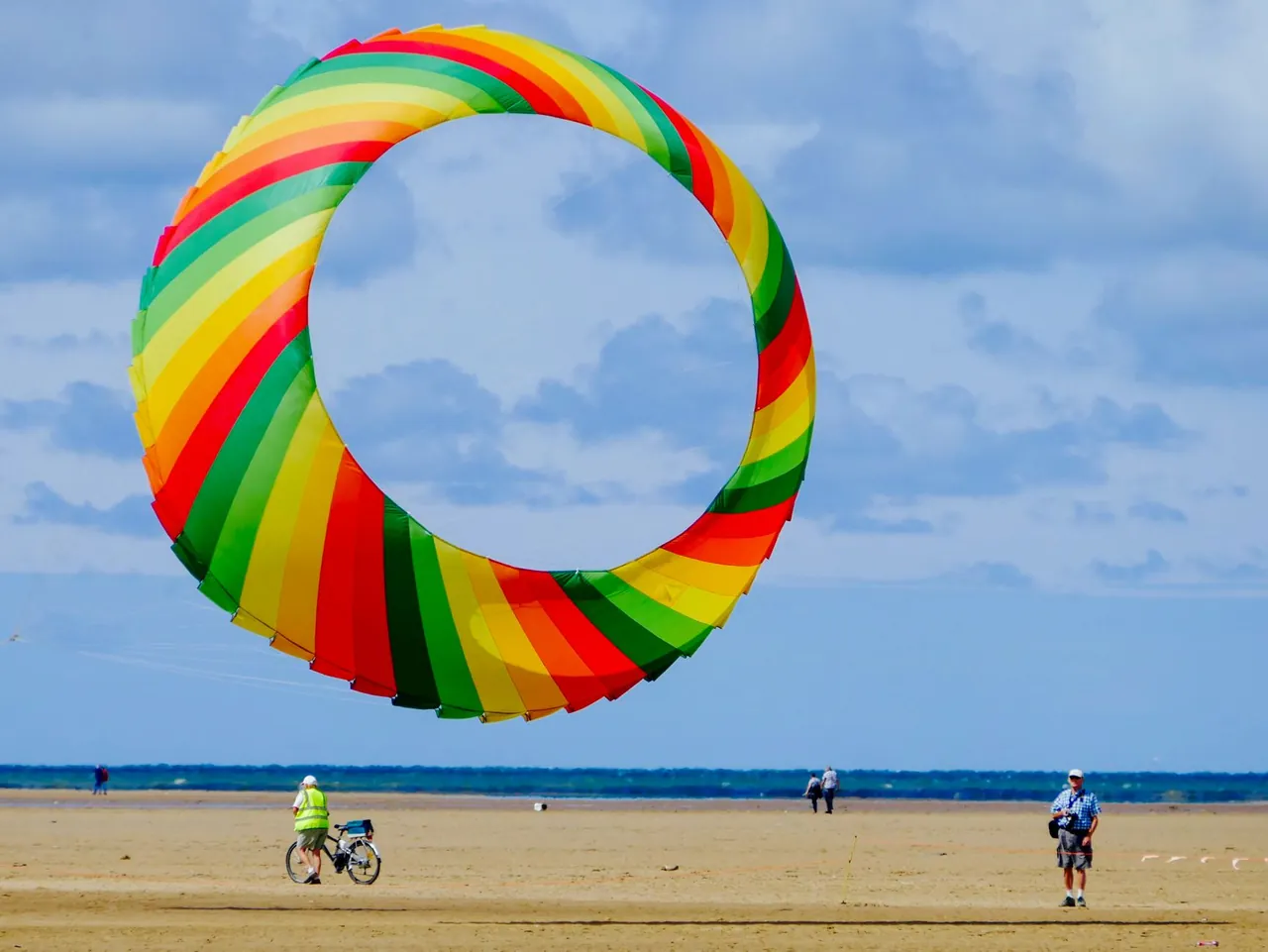
Layang-layang simply means kite in Indonesian, but in Bali the word covers some serious engineering. There are three classic shapes you will see again and again.
- Bebean, the fish. A broad, rounded body shaped like a fish, usually the biggest of the three and the one that looks like a flying whale.
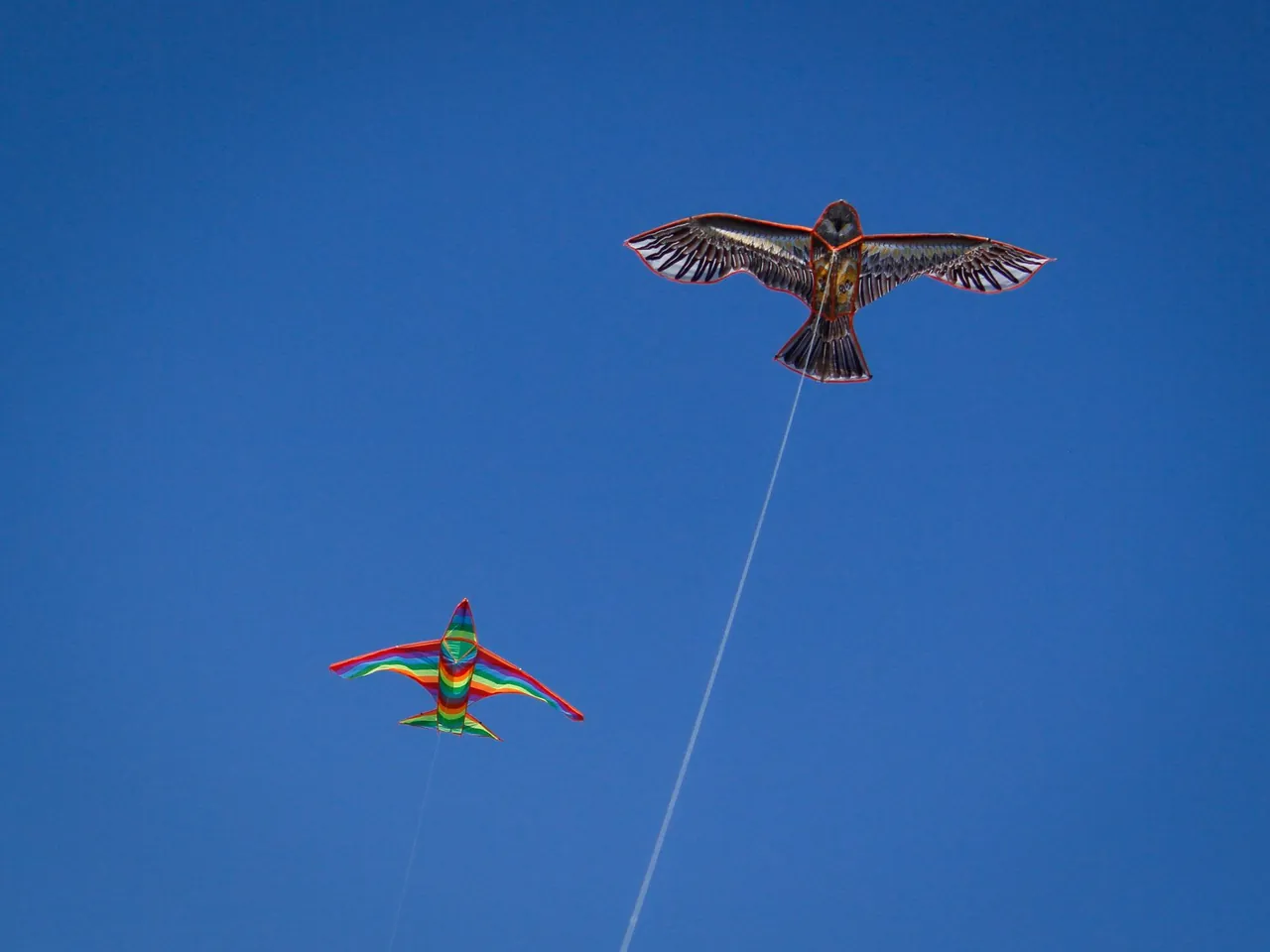
- Janggan, the bird or dragon. You spot these instantly by the enormous ribbon tail, sometimes over a hundred metres long, snaking behind a bird-like head.
- Pecukan, the leaf. A leaf shape that is notoriously unstable and hard to fly, which is exactly why crews love it.
The humming you hear comes from a guwang, a bamboo bow strung across the front of many kites so the wind plays it like an instrument. On a good afternoon with a dozen giants up, the sky genuinely sounds like it is buzzing.
| Kite type | Shape | How to spot it |
|---|---|---|
| Bebean | Fish | Wide, rounded, often the largest |
| Janggan | Bird / dragon | Very long ribbon tail |
| Pecukan | Leaf | Elegant, wobbly, hard to keep up |
Where to watch the giant kites
The heartland of Balinese kite flying is the flat, breezy coastal strip in the south-east around Sanur and Denpasar.
Padang Galak
The black-sand field at Padang Galak, just north of Sanur, is the spiritual home of the big competitions. On a strong afternoon you will see teams of ten or more people wrestling a single kite off the ground, sprinting along the sand, then slowly walking it up into the wind. It is the closest thing Bali has to a sporting stadium made of sky.
Sanur and the surrounding fields
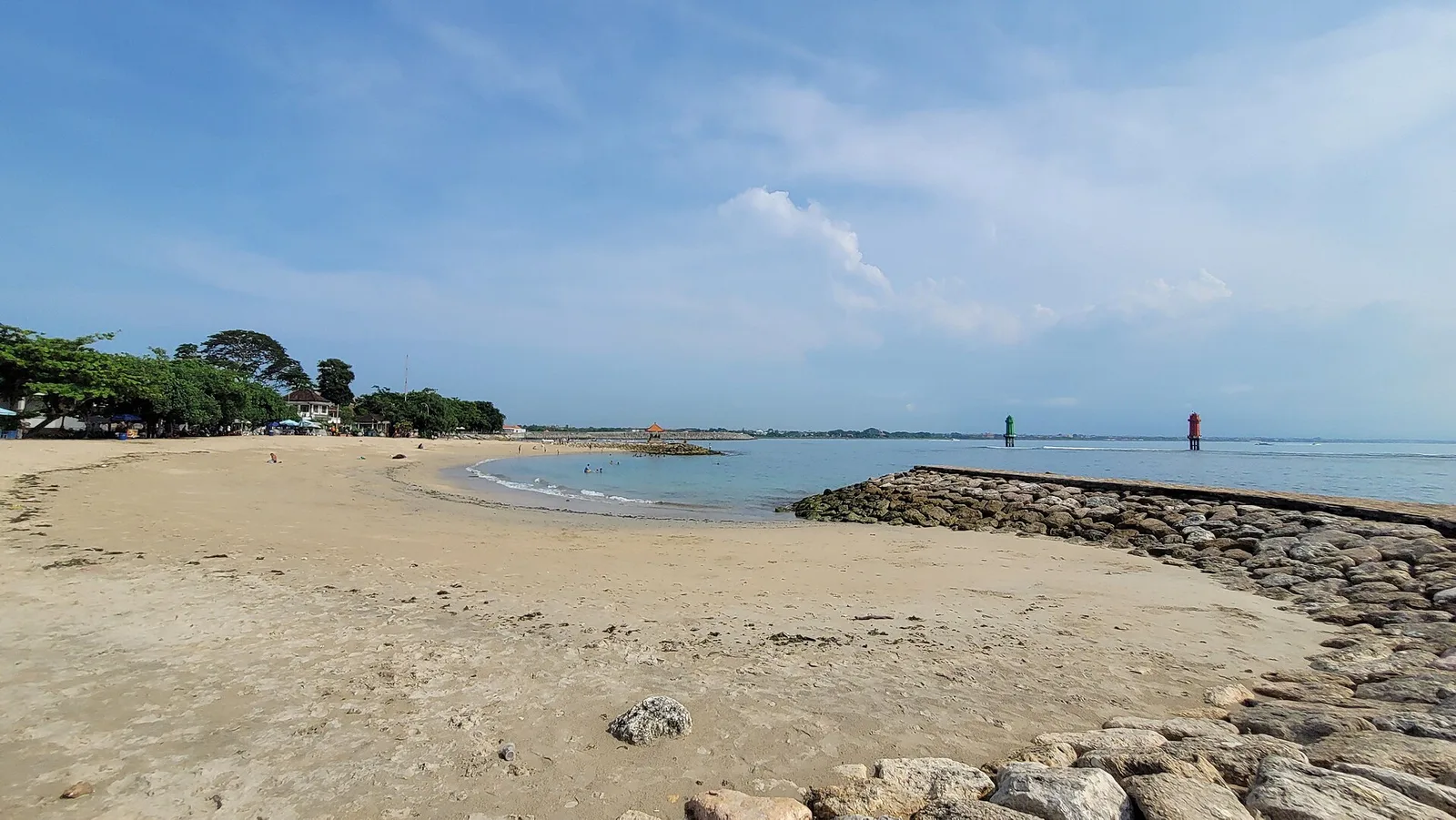
Even outside festival days, the open ground and beaches around Sanur, the calm east coast are dotted with kites most dry-season afternoons. Sanur is an easy, low-key base for this: flat, walkable, and full of warungs where you can sit with a cold drink and just watch the sky work. The same dry-season months that put the kites up are also when the west and southwest coasts get their offshore mornings, so if the wind is what brought you here, our guide to Bali’s best surf beaches covers where it lands on the other side of the island.
The festival season
Bali usually holds a large kite festival somewhere in the Sanur and Padang Galak area during the middle of the year, often around July, drawing hundreds of teams. Exact dates and venues shift from year to year and are not always announced far ahead, so treat any date you see online as provisional and ask locally once you arrive. Guesthouse owners and warung staff in Sanur nearly always know when and where the next big flying day is.
 Want to stay a night near the kite fields?Sanur guesthouses from around EUR 30 a night, many with free cancellation
How to watch without getting in the way
These are heavy objects on long, taut lines, and the launch crews are working hard, so a little awareness goes a long way.
- Stay behind the line, never under it. A falling giant kite is genuinely dangerous, and the string itself can cut. Keep clear of the run-up lane the crew uses to launch.
- Ask before you walk into a team’s patch. Most crews are warm and happy to explain their kite, but the field is their workspace.
- Watch your footing on the sand. Lines lie across the ground everywhere. Do not step on them.
- Mind the traffic. During big flying days the roads around Padang Galak clog up fast. A scooter or a walk beats sitting in a car.
Photographing the kites
This is a photographer’s dream and a technical headache in equal measure. A few things I learned the slow way.
Shoot with the sun behind you so the coloured kites glow rather than turn into silhouettes, unless a silhouette is exactly what you want at sunset. A long lens compresses a crowded sky beautifully, but honestly some of my favourite shots were wide, taken from ground level with a whole crew leaning back on the line and the kite tiny and high above them. That contrast of human effort and huge floating shape is the real story.
If you get chatting to a crew, ask permission before you photograph their kite up close. It is a matter of respect, the same courtesy you would extend when visiting the island’s shrines.
Is it worth planning a trip around?
Honestly, no, not on its own. Kite season is a wonderful bonus rather than a headline attraction, and there is no guaranteed schedule you can build flights around. But if you are already coming to Bali in the dry-season months, spending a late afternoon on the fields at Padang Galak or the beach at Sanur, watching villages fly whale-sized fish into the wind, is free, deeply local, and unlike anything else on the island.
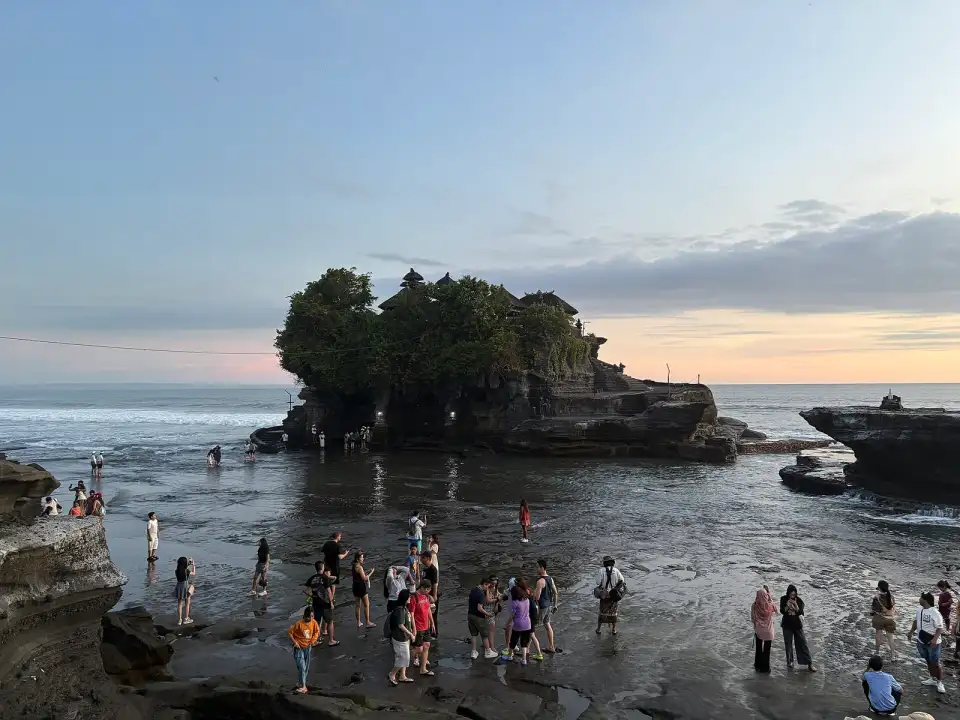
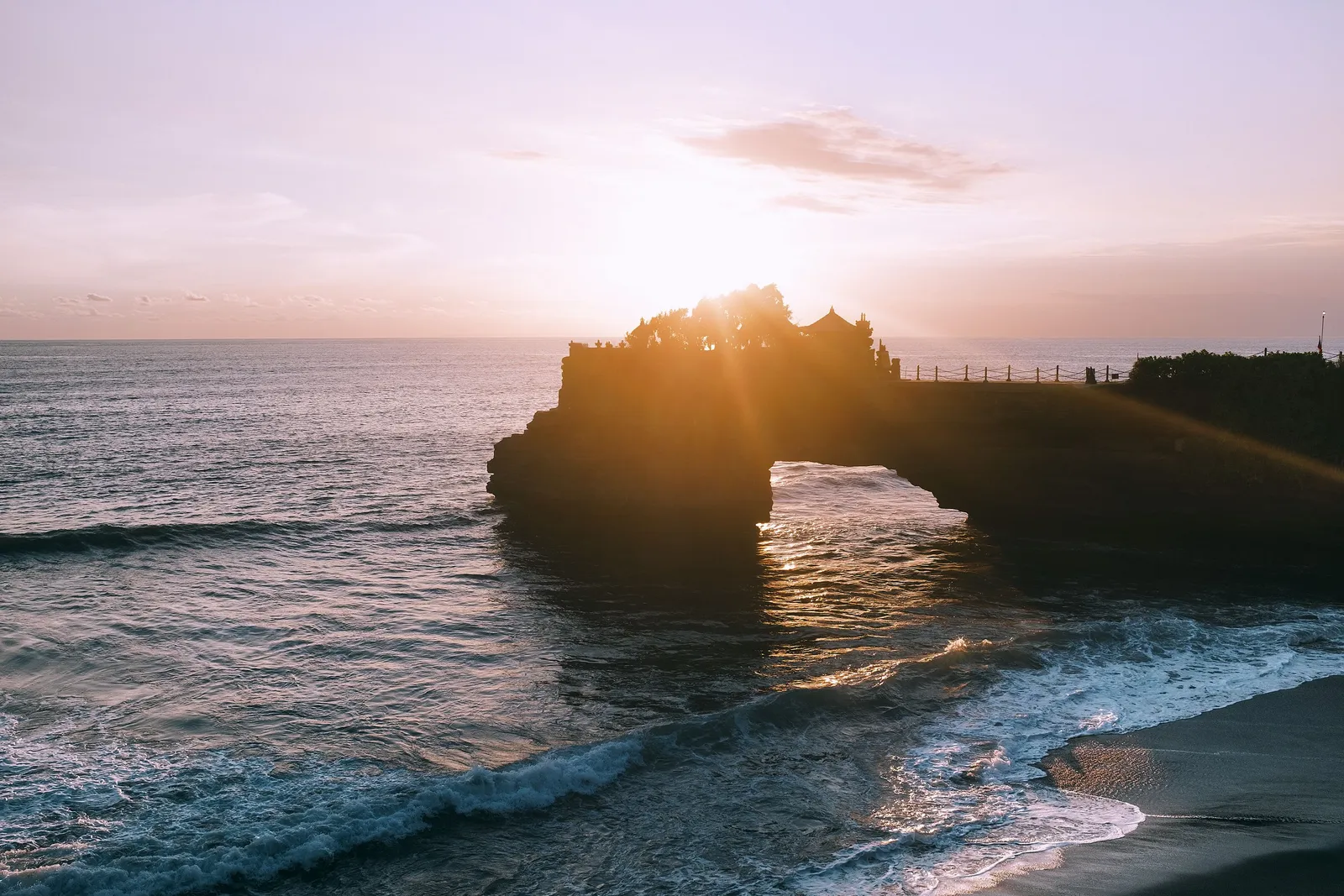
If you want a second late afternoon in the same spirit, on the coast rather than over the fields, our Tanah Lot temple guide covers the sunset that most visitors put on their list.
Have you caught a Bali kite festival, or watched the giants go up on an ordinary afternoon? Tell me where you were standing and which kite made you stop and stare.