Bali sits eight degrees south of the equator, which means one thing above all: it is warm every single day of the year. Temperature is never the question. The question is rain, wind and swell, and those follow a clean two-season rhythm that decides everything from surf conditions to hotel prices. Here is how the year actually plays out, month by month.
The two seasons in one minute
The dry season runs roughly April to October, driven by southeast trade winds: sunny days, lower humidity, calm seas on the west coast, and the island’s postcard weather. The wet season runs November to March, when winds swing northwest and bring humid air and heavy, usually short, tropical downpours, peaking around December and January.
Crucially, wet season is not monsoon misery. A typical wet-season day is a bright morning, a build-up of cloud, a dramatic hour of rain in the afternoon or overnight, then clearing. What changes more is the feel: humidity climbs, seas get rougher for boat crossings, and mosquitoes are more active.
Month by month
| Month | Season | Rain | Best for |
|---|---|---|---|
| January | Wet (peak) | Heavy, frequent | Lowest prices, green landscapes, spas |
| February | Wet | Heavy, easing late | Quiet resorts, waterfalls at full power |
| March | Wet to shoulder | Moderate | Nyepi (Balinese New Year), fewer crowds |
| April | Shoulder to dry | Light | Great all-rounder before crowds build |
| May | Dry | Low | Beaches, surf, hiking, near-perfect |
| June | Dry | Low | Everything, before the peak rush |
| July | Dry (peak) | Very low | Best weather, biggest crowds and prices |
| August | Dry (peak) | Very low | Same as July, book far ahead |
| September | Dry | Low | The insider favourite: sun, space, value |
| October | Dry to shoulder | Rising late | Warm seas, softer prices |
| November | Wet | Building | East-coast surf begins, quiet island |
| December | Wet (peak) | Heavy | Lush scenery, festive crowds mid-month |
A note on the numbers behind that table: coastal highs sit at 30 to 32°C (86 to 90°F) year-round, with January averaging around 320 mm of rain and July closer to 50 mm. The highlands, Munduk, Bedugul, Kintamani, run 5 to 10 degrees cooler and wetter than the coast in every month, so pack a light layer if you are heading up.
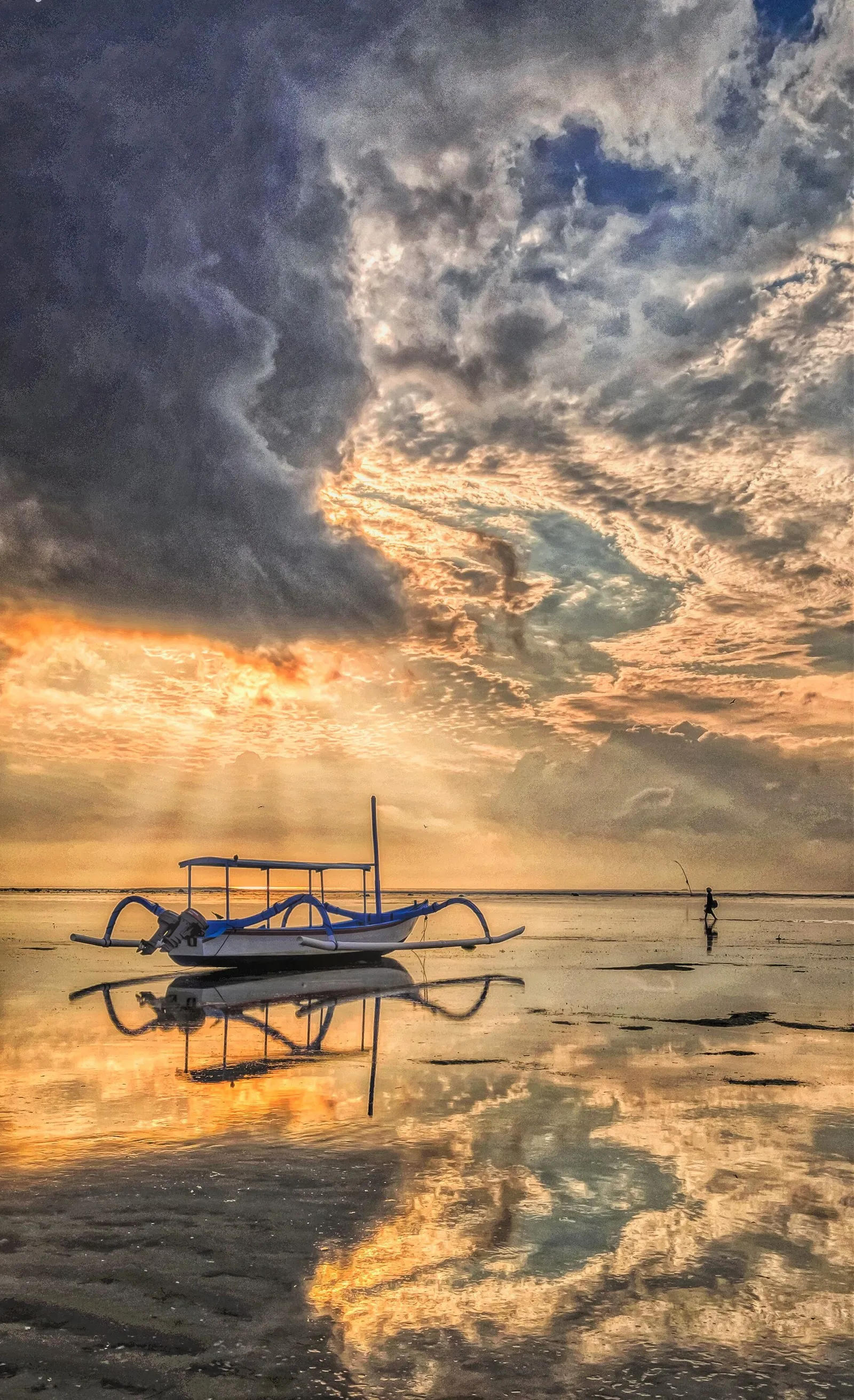
What a wet-season day actually looks like
The averages hide the shape of the day, and the shape is the useful part. Wet-season mornings are frequently clear and bright, which is why locals and experienced visitors front-load everything: sightseeing, beach, temples, treks, all before noon. Cloud builds through the middle of the day, the rain arrives as a heavy, warm, theatrical hour in the afternoon or overnight, and then it clears.
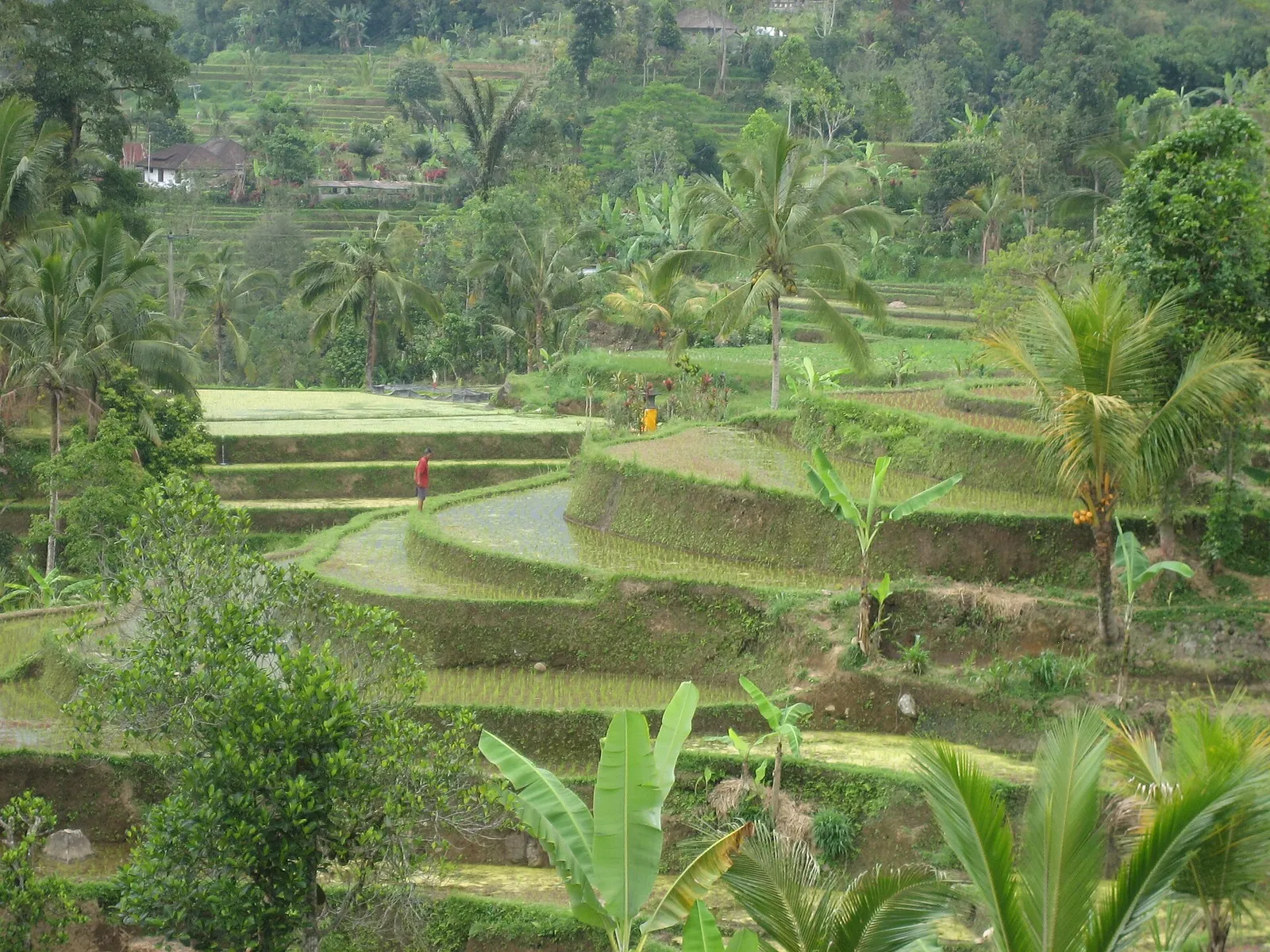
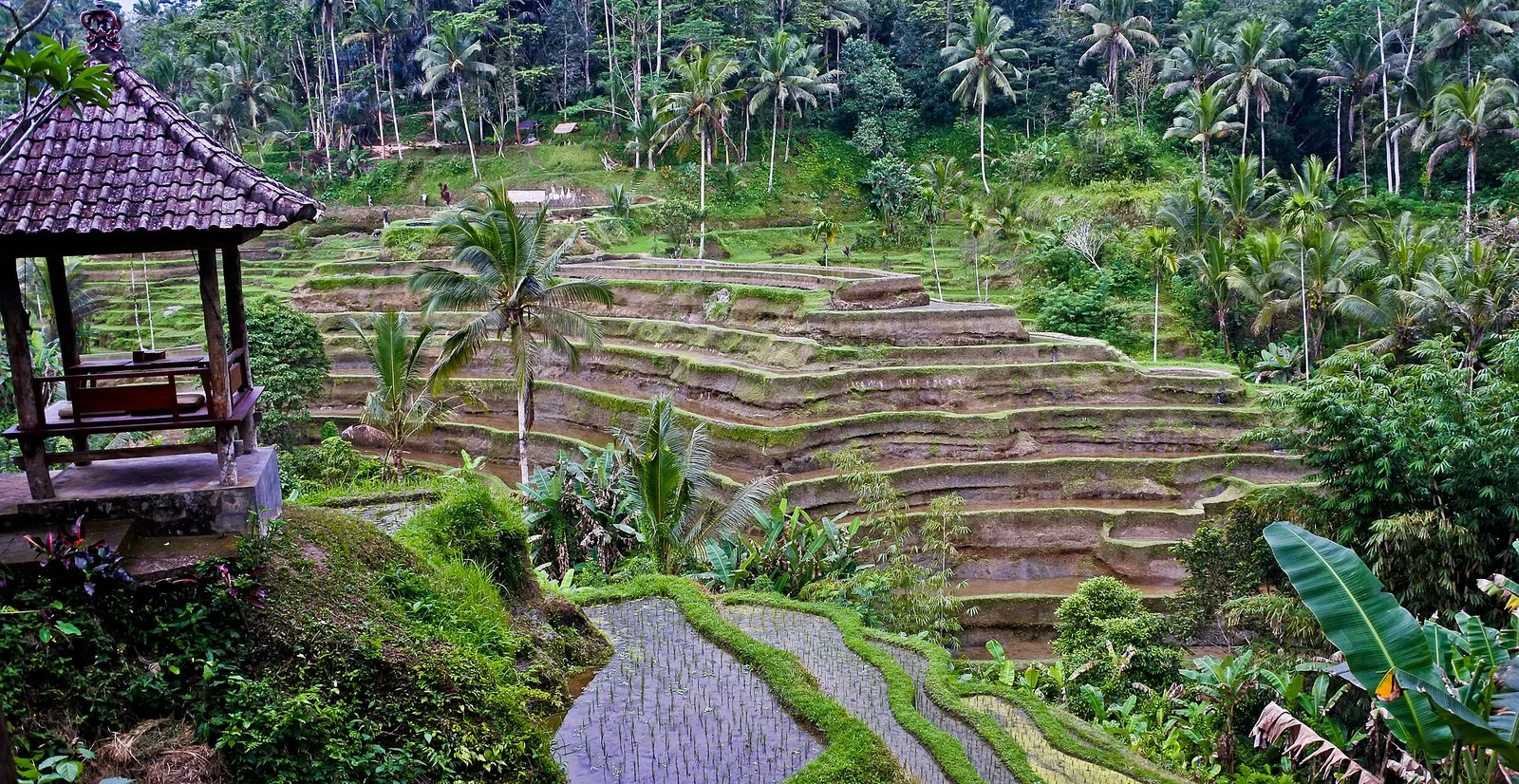
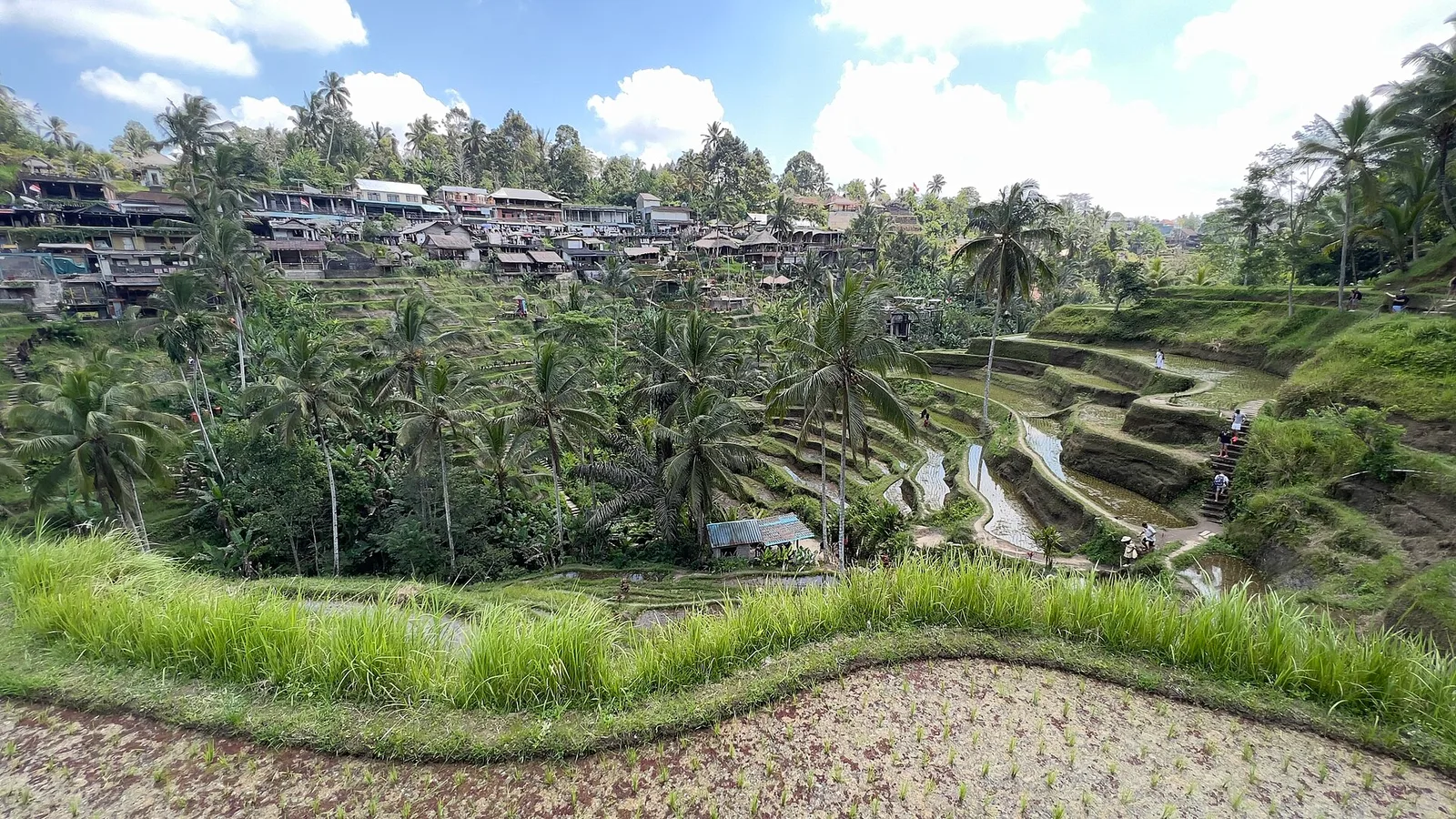
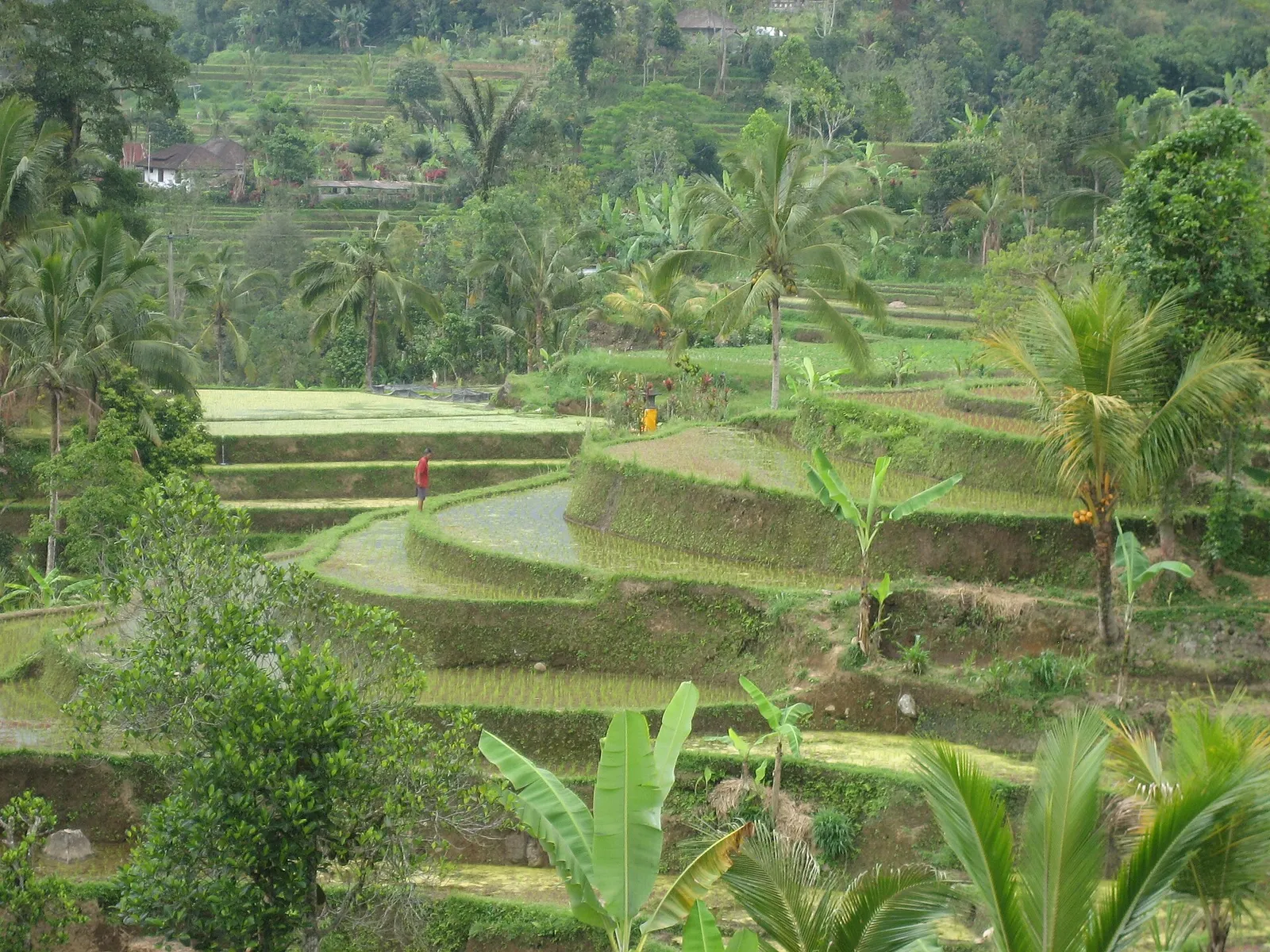
Plan on that rhythm and a wet-season trip works beautifully. Plan on European-style all-day drizzle and you will be pleasantly surprised. What genuinely suffers is anything that needs a whole reliable day: a boat crossing, a sunrise trek with a view, a full day on the sand. Everything else, food, spas, temples, rice terraces, waterfalls, culture, is arguably better in the green months.
Surf seasons: two coasts, two calendars
Bali’s shape gives it a rare gift: somewhere is offshore almost every day of the year.
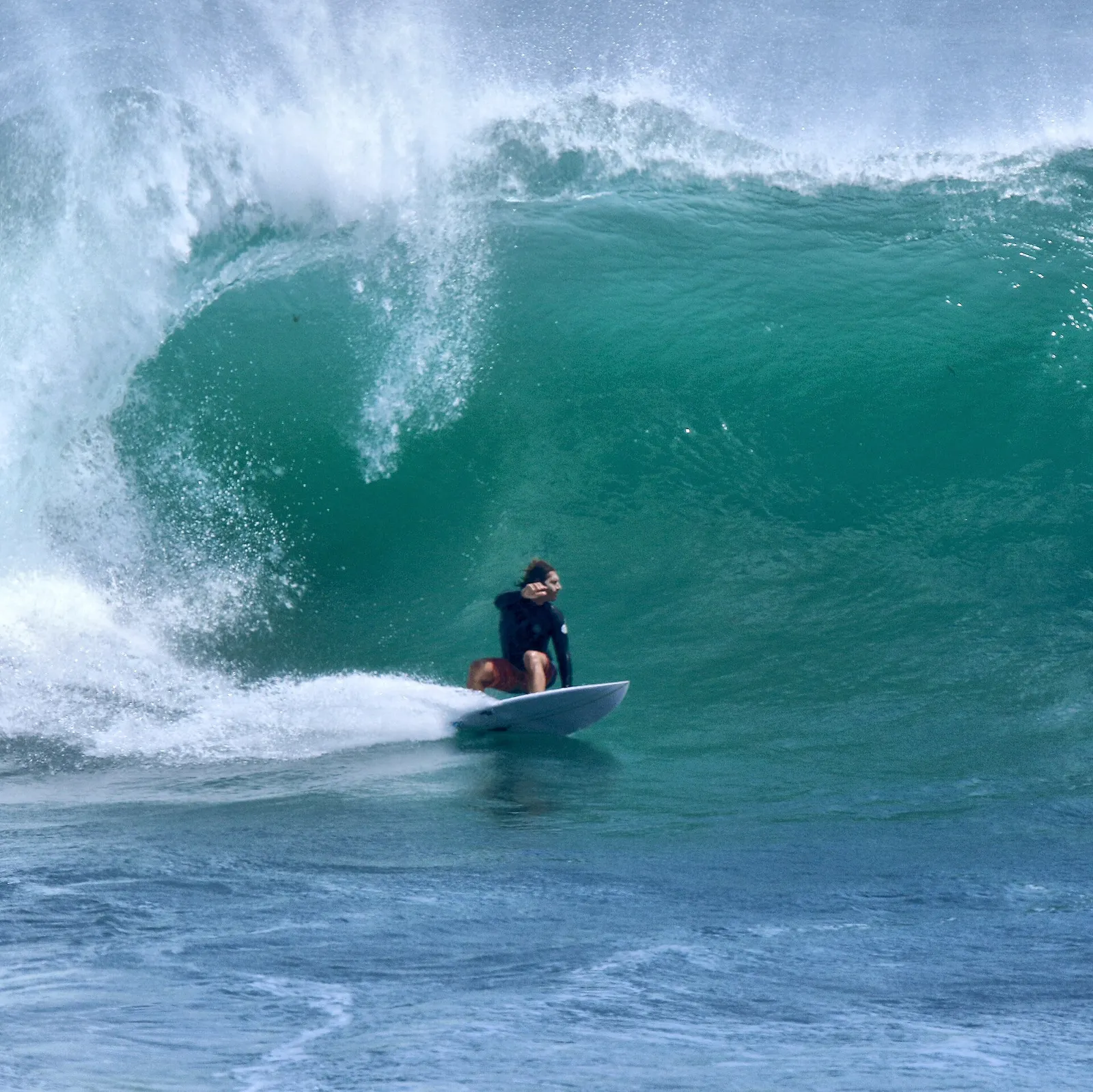
From April to October, dry-season trade winds blow from the southeast, grooming the west coast: Uluwatu, Padang Padang, Bingin, Canggu and Kuta all light up with clean, consistent swell. This is the classic Bali surf season and the reason the Bukit peninsula fills with surfers all winter (their winter, Bali’s dry season).
From November to March, the winds flip to the northwest and the east coast takes over: Keramas, Serangan and Nusa Dua handle the same Indian Ocean swell with offshore mornings. Beginners are the exception to all this seasonality: the gentle beach breaks at Kuta, Legian and Batu Bolong offer learnable waves nearly year-round, and surf schools operate every month. For where each break suits your level, see our best beaches guide.
Heat, humidity and how to cope with both
The thermometer is the least interesting number in this article. What changes across the year is how the same 31 degrees feels, and in the wet months, with humidity high and no breeze, it feels considerably heavier. That has practical consequences: you will walk less, tire sooner, and want air conditioning at night rather than a ceiling fan.
The local rhythm is the answer, and it is worth adopting from day one. Be out early, take the middle of the day slowly somewhere shaded or in the water, and come back out in the evening. Drink far more water than you think, since dehydration here creeps up on people who are not doing anything strenuous. And check that your accommodation has air conditioning in the bedroom, which is not universal in Bali’s more charming open-air villas and matters most in exactly the months when rooms are cheapest.
Mosquitoes are more active in the wet season, and mosquito-borne illness exists in Indonesia, so pack repellent and use it around dawn and dusk. If you want specific advice for your own health situation, a travel clinic before you go is the right place to get it.
Where you stay changes your weather
Bali is small and its microclimates are not. The south coast is the hottest and driest part of the island, which is why the beach areas take the fewest rain hits. Ubud, inland and higher, is noticeably greener, cooler at night and wetter, with cloud that builds earlier in the afternoon. The highlands around Munduk, Bedugul and Kintamani are cooler again and can be genuinely chilly after dark, which surprises people who packed only for the tropics.
That matters when you pick a base, because it decides what your ordinary day feels like rather than just where you sleep. Our comparison of Ubud and Canggu covers the two most popular options, and the weather difference between them is a real part of the choice: jungle humidity and afternoon cloud versus coastal heat and a sea breeze.
Picking your month by trip type
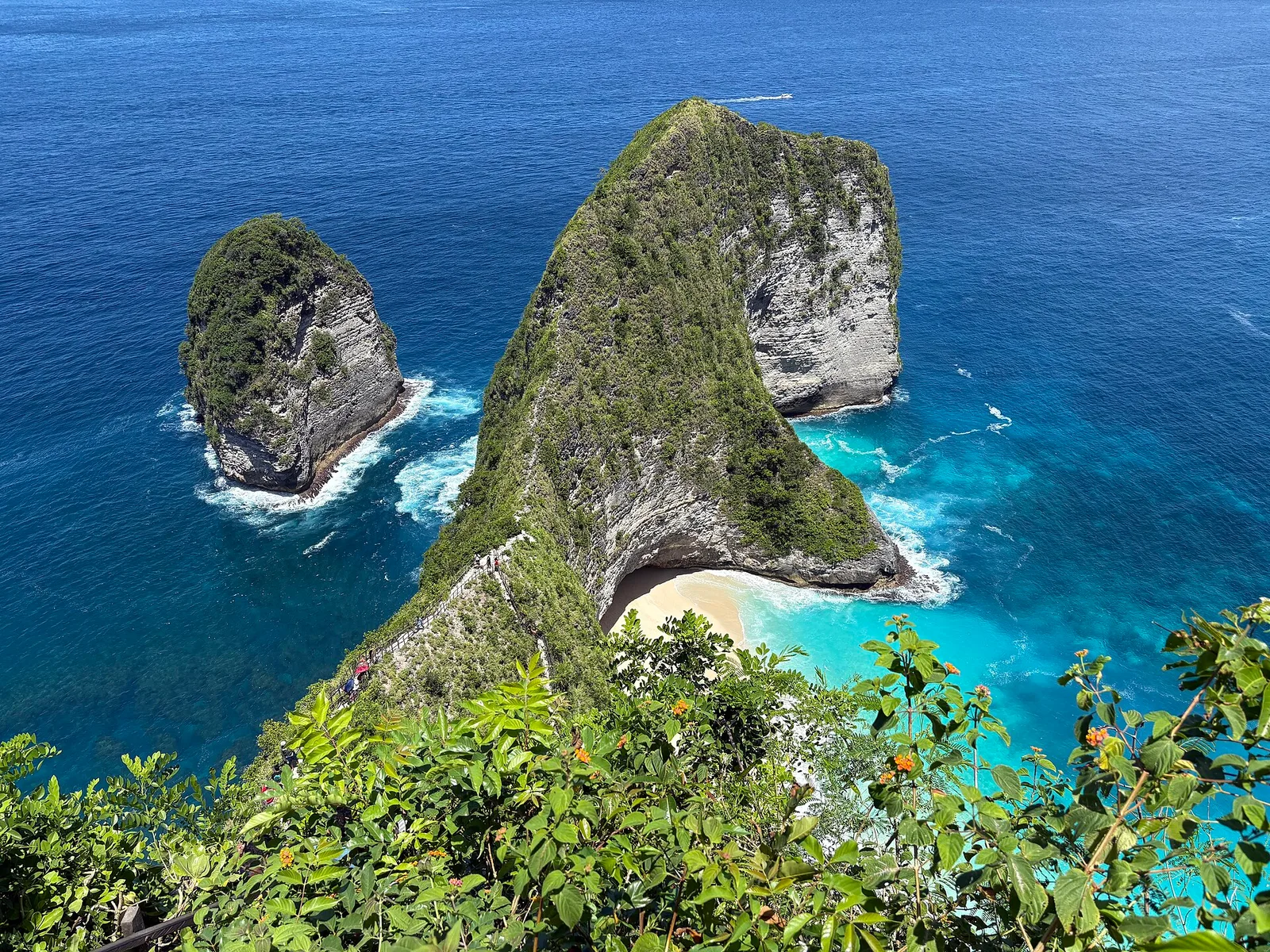
Beach-first trips want May to September: reliable sun, calm west-coast seas and dependable boat crossings to Nusa Penida and the Gilis. Hikers and sunrise chasers should also aim for the dry months, when Mount Batur’s summit view is most likely to be clear. Divers and snorkellers get good conditions most of the year, with April to November best around Nusa Penida, and the famous mola mola (oceanic sunfish) season around Penida peaking August to October.
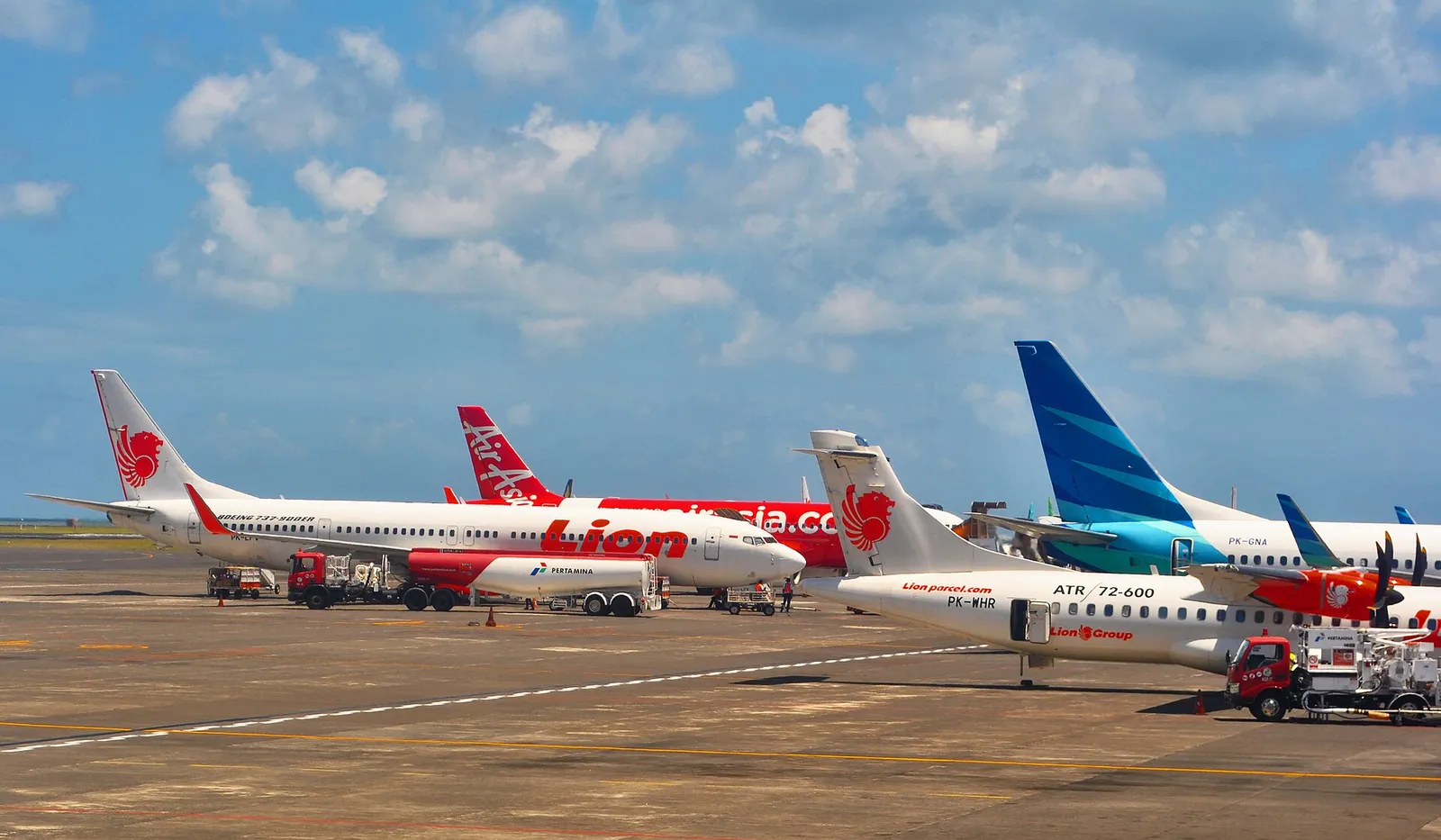
Budget travellers should look hard at the wet season and the shoulders: February, March and November can cut accommodation costs by 30 to 50 percent against August, and the island feels local again. Culture seekers might plan around Nyepi, the Balinese Day of Silence in March, when the entire island, including the airport, shuts down for 24 hours: a genuinely unique experience if you embrace it, a logistical trap if it surprises you. Foodies and spa lovers can go absolutely any month; rain has never ruined a tasting menu or a two-hour massage.
What the weather can actually cancel
Most of Bali carries on in the rain. Three things do not. Fast boats to the Nusa islands and the Gilis are the big one: crossings get rough and are cancelled outright in bad conditions, usually decided on the morning, so never make a boat the last link before a flight. Sunrise treks up Batur are weather dependent for the view rather than the walk, and a cloudy summit is a long night out for nothing. And cliff paths and waterfall descents get slippery and genuinely hazardous after heavy rain, which is part of why several of the bigger waterfalls require a local guide.
The planning move is simple: keep a spare day between anything weather-dependent and anything unmissable, and put the boat trip early in the stay rather than on the last morning.
Crowds and prices: the third season
Weather is only half the calendar; the other half is people. July, August and the mid-December to early-January holidays are peak season: the best weather (or festive buzz) but the highest prices, heaviest traffic in Canggu and Seminyak, and sold-out sunrise treks. May, June and September deliver nearly identical weather with 20 to 40 percent softer prices and breathing room at the famous spots. If your dates are flexible, those three months are the answer to almost every version of the question “when should I go to Bali?”
If your dates are fixed: Bali or somewhere else?
This is where the calendar becomes a destination question rather than a timing one. Bali’s dry season runs April to October, which is close to the inverse of the dry season on Thailand’s Andaman coast, where November to April is the reliable window. If you can only travel in the northern winter and long, dependable beach days are the entire point of the trip, that difference is worth knowing before you book.
None of which makes a January Bali trip a bad idea: it is green, quiet and cheap, and the mornings are usually fine. It just means the choice deserves a moment’s thought. Our comparison of Bali and Thailand weighs the two on cost, beaches, food and how much of the holiday is spent travelling, with the seasons as one input among several.
What to pack, by season
For the dry season: light clothes, swimwear, a hat, strong sunscreen, something on your feet for hot sand, and one long-sleeved layer for temples and highland evenings. Modest cover for shoulders and knees is needed at every temple, and while sarongs are provided at the gate, a light scarf of your own is useful.
For the wet season: everything above, plus a compact rain jacket rather than an umbrella, sandals that survive a downpour, a dry bag for phones and cameras, and repellent. In both seasons, add a light layer if the highlands are on your itinerary, since Kintamani before sunrise is nobody’s idea of tropical.
The short version
Any month works; some months work harder. Go May, June or September for the best all-round trip, July or August if you only get peak-summer holidays and can book early, and the wet season if you want the green, quiet, affordable Bali most visitors never meet. Whichever you choose, front-load the day, keep slack around anything that depends on a boat, and pick a base whose microclimate suits how you want the afternoons to feel.
Are your dates fixed, or are you picking the month around the weather?