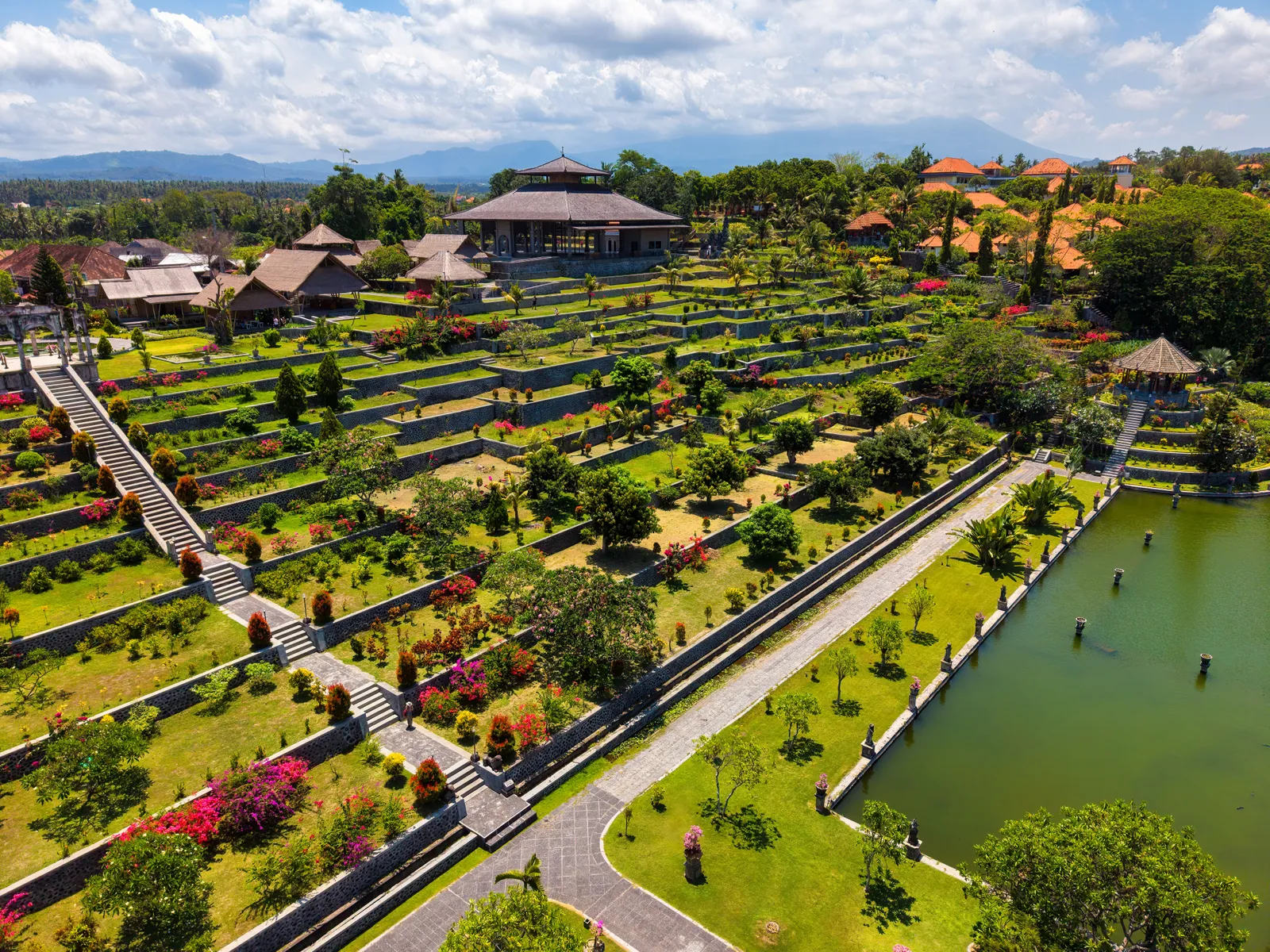
Tirta Gangga is not a temple, despite how often it gets filed alongside one in Bali itineraries. It is a former royal water palace: a set of ponds, fountains and stone carvings built for the last king of Karangasem in the middle of the twentieth century, and it survives as one of the more photogenic, least rushed stops in East Bali. Our guide to Bali’s temples covers where Tirta Gangga fits alongside the island’s actual religious sites, and if you are already heading inland for green terraces on the same trip, our guide to Tegalalang and Jatiluwih covers the rice-field side of a similar kind of day out.
A palace, not a temple
Tirta Gangga was built around 1946 for Anak Agung Anglurah Ketut Karangasem, the last king of the Karangasem royal house, and takes its name from the Ganges river, sacred in Hindu tradition. It was designed as a royal retreat and pleasure garden built around a natural spring, with ponds, fountains and statuary rather than shrines.
The site was badly damaged in 1963, when nearby Mount Agung erupted, one of the most destructive eruptions in the volcano’s recorded history. Much of the palace was later restored, using original stonework where it survived, and it has since been managed as a public attraction with continuing ties to the royal family.
The spring itself predates the palace built around it. Natural water sources like this one have long carried religious significance in Balinese tradition, and building a royal retreat here rather than somewhere else on the coast or in the hills was very much a deliberate choice, tying the site’s later name and its Ganges reference to that older association between water and sanctity.
What is actually there
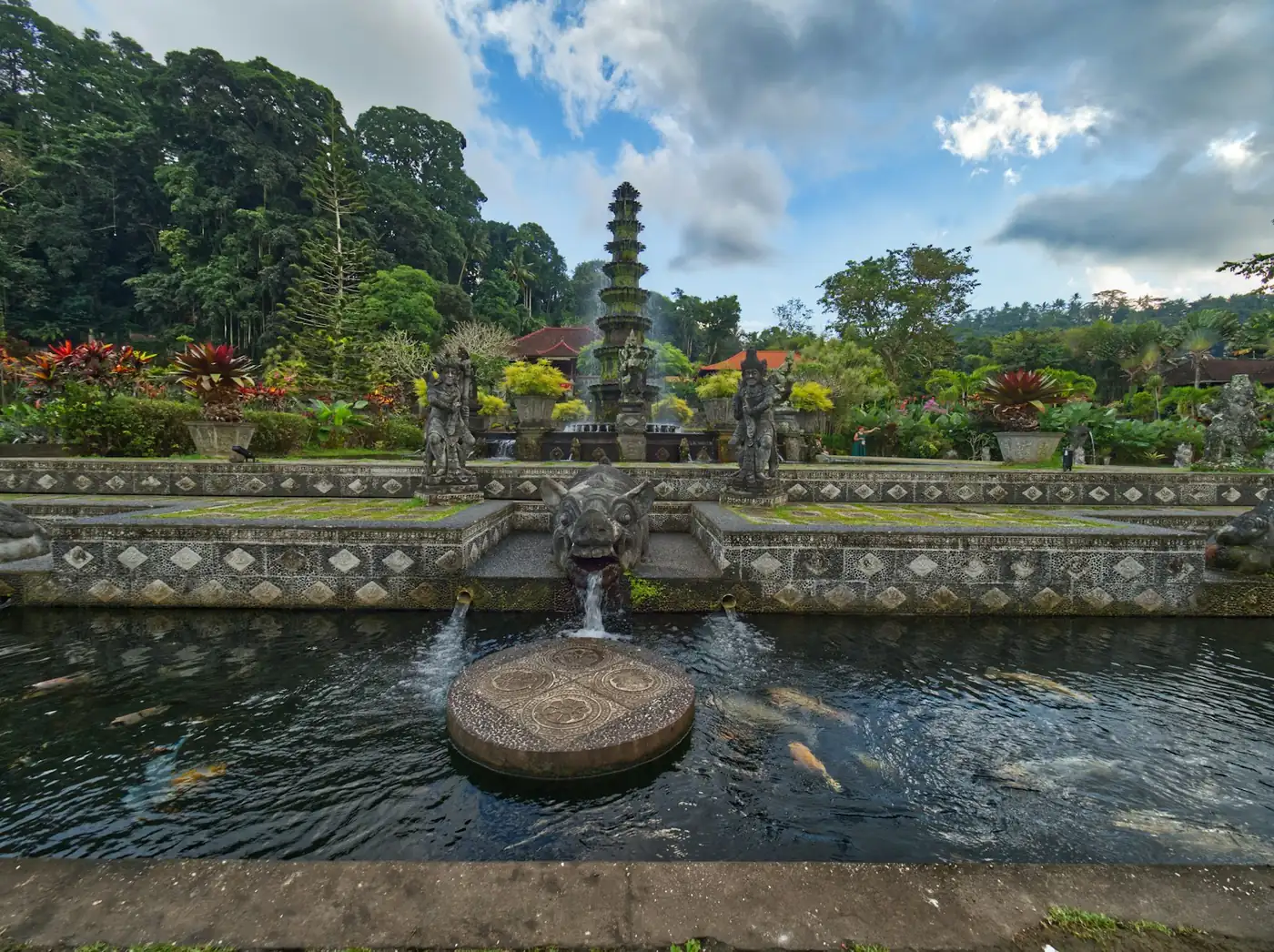
Several ponds fed directly by the spring, decorated with carved stone fountains and statues, including the naga, or dragon, figures the site is best known for in photographs.
A stepping-stone path across the largest pond is the signature experience, a line of raised stones threading between lily pads and koi, and a genuinely fun if slightly precarious walk. It can be wet and slippery, particularly after rain, and it is worth taking slowly with children.
A large swimming pool, also spring-fed and notably cool, open separately from the general gardens for a modest additional fee. It is a popular way to cool off midway through a longer East Bali day.
Terraced gardens and further statuary climb the slope above the main ponds, with quieter corners away from the busiest photo spots near the entrance.
Visiting practically
Tirta Gangga sits in the Karangasem regency, in East Bali, close to the town of Amlapura. From Ubud or the southern resort areas, allow roughly ninety minutes to two hours each way, since the roads narrow and climb through hill country for the final stretch. A private driver is the more comfortable option for most visitors, given both the distance and the number of other stops that typically get combined with it.
Entrance is by a modest ticket, with the swimming pool priced separately; treat any specific figure you read elsewhere as approximate and expect it to change, since these things do over time.
Mornings are best. Arrive before the mid-morning tour groups for softer light on the ponds and a much quieter walk across the stepping stones, and expect coach parties to build steadily from around ten or eleven onwards.
Parking, restrooms and a small row of food and drink stalls sit near the main entrance, so there is no need to arrive fully stocked, though options thin out compared with a resort area. A handful of local guides linger near the gate offering to walk you through the gardens for a small tip; they are optional and the stepping stones and ponds are easy enough to navigate without one.
Allow at least an hour, more if you plan to swim, since the gardens reward an unhurried pace far better than a quick photograph at the stepping stones and straight back to the car.
The rice paddies around the palace
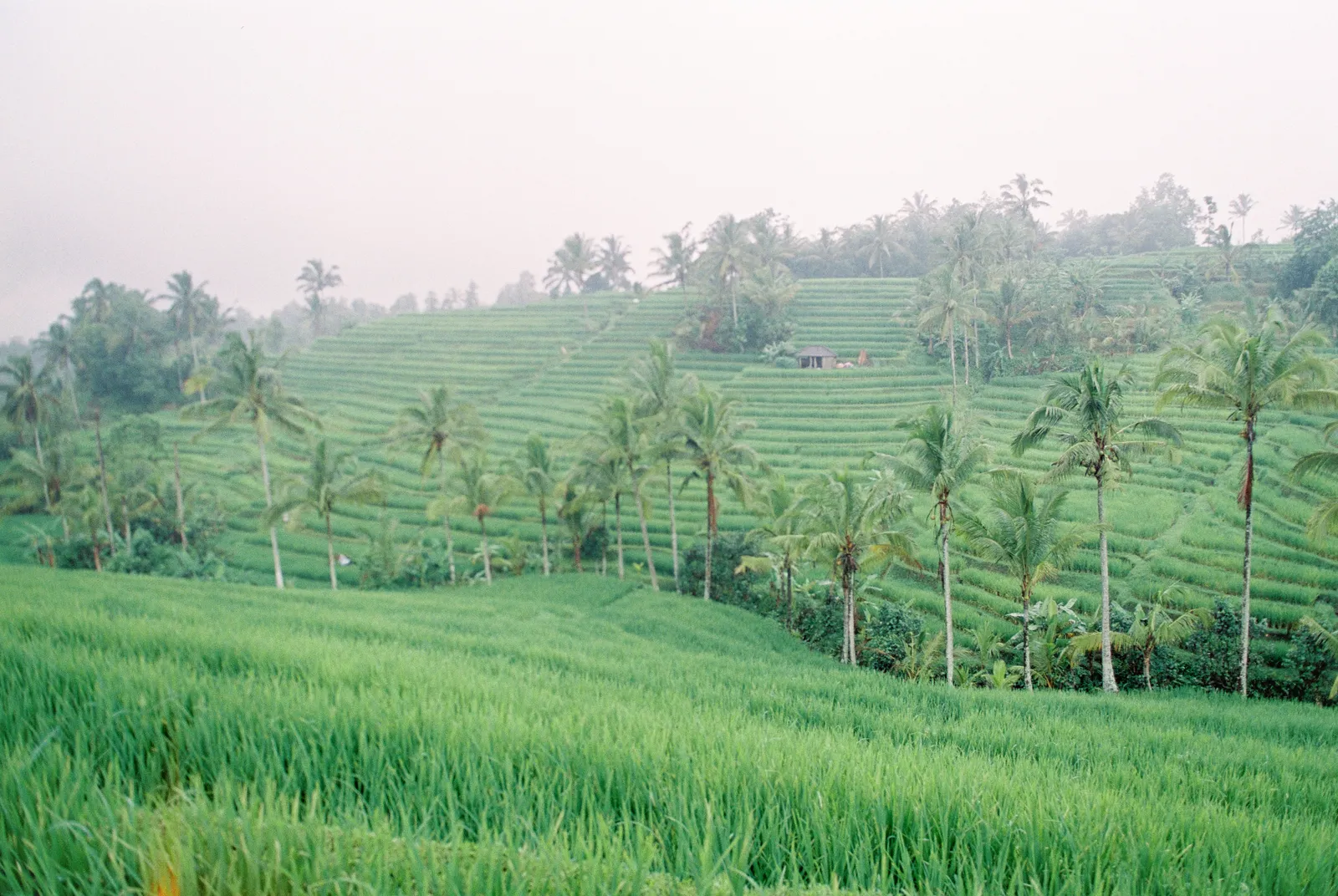
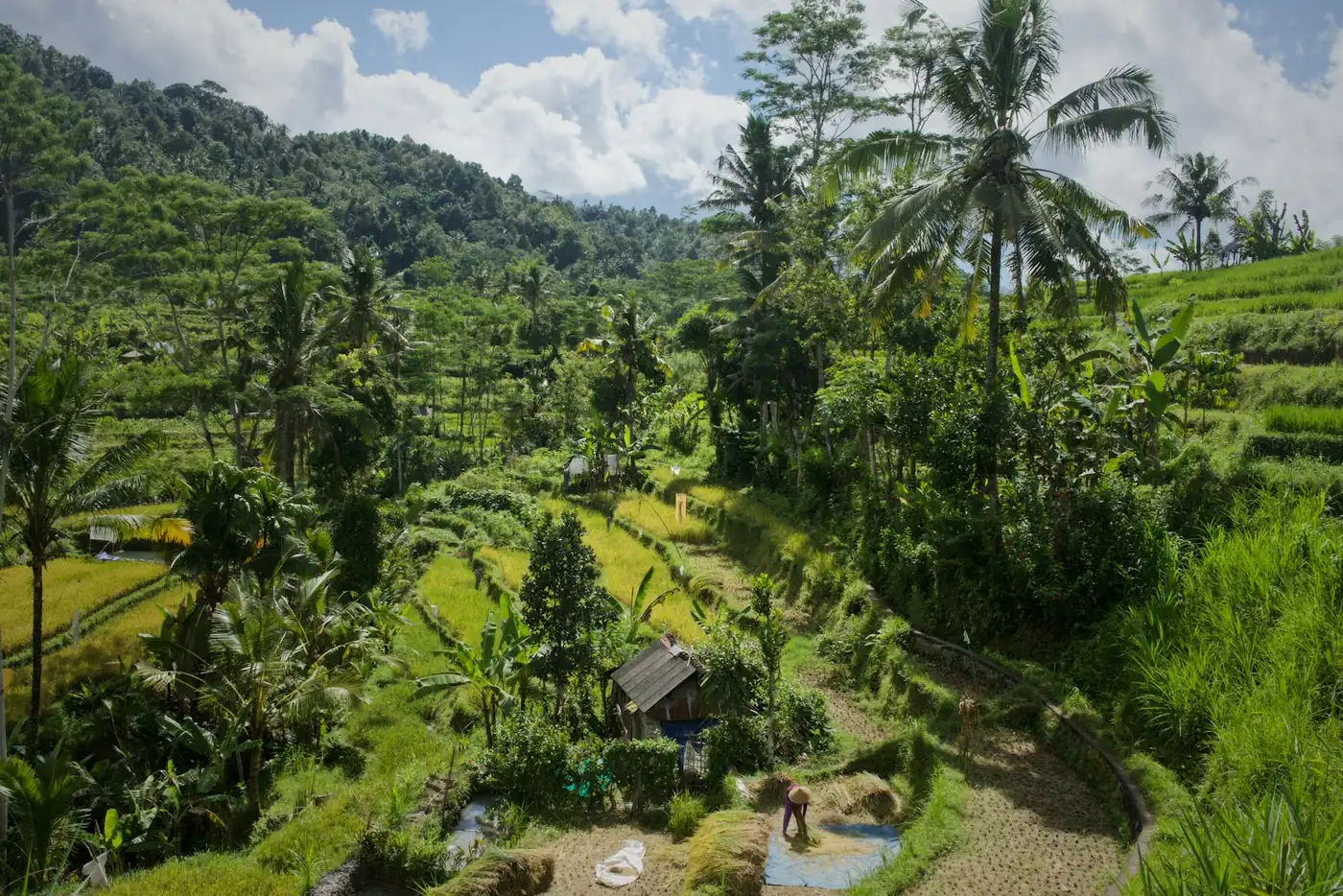
Tirta Gangga does not sit in isolation. The road in and out threads through some genuinely beautiful rice terraces of its own, smaller and less visited than Tegalalang or Jatiluwih further west, and a short walk or drive around the surrounding paddies is one of the more overlooked ways to spend an extra half hour here.
A handful of small guesthouses and warungs overlook the terraces just outside the main gate, several with views back towards the water palace itself, and they make a pleasant, unhurried lunch stop before or after the gardens.
Cycling is a genuine option for travellers based nearby rather than passing through on a day trip, with quiet lanes running between the paddies and the coast that see very little traffic compared with the routes around Ubud.
The east coast rewards a driverTirta Gangga sits well away from the south, and a hired car for the day turns it into a proper east Bali outingCombining it with the rest of East Bali
Tirta Gangga rarely works well as a single destination for a full day on its own, and most visitors fold it into a wider loop through Karangasem. The old royal palace, Puri Agung Karangasem, sits a short drive away in Amlapura and adds context to the water palace’s royal history. The coast at Amed, known for calm-water snorkelling and diving, and the traditional Bali Aga village of Tenganan, with its distinctive woven ikat textiles, both sit within easy reach. The whole region lies at the foot of Mount Agung, the volcano whose 1963 eruption reshaped the water palace itself.
A note on nearby “Gates of Heaven” photographs. The split-gate photo often marketed alongside East Bali itineraries actually belongs to a temple at Lempuyang, a separate site some distance away with its own entrance, queue and rules; do not expect to find it at Tirta Gangga itself.
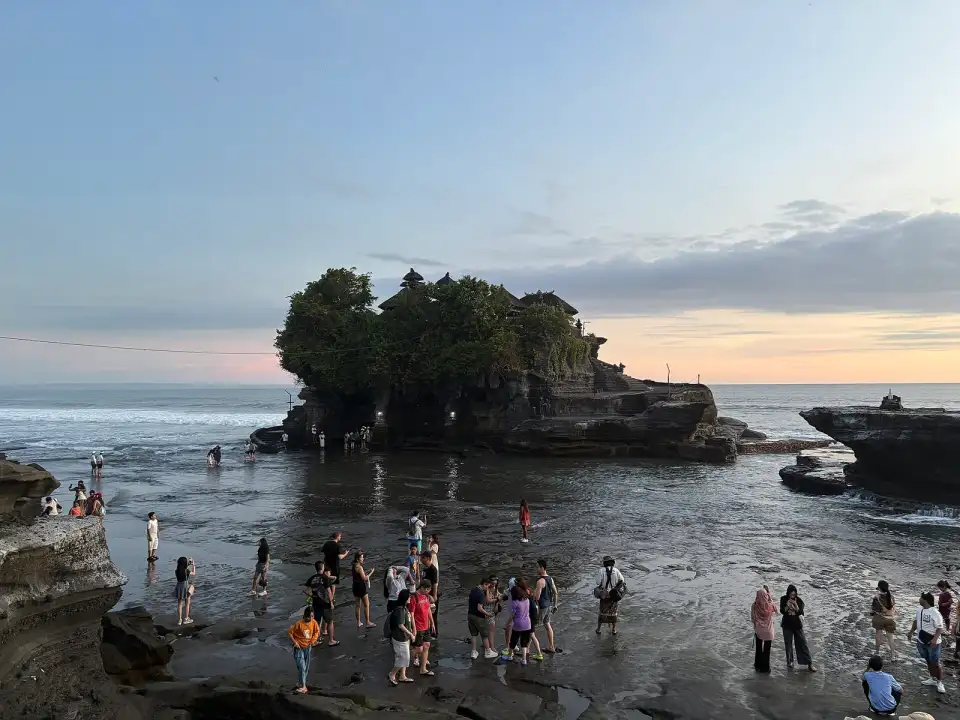
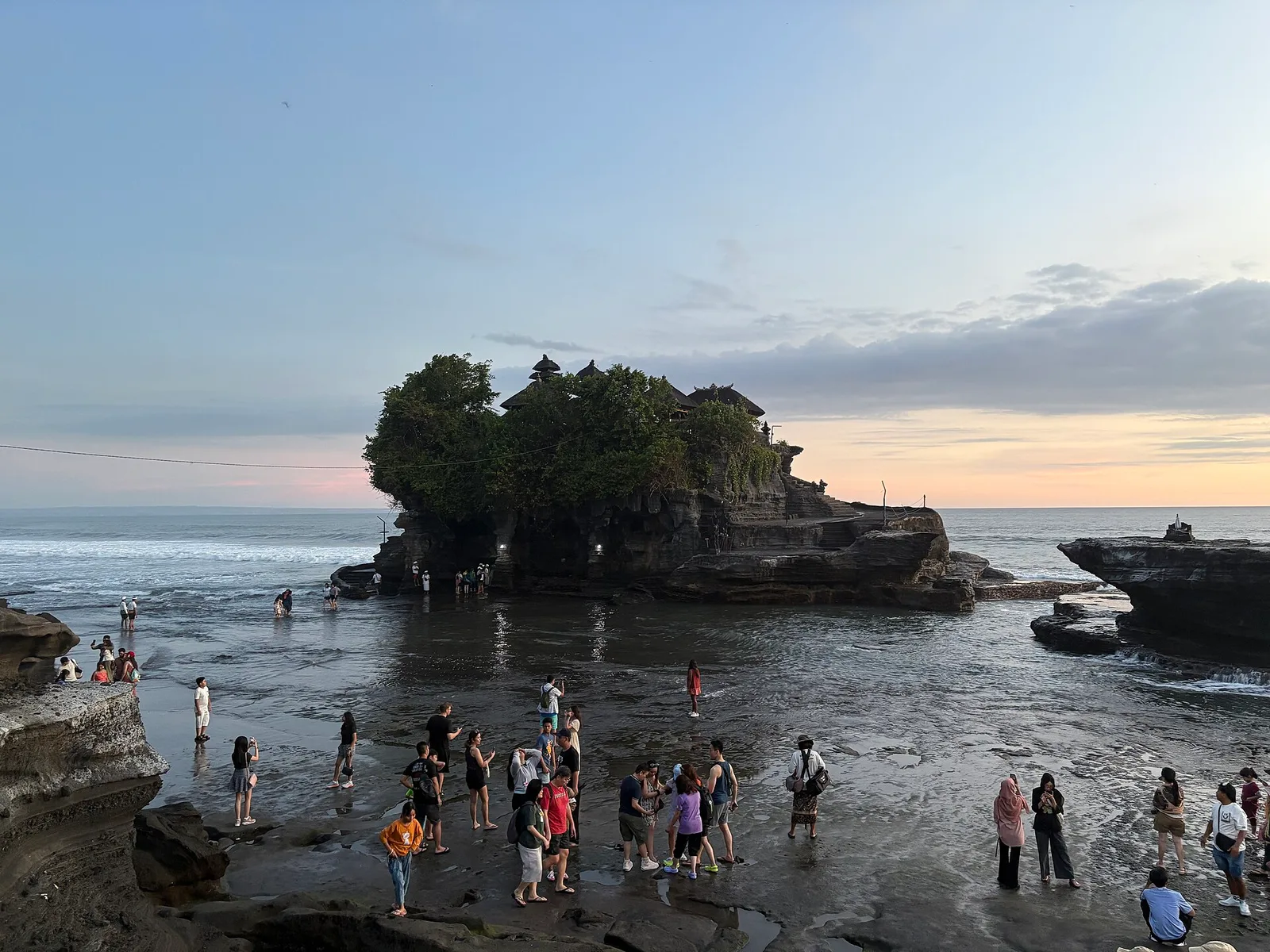
Tirta Gangga rarely gathers the crowds that build at Bali’s most famous sea temple. Our guide to Tanah Lot covers that side of the island, on the opposite coast, for comparison: if the tour-bus queues and sunset crowds there wear you down, a quiet morning walking stepping stones in Karangasem is the antidote.