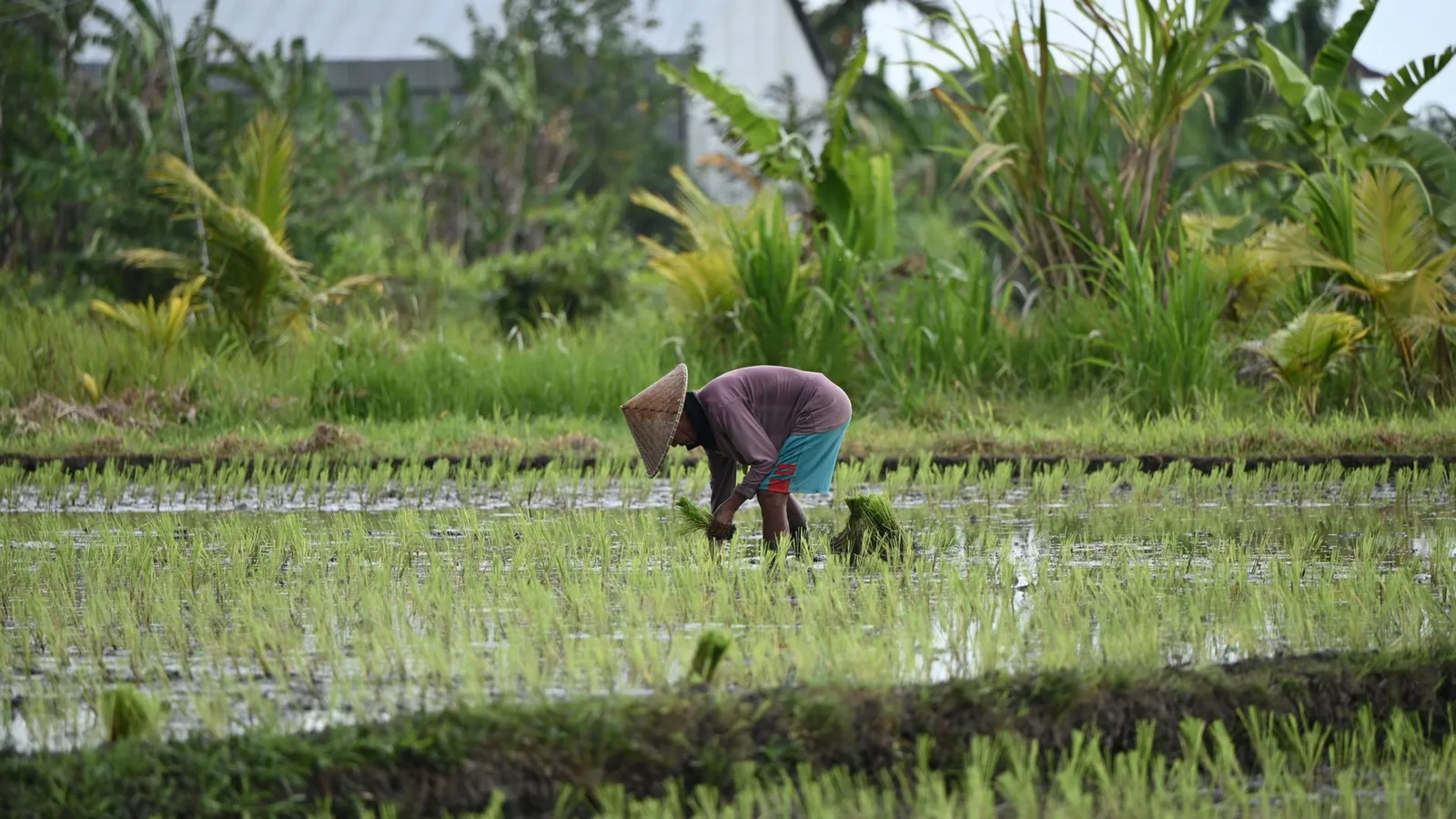
Every visitor to Bali arrives with a picture in their head: green terraces stepping down a valley, a volcano at the far end, a farmer in a conical hat, and silence. Ubud stopped being that some time ago. Sidemen, an hour and a half east, still is. It is a working agricultural valley with a scattering of guesthouses along its sides, no nightlife, very few restaurants and a view that people book a week for and then spend most of it looking at.
The valley
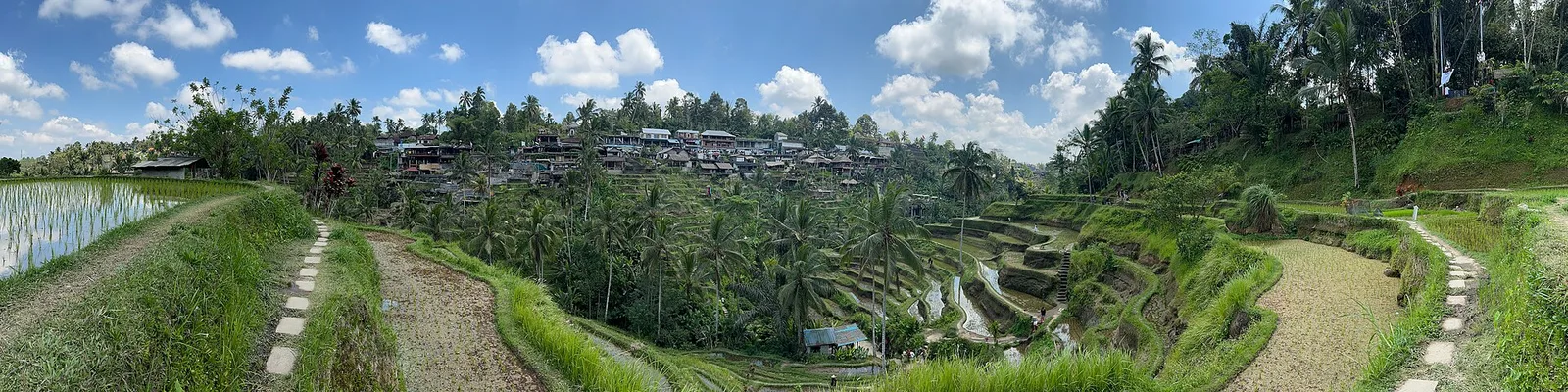
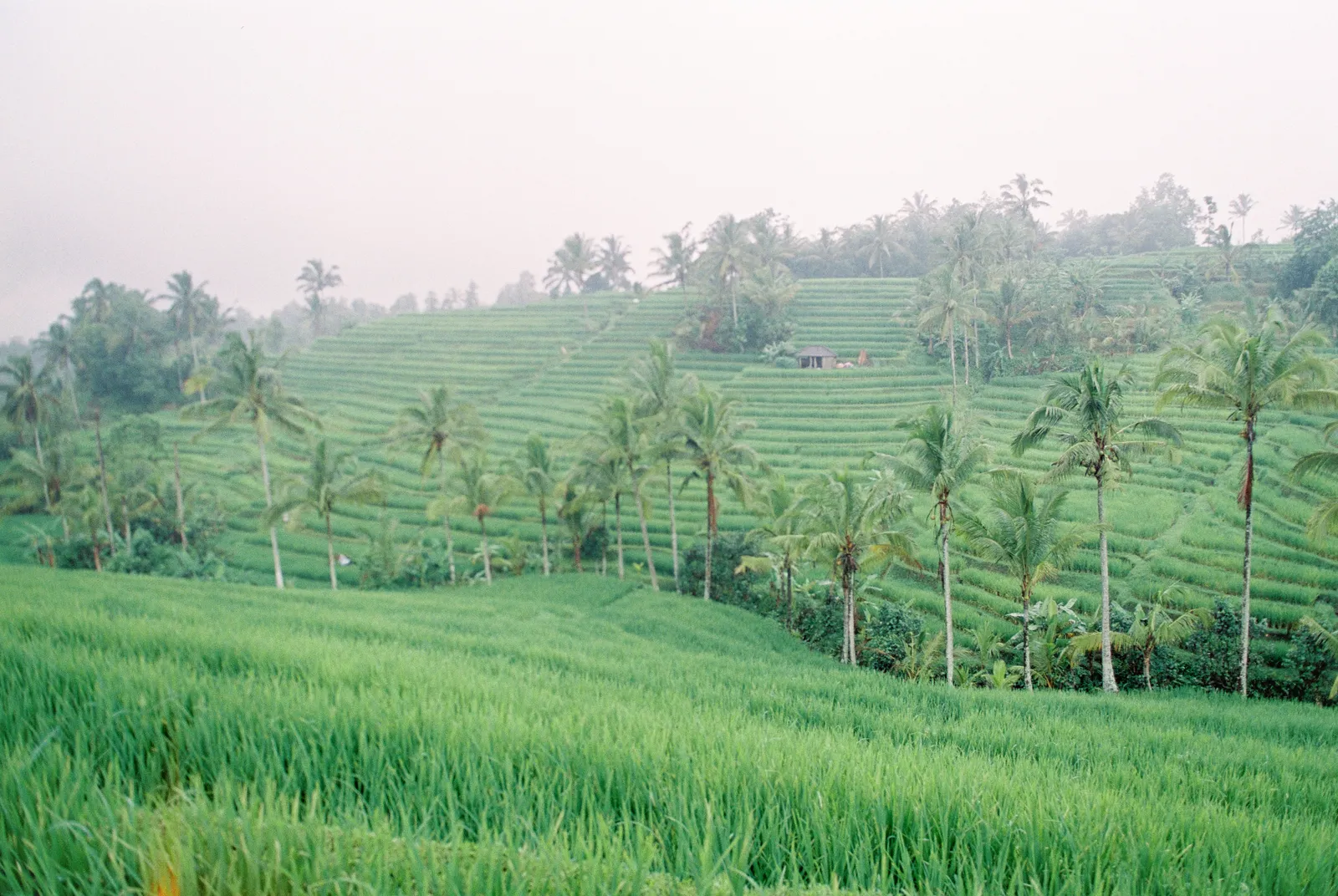
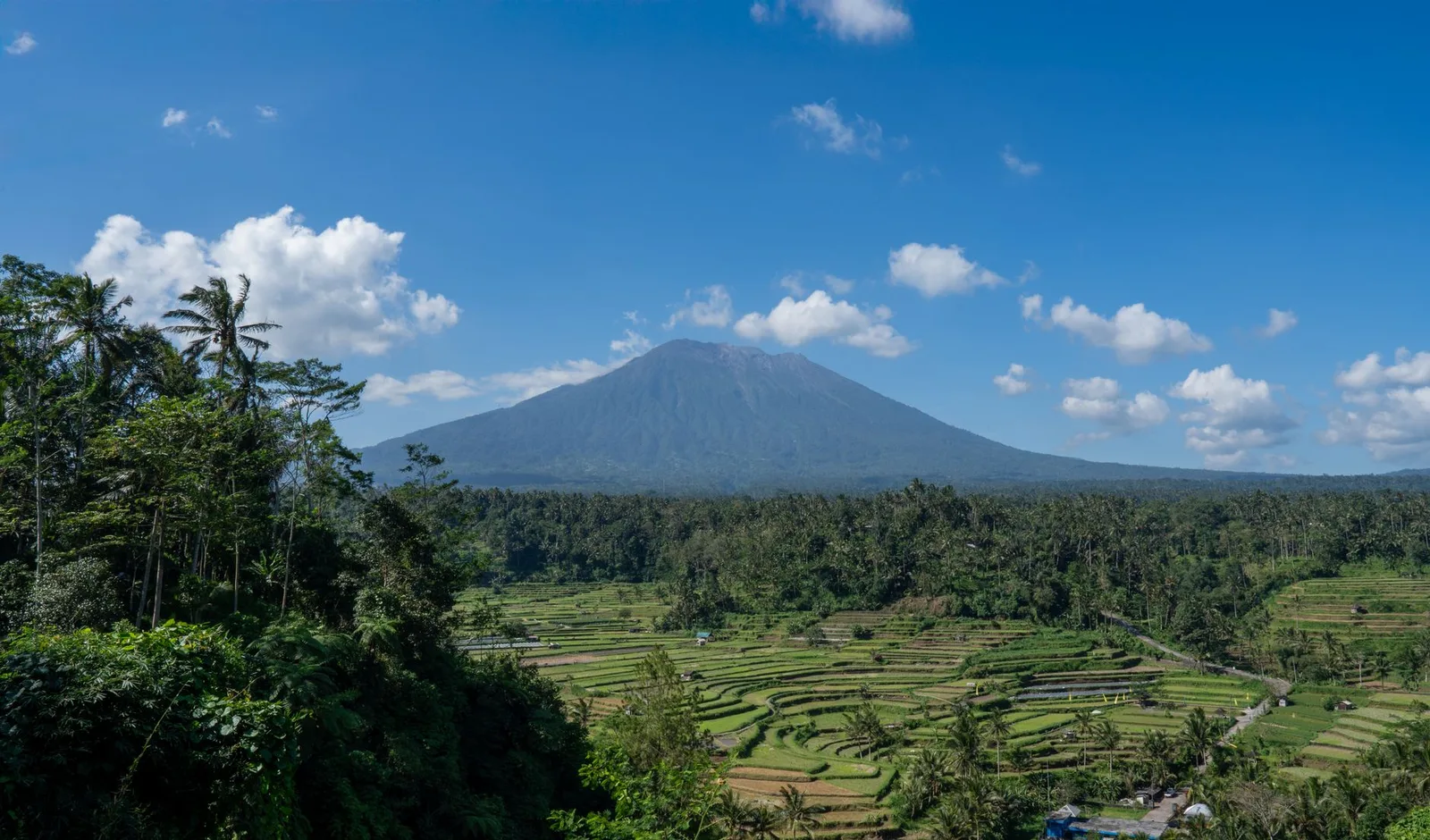
Terraces on both sides of a river valley, worked rather than preserved, with the island’s largest volcano closing the view to the north.
Almost no traffic, and the road through it is narrow and quiet.
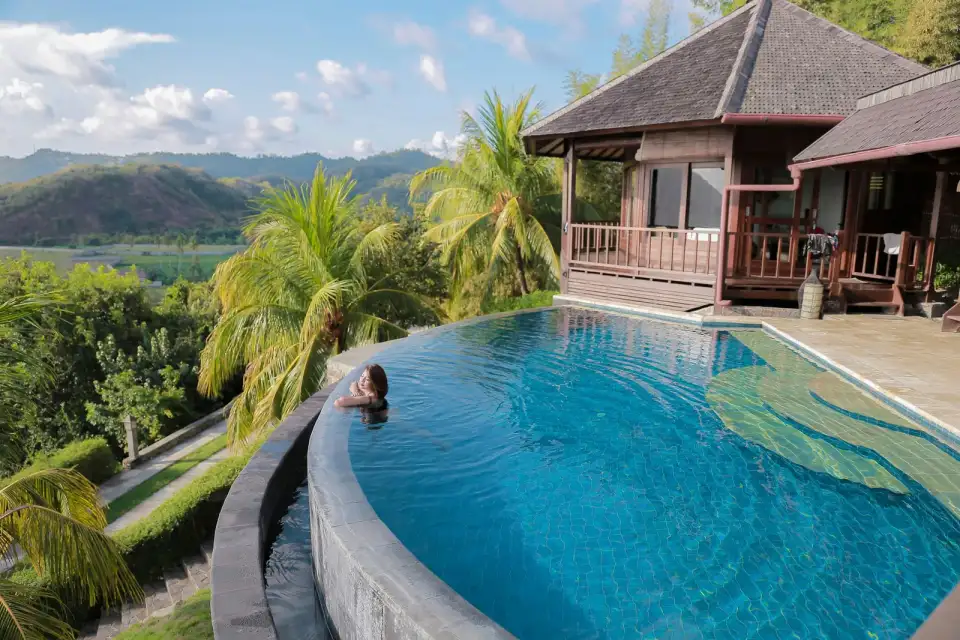
A handful of guesthouses on the slopes, most with a pool and a terrace facing the view.
A few warungs and a small number of restaurants, mostly attached to accommodation.
Weaving, which is the valley’s craft, producing the traditional cloth used across Bali for ceremonies.
What to do
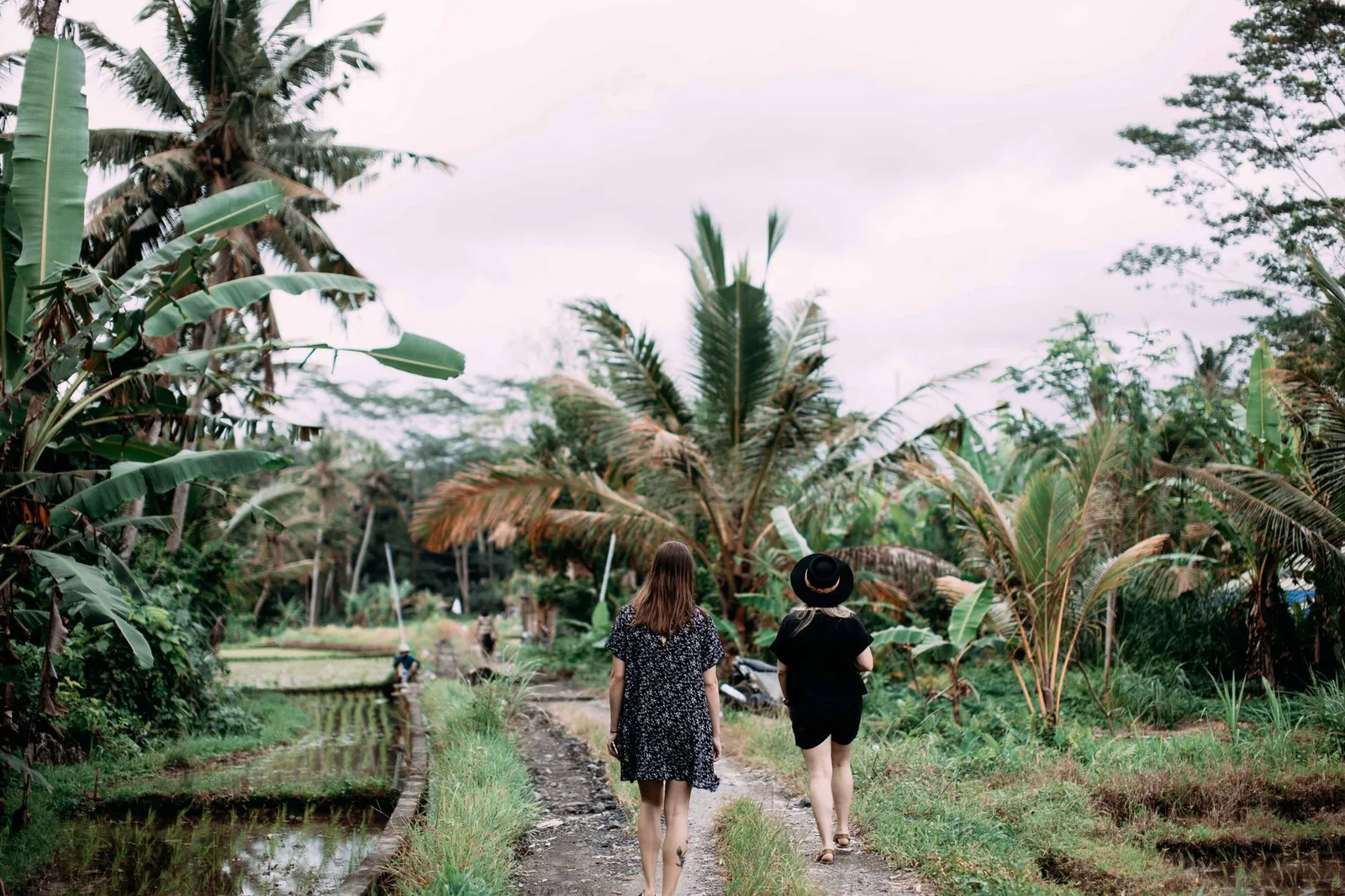
Walk. Paths run along the irrigation channels between the terraces and up to the villages on the ridges, and a morning walk with or without a guide is the main event here.
Visit a weaving workshop, where the cloth is made on backstrap looms, which is genuinely interesting rather than a shop.
A palm sugar or arak producer, which is small-scale, informal and eye-opening.
River tubing down the valley, which is gentle and good with older children.
Temples, including several small village ones and the mother temple on the volcano’s slopes a drive away.
Sit still, which is the reason the guesthouses have terraces.
As a base for the east
The valley sits within reach of most of eastern Bali, which is the practical argument for it.
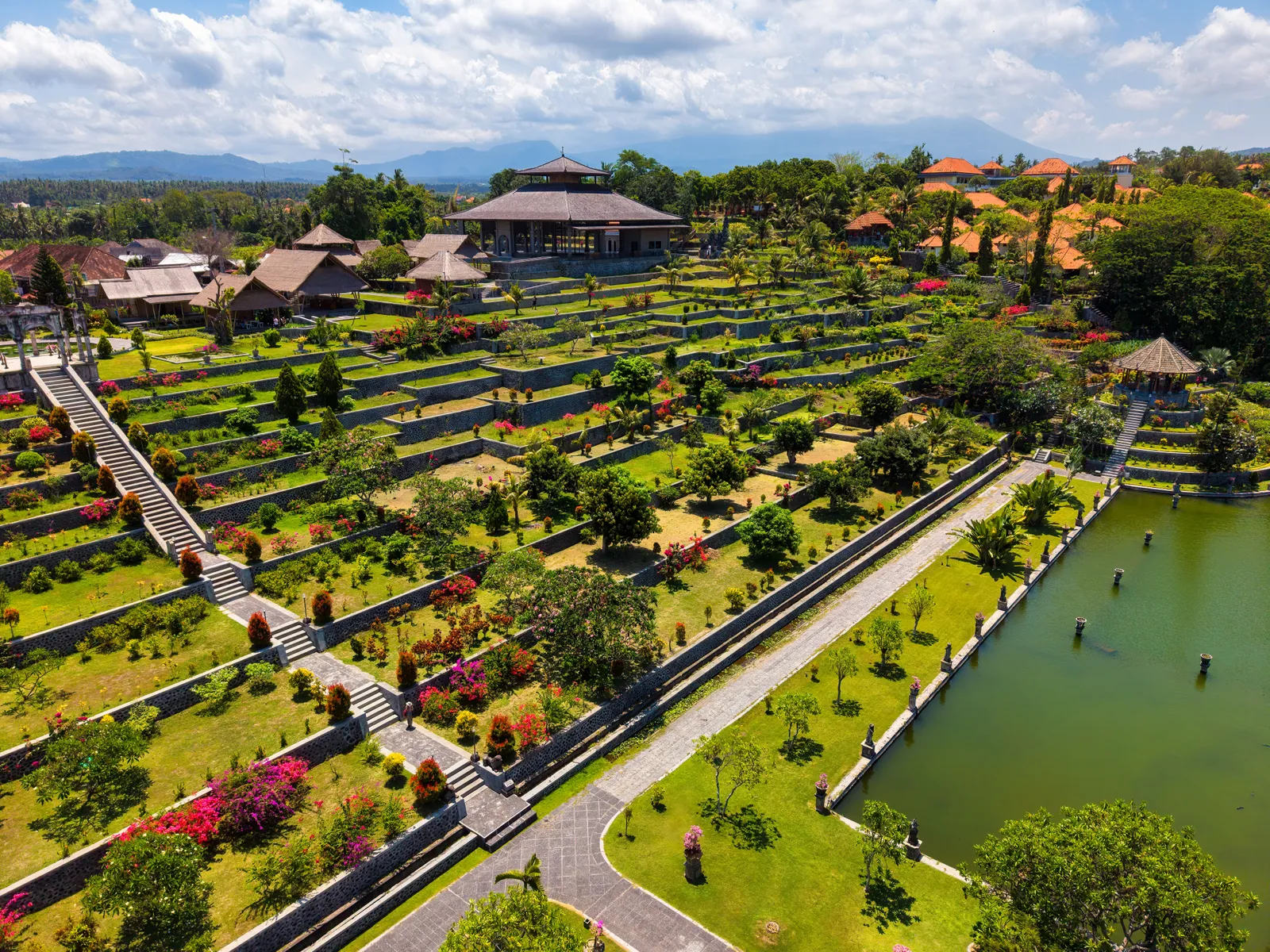
The water palaces on the eastern coast, both a short drive, with pools, fountains and stone terraces.
The mother temple on the slopes of the volcano, the most important in Bali, which needs a sarong and a tolerance for guides at the entrance.
The eastern coast with its black sand and shore diving, an hour or so away.
The ferry port for Lombok, on the same road.
Rice terraces further north, if you want the famous staged ones as well as the working ones outside your window.
Practical notes
Rain comes in the afternoon more often than on the coast, and the valley is green for a reason.
Cash is easier than cards, and machines are limited.
Mosquitoes at dusk on a terrace above rice fields are a fact; repellent and long sleeves handle it.
The road is narrow, steep in sections and unlit at night, which matters if you are riding.
Arrange a driver for the day trips rather than assuming a scooter will cover the distances.
Dress for temples, with a sarong and sash, which most sites lend or rent.
Where this fits in a Bali trip
Sidemen is the pause in the middle of an itinerary rather than the start or the end.
Our guide to Munduk and the north covers the other quiet inland option, higher, cooler and greener still, which pairs well with this valley on a longer trip.
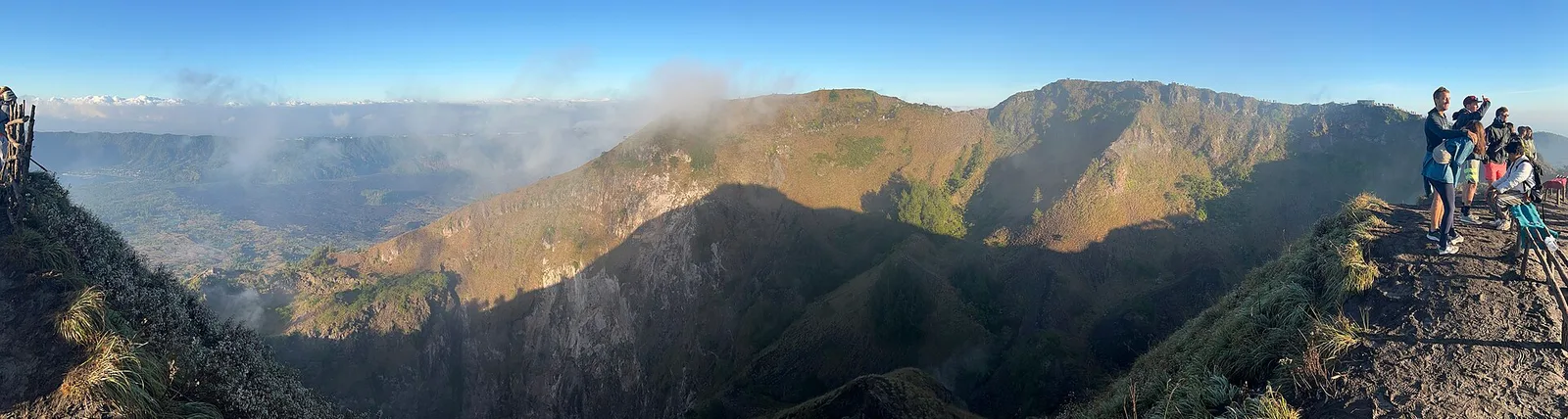
For the sunrise volcano climb that most people do from Ubud and that is closer from here, our guide to the Mount Batur sunrise trek covers whether it is worth the alarm.
And for the groundwork of a first Bali trip, from the areas to the transport and the etiquette, our first-time guide to Bali covers what this article assumes.
The short version
Come to Sidemen for the version of Bali in the photographs, and pick the guesthouse for its terrace and its view because you will spend real hours on it. Walk the irrigation paths in the morning, visit a weaving workshop and a palm sugar producer, and use the valley as a base for the water palaces and the mother temple. Expect afternoon rain, carry cash, and accept that there is nothing to walk to for dinner. Two or three nights, and most people wish they had booked four.