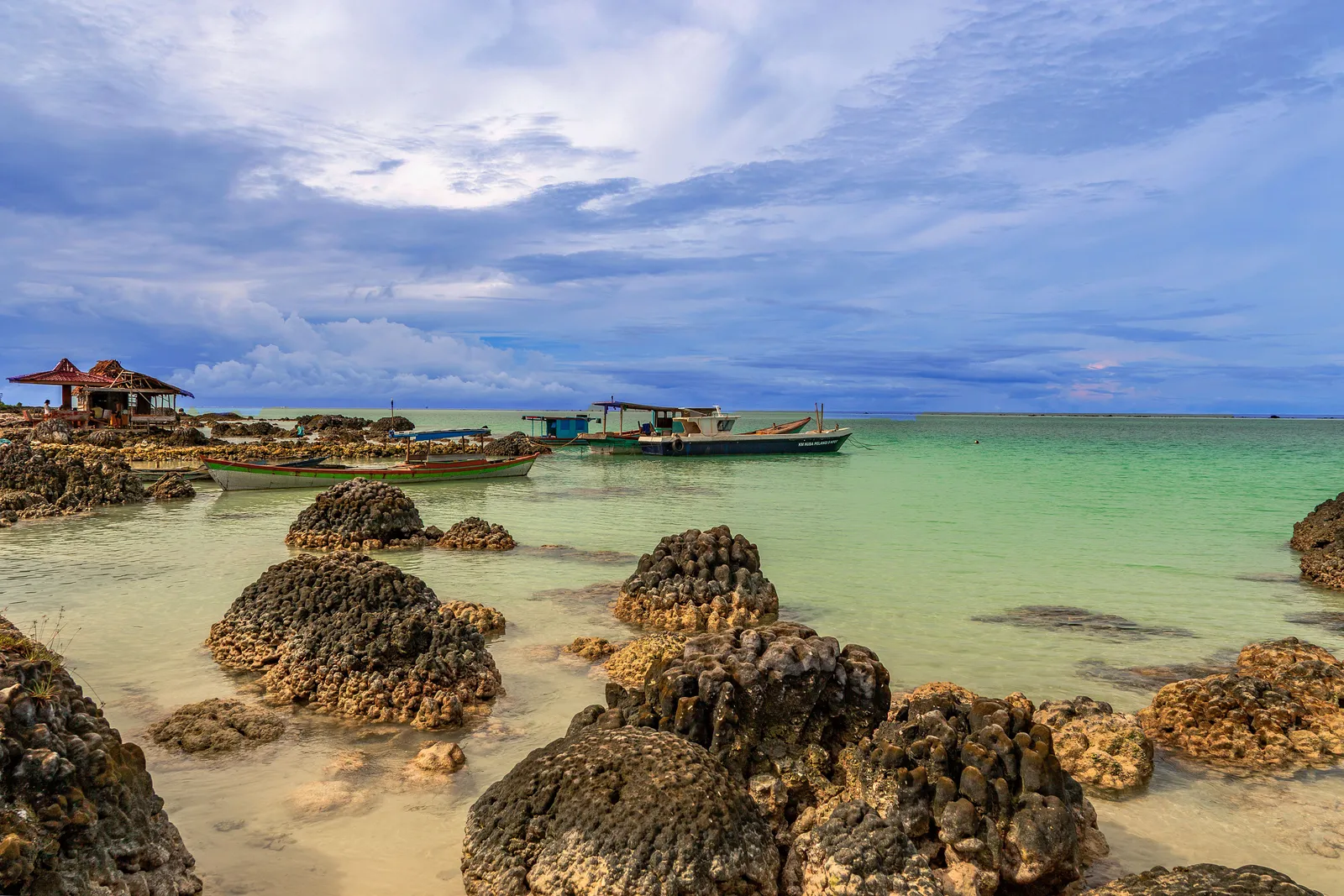
Bali works well with children, and the version of it that works is not the version in the photographs. The famous beaches are the wrong beaches, the famous attraction has a genuine drawback, and the heat dictates the shape of every day. Get those three right and it is one of the easier long-haul destinations for a family. Here is how.
The water decides where you sleep
This is the most consequential choice and the one most families get wrong by booking the well-known areas.
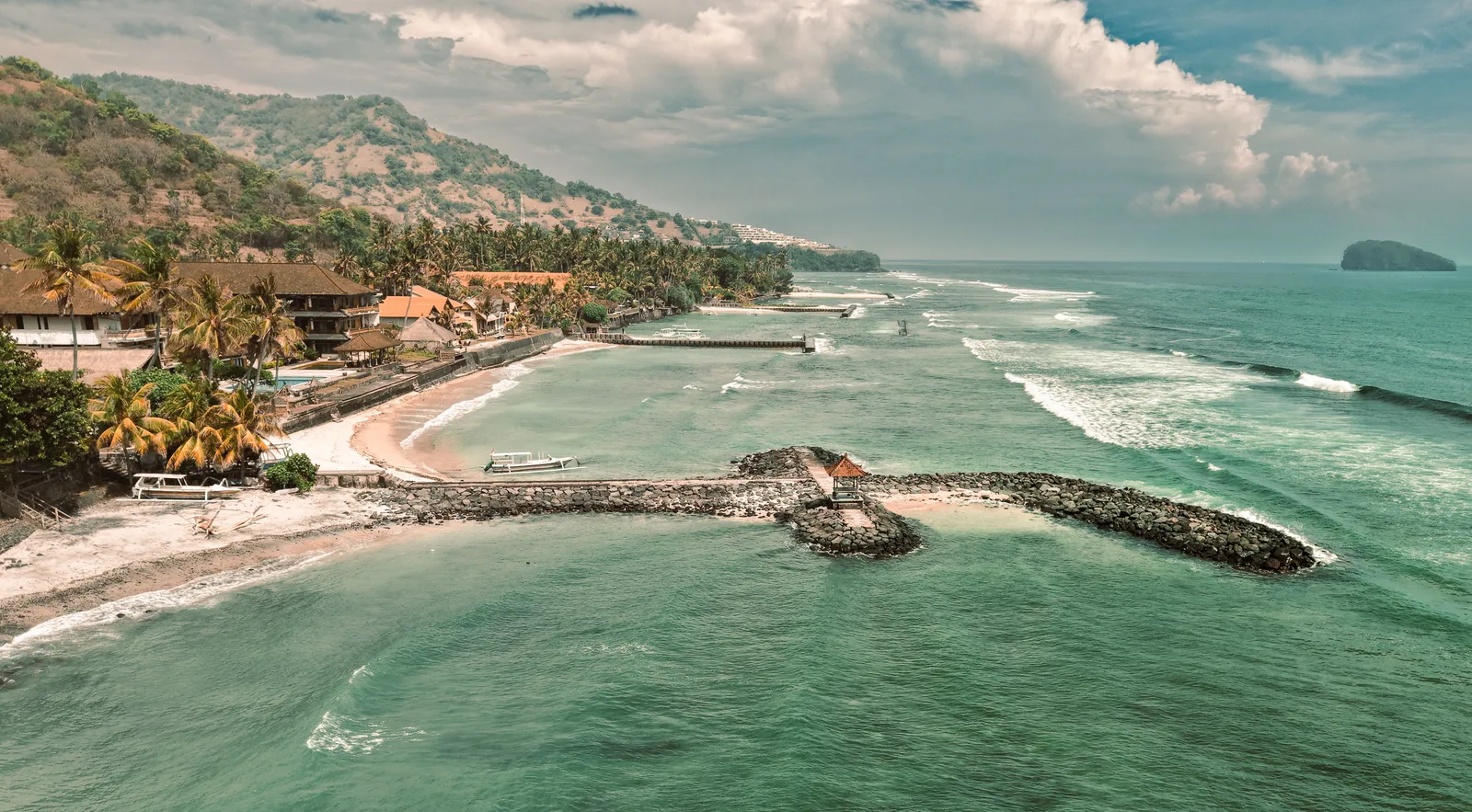
The west coast beaches around Canggu, Seminyak and Uluwatu are surf beaches. Waves, strong currents, rip tides, and in several cases limited lifeguard cover. They are superb for surfing and unsuitable for small children swimming. This is not a comment on the character of those areas, which are excellent, but on the water itself.
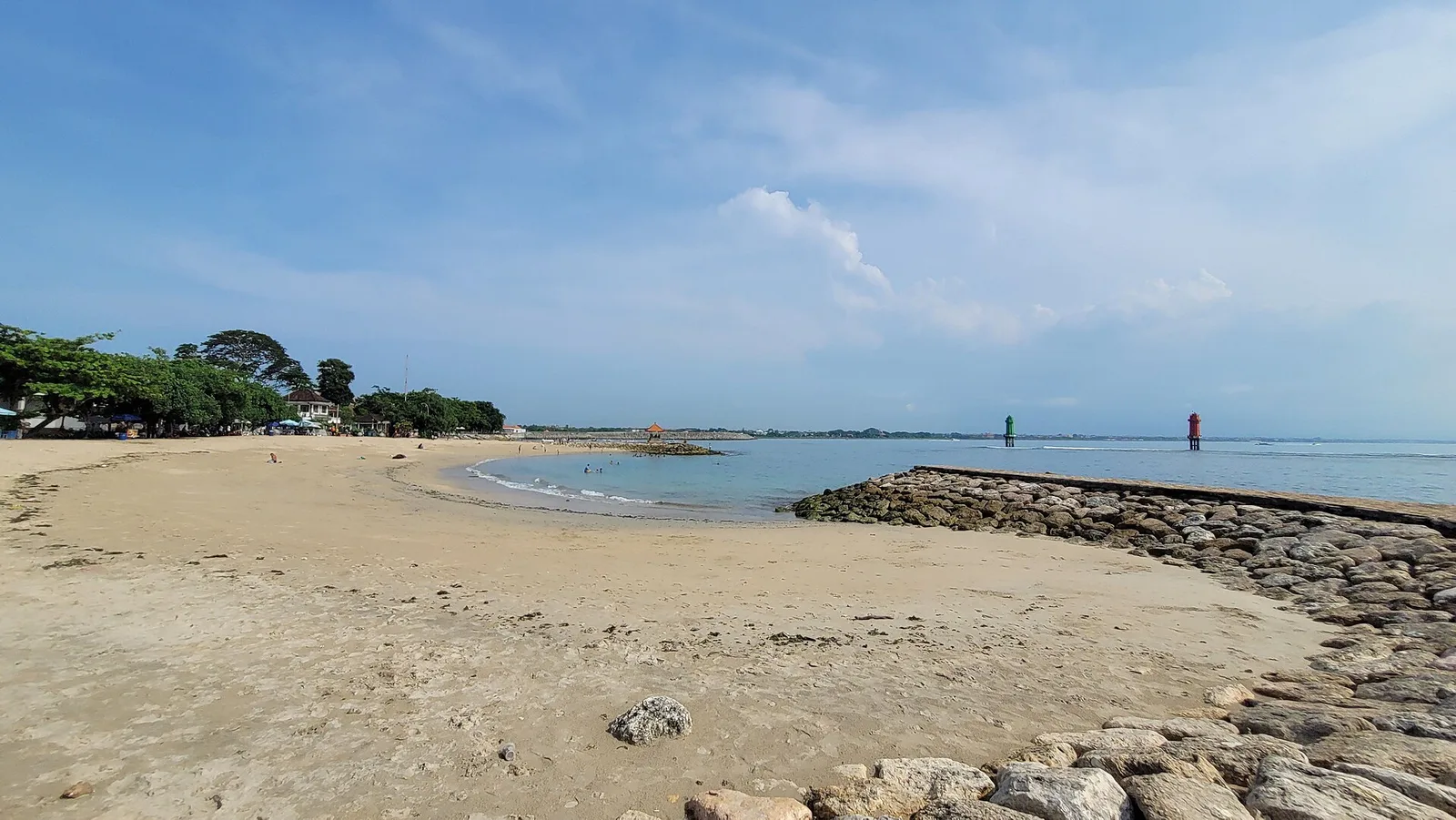
The east coast is the answer. Sanur has a reef offshore that keeps the water calm and shallow, plus a long flat seafront path that works for prams and small bicycles, and it is quiet by design. Our Sanur guide covers the area. Nusa Dua in the south is the other option: large resorts, sheltered swimming and extensive facilities, at the cost of feeling somewhat detached from the island.
The heat runs the day
Bali is hot and humid all year, and the middle of the day is hard work with small children. The fix is structural rather than a matter of endurance.
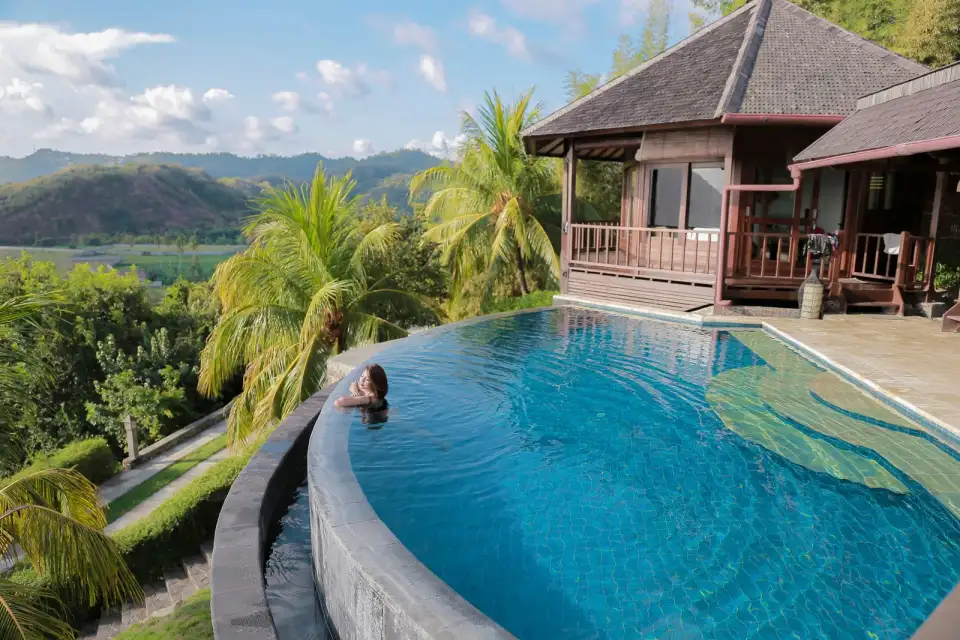
Early morning out, long break through the middle, out again late afternoon. That is how the day works here, it is what local families do, and it is worth building the accommodation choice around it: a pool you can retreat to between four and five hours of the day is more valuable than a good location.
Sun protection needs more attention than in temperate countries, particularly on and near water, where reflected light adds to the exposure from above.
The other half of the heat problem is fluid and stomach upsets. Tap water is not for drinking, and that extends to the things children forget about: ice in drinks outside established places, salads rinsed in tap water, and brushing teeth if you want to be careful with a toddler. Bottled water is cheap and available everywhere, and many hotels now provide refill stations. Pack oral rehydration sachets from home rather than assuming you will find a familiar brand at short notice, because a mild stomach bug plus this humidity dehydrates a small child faster than it does an adult.
The bite issue
This is the part that rarely appears in family guides and should. Rabies is present in Bali, carried by dogs and monkeys.
Children are more likely to approach animals and less likely to mention a small scratch, which is exactly the combination that matters here. The rule is simple: any bite or scratch that breaks the skin should be washed thoroughly and assessed by a doctor immediately rather than watched to see how it develops.
Pre-travel vaccination is a conversation to have with a travel health professional before you go, since the recommendation depends on how long you are staying and where you are going. It is not a reason to avoid Bali. It is a reason to have a plan and adequate insurance.
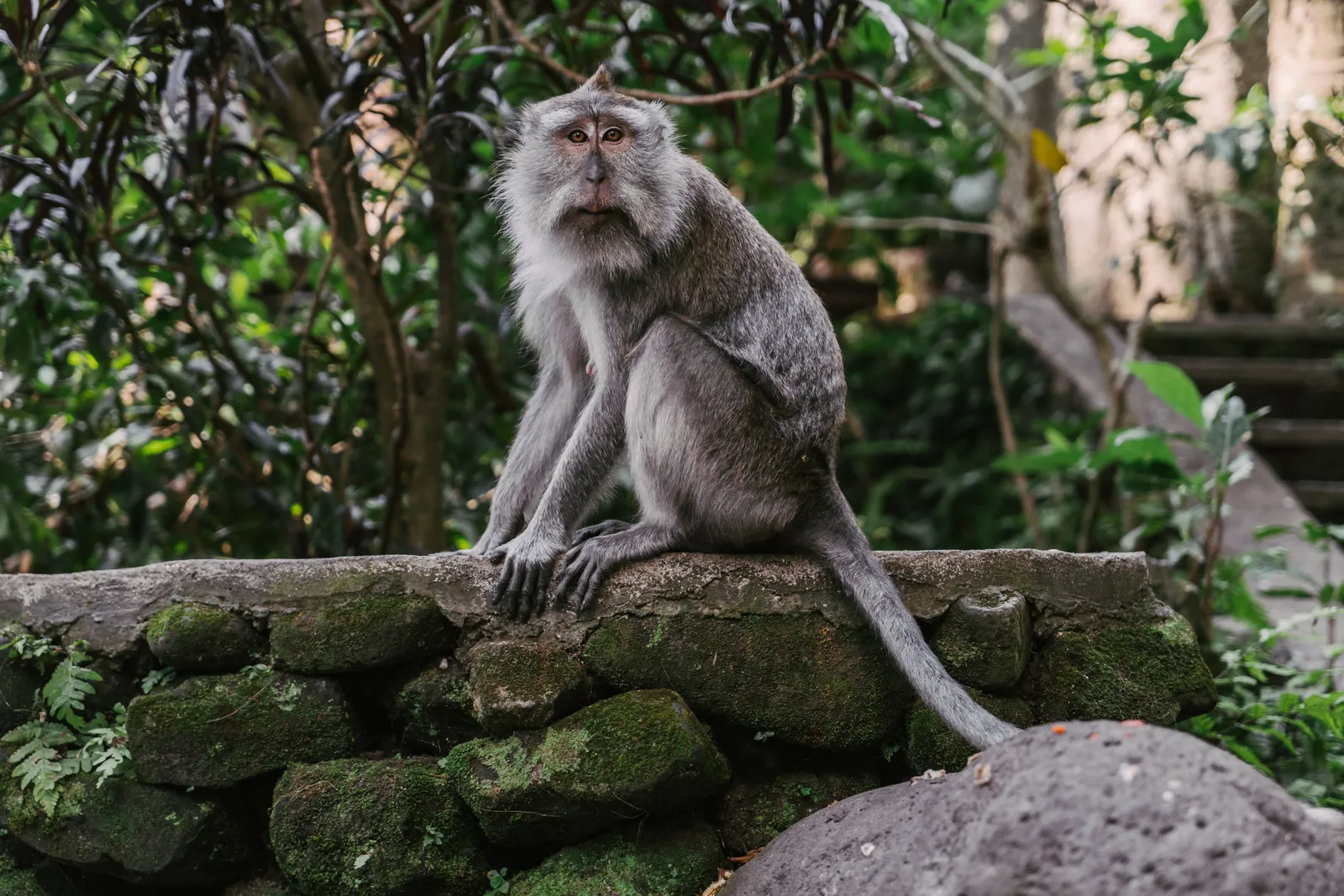
That also colours the monkey forest, which is on every family itinerary. The monkeys are wild, entirely habituated to people, and will take bags, sunglasses, phones and anything resembling food. With older children who follow instructions it is fine. With toddlers it is difficult. Keep food out of sight, do not make eye contact with the animals, and consider whether it is worth it at all with very young children.
The cover that matters here is medicalRabies assessment, dengue and the road accident rate make this a destination where a proper policy earns its costGetting around
Two practical realities that surprise families.
Car seats are not standard. They are not commonly fitted in taxis or hire cars, and drivers frequently do not have one even when asked in advance. Families who regard a car seat as essential bring their own.
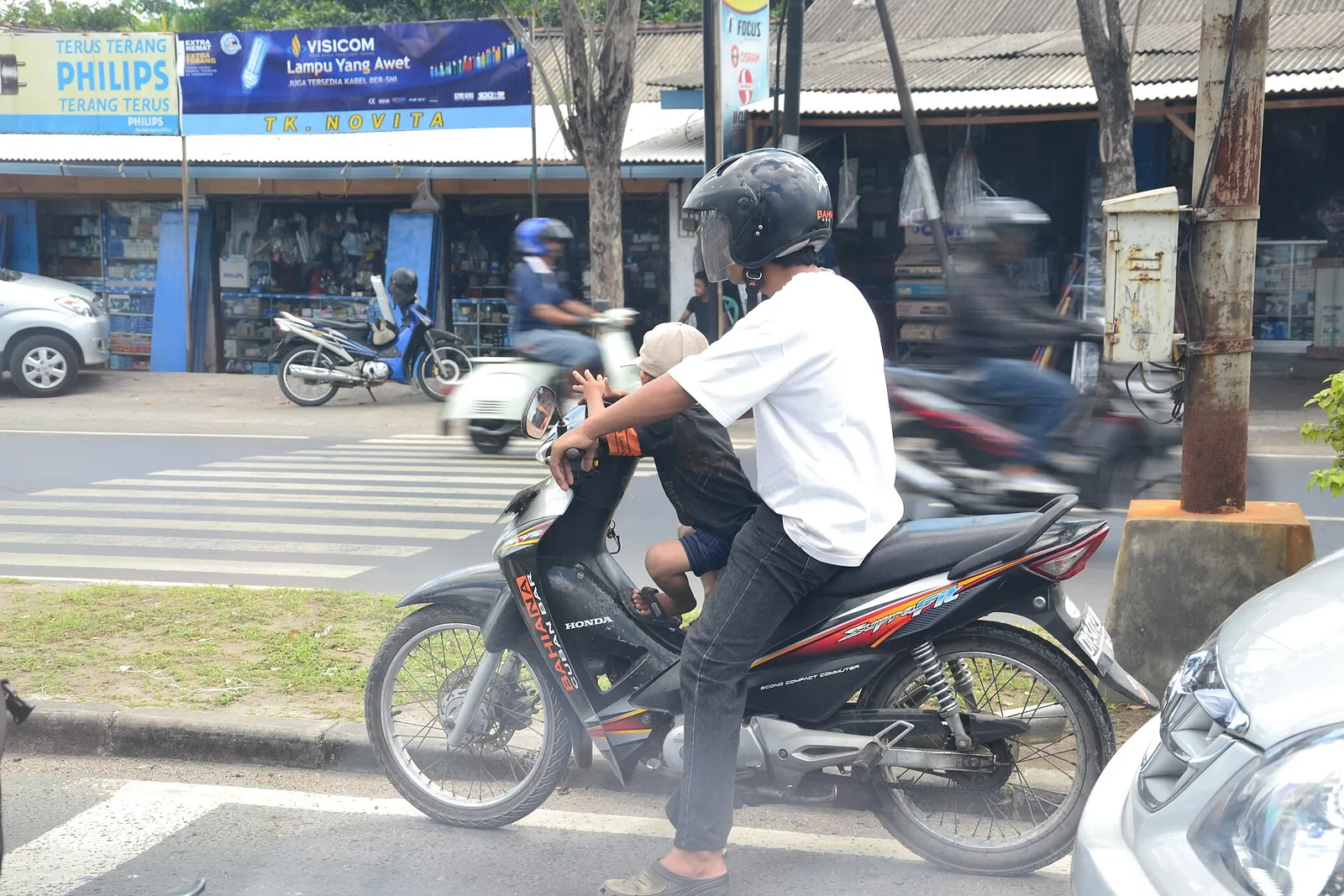
Scooters are not an option with young children, whatever you see local families doing. Hiring a driver for the day is inexpensive and is the sensible way to cover any real distance, and the same driver for several days is usually cheaper and much easier than arranging a new one each morning.
Pavements catch out families arriving with a pram. Outside the resort areas footpaths are narrow, uneven, frequently interrupted by open drainage channels and often absent altogether, and a large pram is close to unusable on them. A carrier or a small folding buggy travels far better here, which is part of why the flat seafront paths at Sanur and Nusa Dua matter so much.
And remember the island’s governing constraint: distances are short and journey times are long. Fifty kilometres can take two to three hours. A day trip that looks reasonable on a map can consume the whole day in a car, which is a worse outcome with children than with adults.
What to actually do
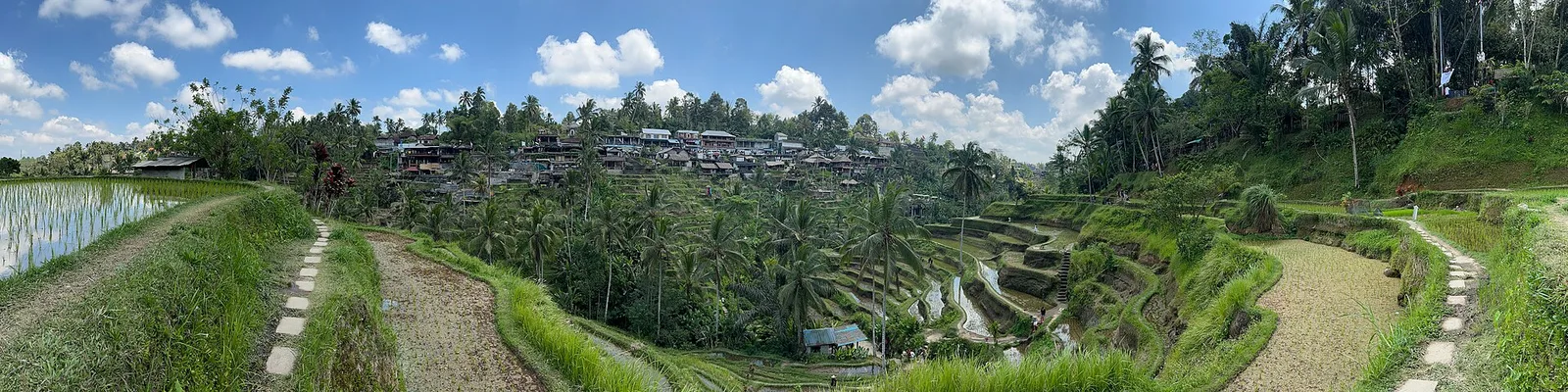
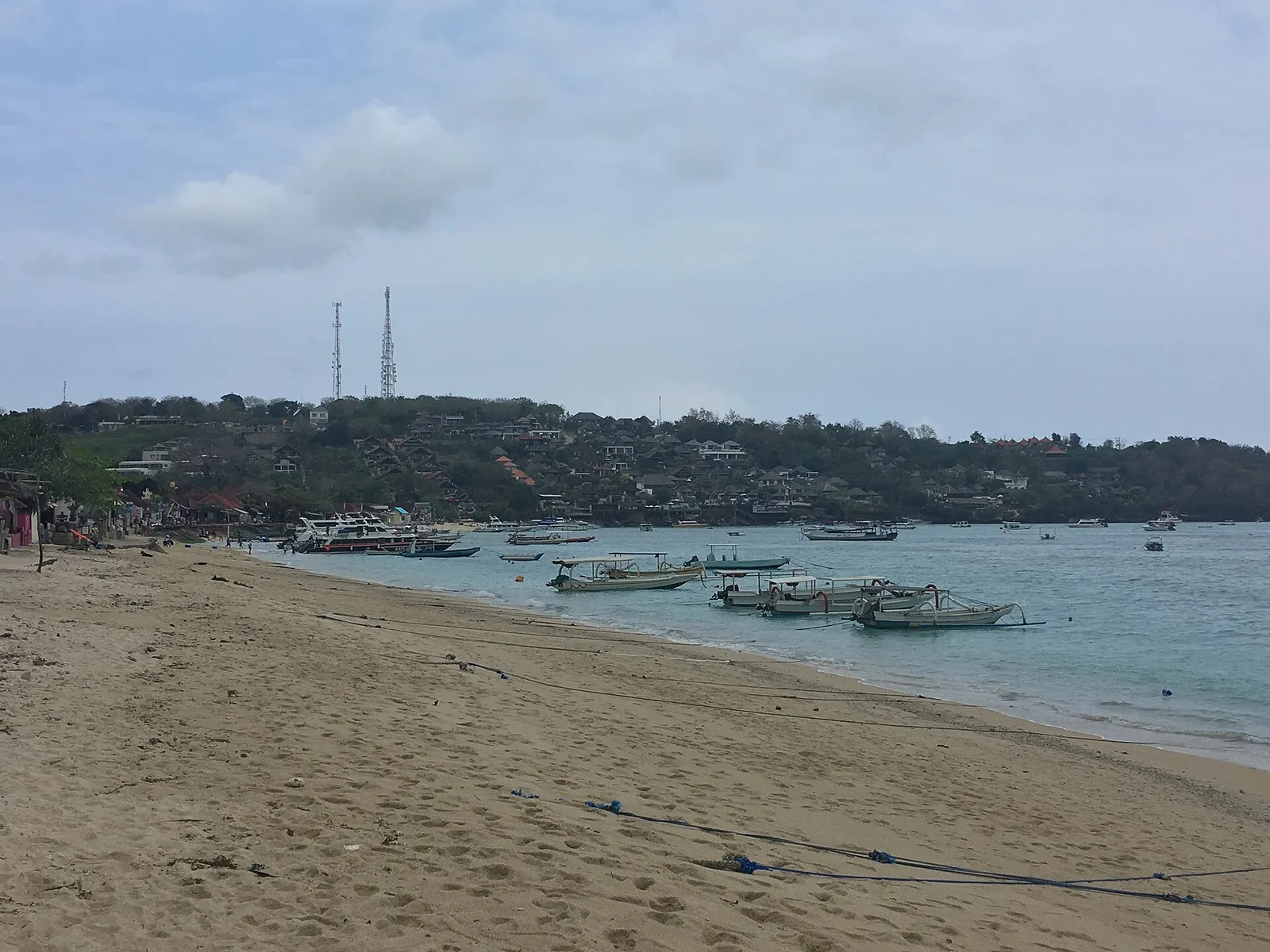
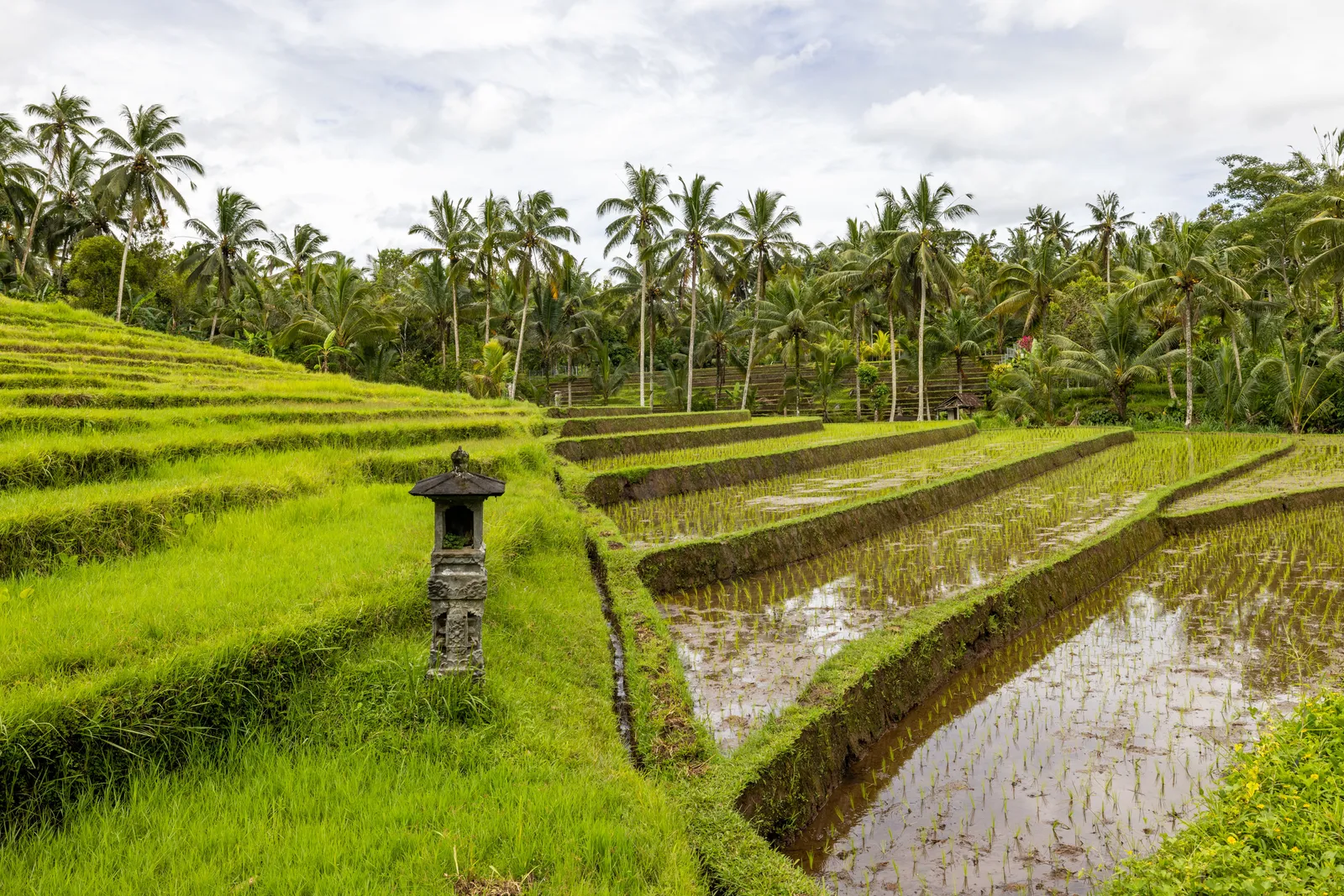
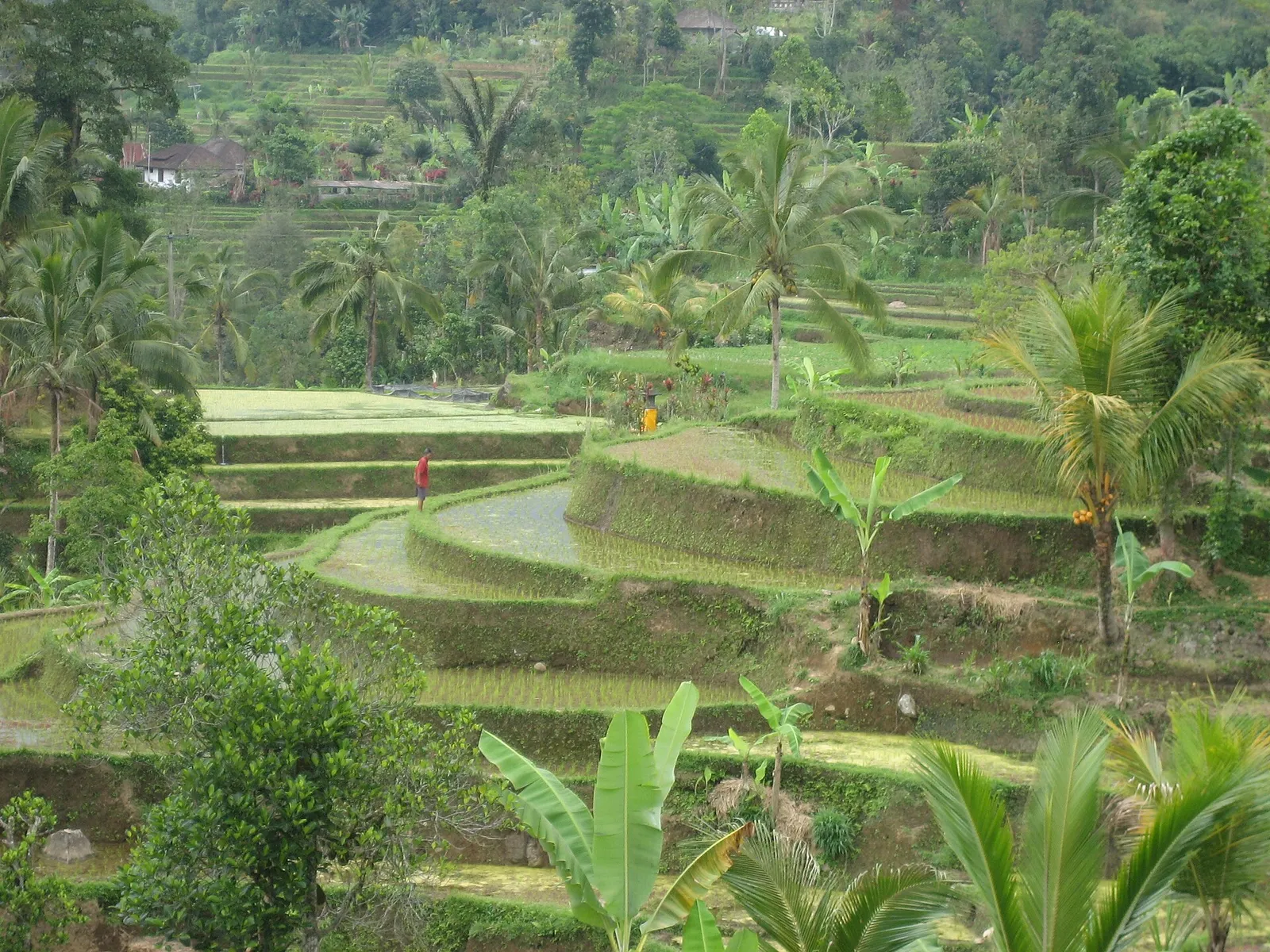
The things that work best are the simple ones: the calm-water beaches, a pool, the rice terraces on an early morning walk, a waterfall with a short easy path, and a boat trip to one of the nearby islands. Nusa Lembongan is the most manageable of those, being small, close and low-key, and our guide to it covers the crossing.
What to skip: long temple circuits in the middle of the day, the volcano sunrise trek, which starts in the small hours and is genuinely demanding, and any itinerary that involves more than one long drive in a day. Our first-time guide covers the general groundwork, most of which applies regardless of who you are travelling with.