Ask a Balinese person to name the island’s defining dish and you will almost certainly hear babi guling: a whole young pig, packed with spice paste and turned slowly over coconut husk embers until the skin shatters like glass. It is not a tourist invention. It is ceremonial food, tied to temple festivals and family celebrations, that happens to have become the thing every visitor wants to try. Our broader Balinese food guide covers the wider repertoire; this one is about the pig, how to eat it properly, and how to time it so you do not arrive to a shut door.
What it is, and why Bali eats it
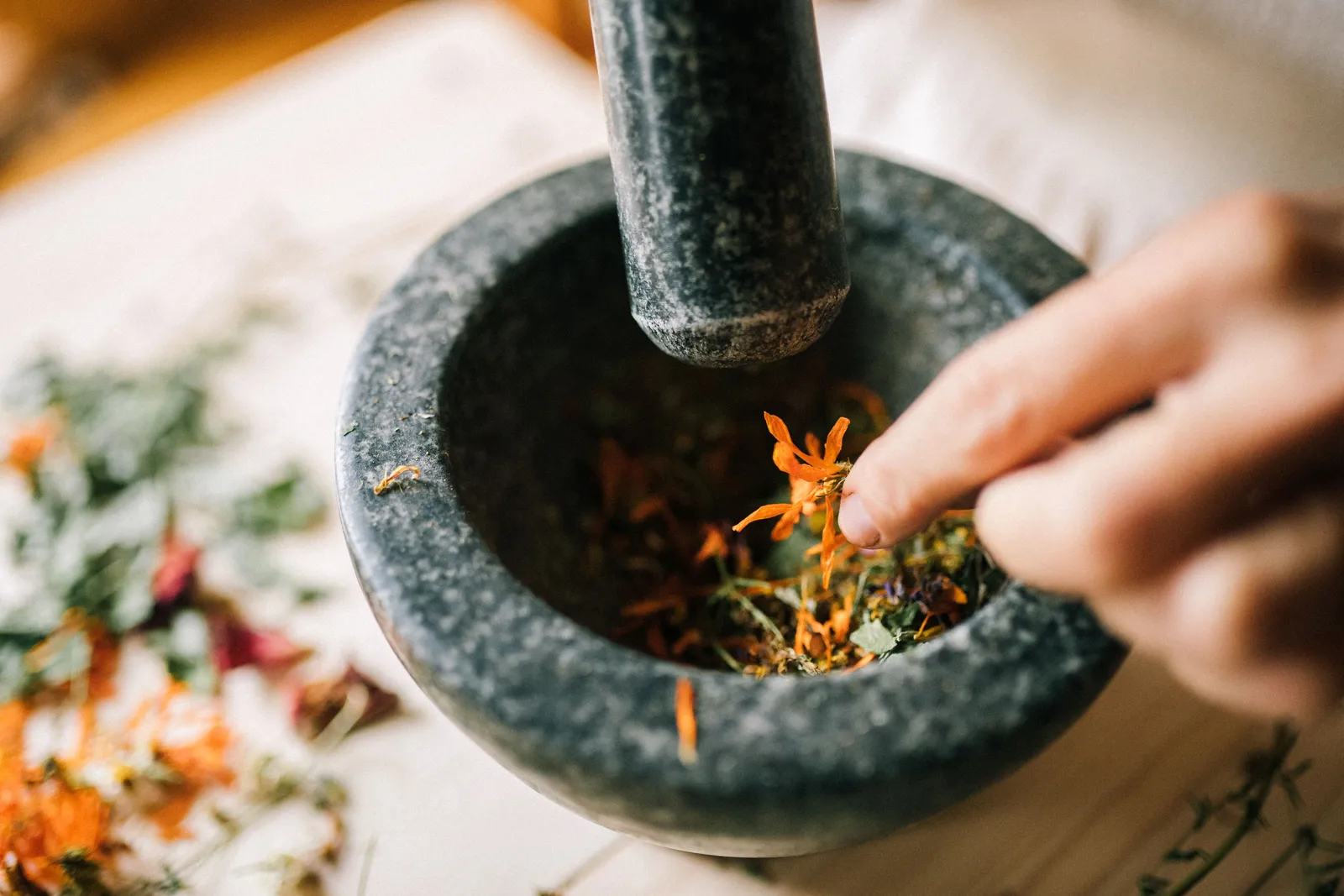
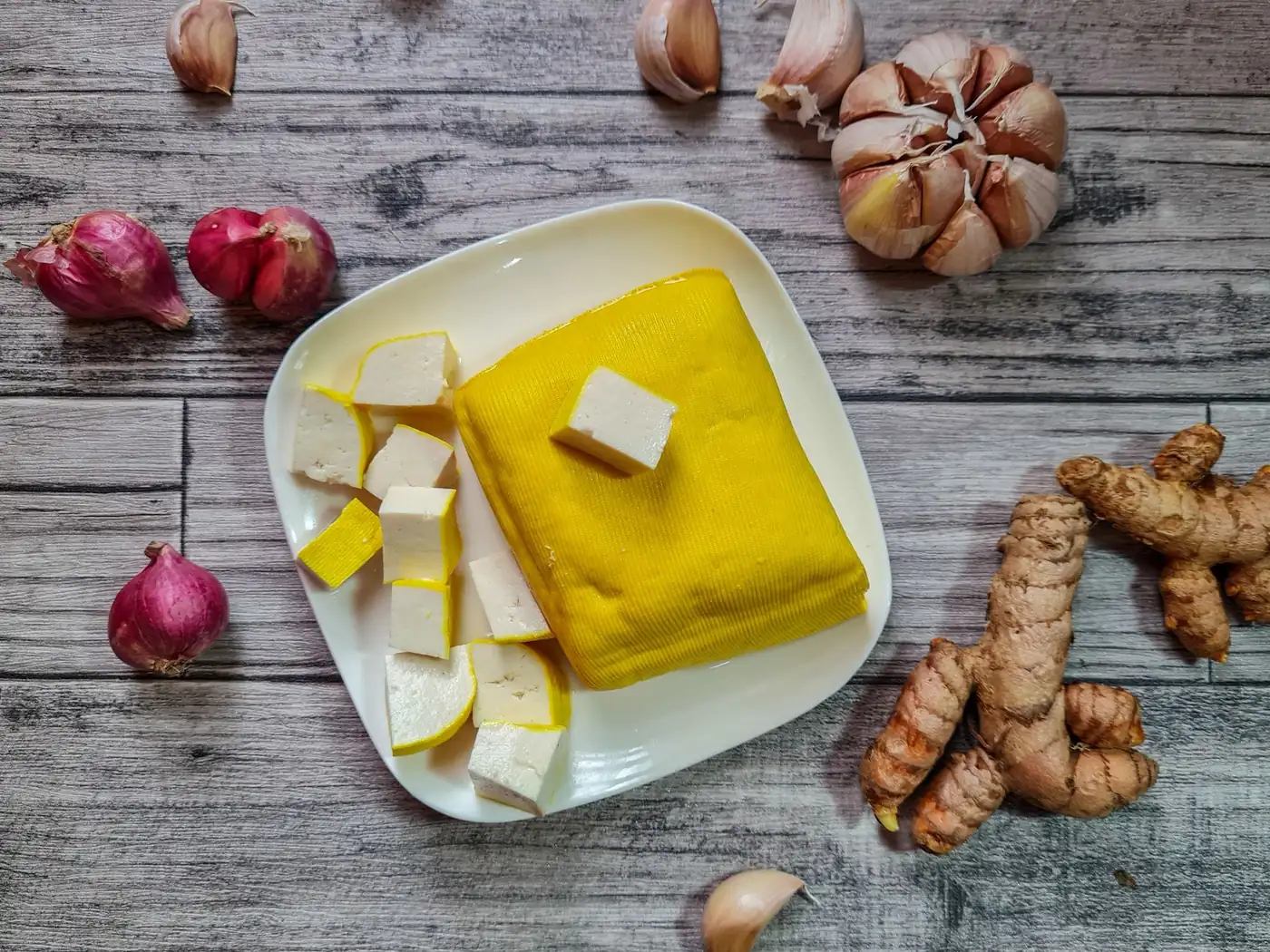
Babi guling means, roughly, turned pig. The animal is cleaned and stuffed with base genep, the all-purpose Balinese spice paste built from turmeric, galangal, ginger, garlic, shallots, chilli, coriander seed, candlenut and lemongrass, then skewered on a bamboo pole and rotated over low embers for hours while the skin is basted, often with coconut water or turmeric oil, until it lacquers.
The context matters. Bali is a Hindu-majority island within a Muslim-majority country, and that single fact explains why pork is a celebration food here and largely absent from menus in most of the rest of Indonesia. Babi guling appears at temple ceremonies, weddings and family rituals, and the warung version most visitors eat is a commercial spin-off of something that started as offering food. That is also why the best places sell out: they roast one pig, or a small number, and stop.
What actually arrives on the plate
Ordering babi guling does not get you a roast joint. It gets you a composed rice plate, and knowing the parts helps you order well.
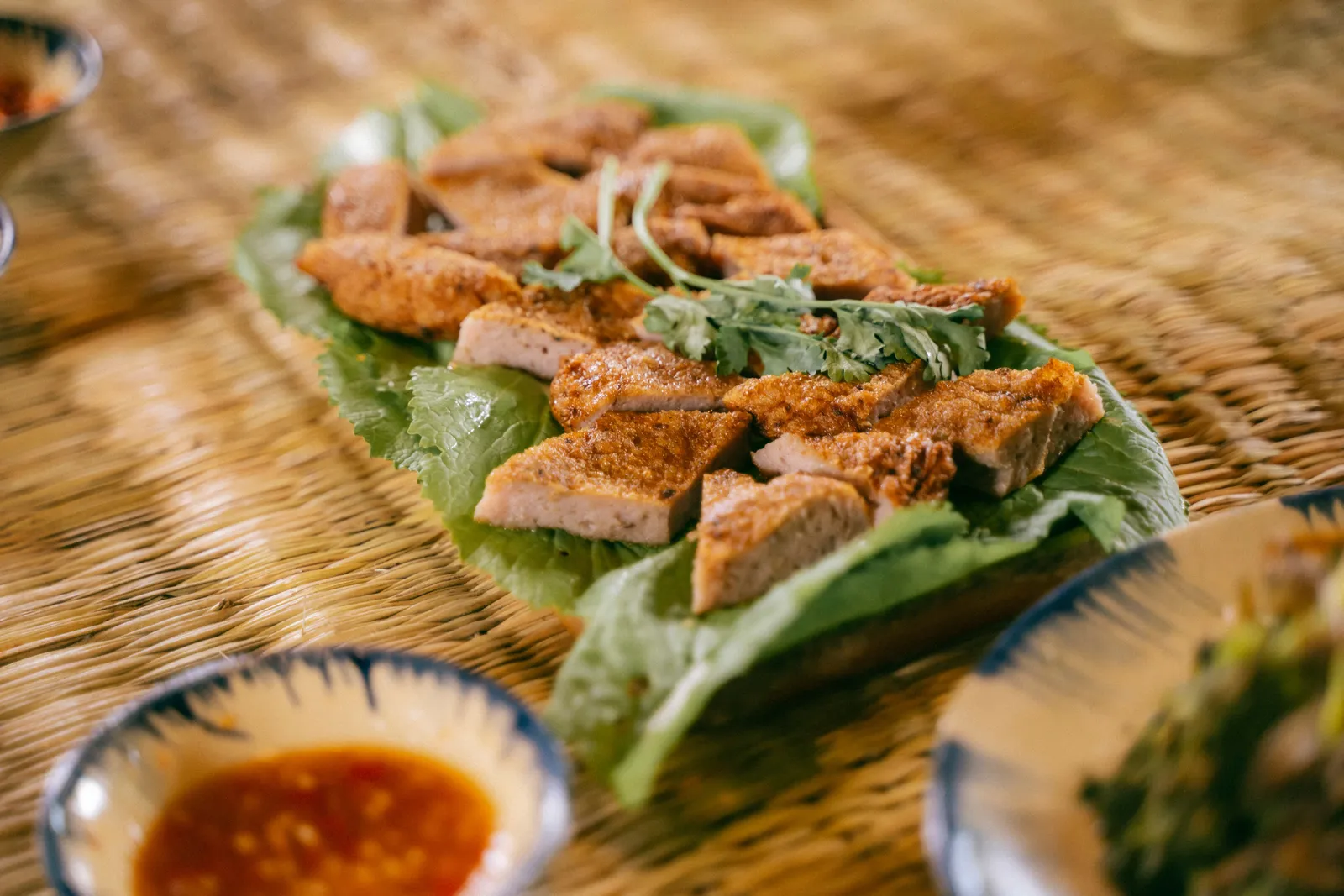
The base is steamed rice. On top go slices of roast pork, a shard of crackling skin, which is the element most people remember, and lawar, a finely chopped mixture of vegetables, grated coconut, spices and sometimes minced meat that provides the sharp, herbal counterweight to the fat. Many places add a piece of Balinese sausage, occasionally a fried intestine, sometimes a rib. A spoon of sambal goes on the side, and some warungs serve a small bowl of clear pork broth alongside.
Most menus offer a basic plate and a special or complete version with more crackling, more sausage and a bigger portion of meat. If you want the full picture of the dish, the larger plate is worth it once. The crackling should be eaten first and fast; it goes leathery within minutes of hitting the rice.
Timing: the dish that sells out
This is the practical thing to get right. The pig is roasted in the morning, and sold until it runs out. There is no second sitting. The well known specialists are at their best shortly after opening and often close during the afternoon, and family-run places also shut for Balinese ceremony days at short notice.
Published opening hours for these warungs are unreliable enough that it is not worth planning a day around one address. Treat late morning as the sensible window, have a second option nearby, and check on the day if you can. Turning up at three in the afternoon expecting a famous plate is the most common way visitors miss out entirely.
What it costs
Prices vary sharply by venue, and they have been rising. A plate at a modest neighbourhood warung sits in a low band of a few tens of thousands of rupiah. The famous, tourist-facing establishments in central Ubud and on the main roads charge considerably more, in some cases several times as much for what is recognisably the same dish plus a sign in English and air conditioning.
Neither price is a rip-off in itself; you are paying for location and reputation. But it is worth knowing the gap exists before you decide that babi guling is expensive, and worth checking the board rather than assuming. As with the sit-down places in our restaurants guide, larger venues may add tax and a service charge on top of the listed price, while small warungs generally quote the price you pay.
Build a food stop into a proper Ubud dayThe traditional heartland for babi guling sits around Gianyar and Ubud, easy to fold into a day outWhere to look, and how to choose
The Gianyar regency, which includes Ubud, is the traditional heartland and has the densest concentration of respected specialists, from internationally famous names to unmarked shopfronts on side roads. Denpasar and the Sunset Road corridor towards Seminyak have their own long-established favourites, generally with more Balinese customers and fewer tour groups. Gianyar’s night market is another route in, with roast pork sold from stalls in the evening rather than at a fixed warung.
The selection heuristic that works better than any list: eat where local people are queuing before noon. A place with a line of Balinese customers at eleven has fresh pork, high turnover and a price set for regulars. A place with an empty dining room at two in the afternoon has meat that has been sitting since dawn.
If you do not eat pork
This is worth addressing directly, because Bali’s position makes it genuinely confusing for travellers arriving from Malaysia, Singapore, the Gulf or anywhere else where pork simply does not appear.
Babi guling is pork, and it is never halal. No preparation, venue or certification changes that. What Bali does have, uniquely within Indonesia, is pork and non-pork kitchens operating openly side by side, sometimes on the same street. Many warungs and restaurants describe themselves as halal or as no-pork kitchens, and Indonesian halal certification is a formal system with an official logo and a national register. If certification matters to you, verify a specific venue against that register rather than relying on a sign in a window or a line on a review site.
Cross-contact is the practical issue at general warungs, where the same utensils and display case may serve everything. Dedicated halal warungs, which are common around Denpasar, Kuta and the areas with large Javanese and Madurese communities, are the straightforward answer, and ayam betutu, the slow-cooked spiced chicken, is the closest thing Bali offers to the same ceremonial-feast experience without pork.
For everyone else: go early, order the crackling, eat it immediately, and accept that you will spend the rest of the trip comparing every other plate to it.